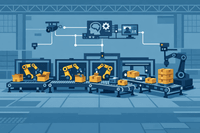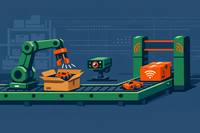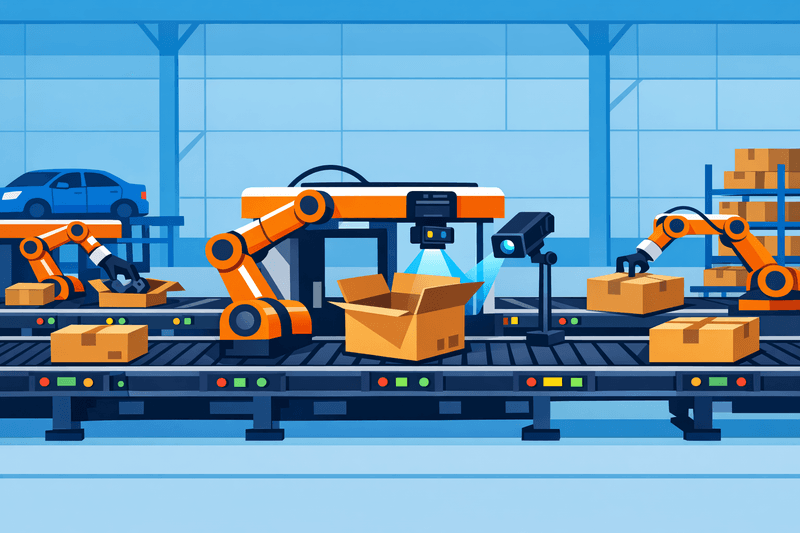
Executive summary. AI-enabled in-line packaging lines are advancing from pilot phases to scaled deployment in automotive warehousing, integrating robotic packaging, conveyor automation, computer vision, and predictive maintenance into coordinated systems. Early adopters note substantial improvements in throughput, quality, and material efficiency, alongside evolving requirements for workforce skills, CAPEX strategies, and regulatory compliance. This article examines the technologies, business case, and roadmap for OEMs, suppliers, and 3PLs with a 2026 outlook.
Why Automotive Warehouses Are Accelerating In-Line Packaging Automation
Automotive warehousing is challenged by increasing SKU complexity, volatile demand, and strict delivery windows for spare parts and assembly components. Manual or semi-automated packing stations often cannot match this variability while ensuring consistent packaging quality and compliance.
Industry analyses estimate that AI in 3PL operations can cut logistics and warehouse costs by 15-20% and reduce equipment downtime by up to 50%1AI In The 3Pl Industry Statistics Statistics: Market Data Report 2026. These benefits are prompting a shift toward integrated, AI-powered in-line packaging in automotive distribution centers, mixing centers, and 3PL facilities.
Key adoption drivers include:
- Labor shortages and high turnover at manual packing stations
- Rising proportion of long-tail SKUs, especially aftermarket and EV parts
- Stricter packaging, labeling, and dangerous goods regulations
- OEM and tier-1 demand for traceability at carton and component levels
- Corporate targets for reducing packaging waste and CO₂ emissions
Packaging automation is extending beyond plant end-of-line to distribution centers as a supply chain priority.
Core Technologies in AI-Enabled In-Line Packaging Systems
In automotive warehouses, in-line packaging systems are evolving into software-defined, modular platforms. Multiple technology layers combine to deliver improved performance.
Robotic Packaging Cells and Conveyor Automation
Contemporary robotic packaging employs articulated arms, delta robots, and collaborative robots to pick parts, assemble kits, and load containers directly onto moving conveyors. Smart conveyors with zone control and accumulation enable continuous flow rather than batch processing.
Capabilities include:
- Automated case forming, right-sizing, and sealing
- Robotic loading of parts into trays, totes, or export cartons
- In-line labeling, barcode application, and verification
- Integrated palletizing and stretch-wrapping downstream
Case studies in manufacturing indicate well-designed automated packaging lines maintain higher, more stable throughput than manual processes, especially with variable demand and multiple SKUs.2Warehouse Tech Navigator - Global Warehouse Automation Solutions
Computer Vision and In-Line Quality Verification
AI-based computer vision underpins quality assurance in packaging systems. High-resolution cameras and edge AI models confirm correct parts, quantities, labels, and dunnage are present.
AI vision systems in automotive manufacturing report defect detection accuracies near 99.5% and quality improvements up to 35% compared to manual inspection3Vision AI for Automotive QA | 360° Inspection, Assembly Verification & OCR. This approach is now applied to packaging, where models trained on good and defective packs identify missing parts, incorrect labels, package damage, and seal issues in real time.
Typical in-line checks:
- Part presence and orientation for kits
- Label and barcode accuracy, print quality, and correct placement
- Pack count validation (e.g., fasteners or small components)
- Carton integrity (e.g., crushed corners, open flaps)
Vendors report quick ROI and measurable gains from AI vision inspection in warehouses and FMCG packaging lines.
Vendors of AI vision inspection for packaging report typical payback periods of 8-12 months and inspection speeds about 30% higher than manual or rule-based systems4Vision Inspection Systems AI for Manufacturing & Logistics | Jidoka
Predictive Maintenance and Real-Time Monitoring
Packaging uptime depends on predictive maintenance using vibration, temperature, current, and other sensor data from motors, gearboxes, and sealing equipment to predict failures before downtime occurs.
Case studies show AI-based predictive maintenance cuts conveyor failures by about 50% and reduces unplanned stoppages by up to 95%5Predictive Maintenance AI Reduces Food Packaging Line Failures by 50% - Mipu Predictive Hub. These results are consistent across industrial pilots.
One McKinsey-cited pilot reported up to 40% reduction in packaging downtime following AI-based predictive maintenance6Smarter Packaging: AI's Role in Predictive Maintenance and Yi
In automotive warehouses, where interruptions affect plant feeding and dealer orders, improved uptime supports service levels and labor efficiency.
Software Orchestration: WMS, MES, and the AI Layer
AI-driven packaging automation requires integration between warehouse management systems (WMS), manufacturing execution systems (MES) where relevant, and control layers.
Key software elements:
- Cartonization engines: AI or heuristics choose ideal container size and dunnage per order
- Real-time decisioning: reroutes orders to different pack lines for congestion and SLA compliance
- Data pipelines: stream sensor and vision data into predictive and quality models
- Dashboards and digital twins: simulate layout changes, SKU introductions, or policy shifts pre-implementation7Using AI for Optimizing Packing Design and Reducing Cost in E-Commerce
Operational Impact: Throughput, Quality, and Material Efficiency
AI-enabled in-line packaging lines directly affect key KPIs. The combined gains in throughput, quality, and sustainability are significant where automotive volumes are high and packaging needs are diverse.
Throughput and Labor Productivity
Robotic packaging and conveyor automation minimize manual touchpoints and idle time. Whereas traditional operations have distinct stages (pick, pack, label, inspect, palletize), automation links these into a continuous process.
Sectors using high-density automation report higher order processing rates per labor hour and more stable throughput across shifts.8ENSPIRING.ai: Worlds most advanced robotic warehouse (AI automation) While impacts vary by facility, double-digit throughput gains are typical after system tuning.
Quality and Error Reduction
Packaging errors with automotive parts may lead to line stoppages, warranty issues, or recalls. AI vision and control checks ensure quality inspection is ongoing rather than sampling-based.
Current vision systems:
- Inspect each package at line speed
- Enable automatic rejection or rework of non-conforming packs
- Record images and defect metadata for root cause analysis and improvement4Vision Inspection Systems AI for Manufacturing & Logistics | Jidoka
This traceability is critical for safety-critical components and regulatory audits.
Packaging Material and CO₂ Reduction
Right-sized packaging is central to cost and sustainability initiatives.
Right-size packaging programs often report 20-40% volume reductions and about 25% less corrugated material per shipment9How To Right-Size Packaging to Reduce Shipping Costs - ISD. These benefits are amplified when AI evaluates part geometry, fragility, and transport mode.
New results from automated, cut-to-fit systems highlight further potential:
Automated right-sized carton systems have shown up to 58% CO₂ reduction, 27% less cardboard use, and ~40% less corrugated waste compared to traditional boxing10Right-Sized Packaging Efficiency Boosts Sustainability | CTO ROBOTICS Media posted on the topic | LinkedIn
For automotive facilities shipping from small clips to large panels and EV components, these savings drive down costs, improve trailer utilization, and support sustainability targets.
Comparative Impact of AI Levers
The table summarizes typical impacts of key AI technologies in in-line packaging. Ranges reflect published case studies and vendor data.
| AI Lever | Primary KPI Impact | Typical Improvement Range* |
|---|---|---|
| Vision-based pack verification | Packing error rate | 50-90% defect reduction |
| Predictive maintenance | Unplanned downtime | 40-60% reduction |
| AI-driven cartonization | Corrugate and dunnage use | 20-30% reduction |
| Robotic handling & smart conveyors | Lines per labor hour / throughput | 15-30% increase |
*Ranges based on case studies and vendor reports in packaging, warehousing, and discrete manufacturing.5Predictive Maintenance AI Reduces Food Packaging Line Failures by 50% - Mipu Predictive Hub
Cost of Ownership, CAPEX, and Payback
Investment Profiles for In-Line Packaging Automation
CAPEX for AI-enabled packaging varies with scope and site constraints. Typical expenses include:
- Robotic packing cells for pick-and-place, case loading, palletizing
- Smart conveyor networks, sorters, and accumulation
- Right-size carton systems, case erectors, and sealers
- Vision hardware (cameras, lighting) and edge AI compute
- Integration, software, and commissioning costs
A common strategy in automotive and 3PL sites is to launch one or two high-volume packaging lanes, then expand modularly after proving performance.11The Future of Automated Warehousing for 3PLs and eCommerce | Helm
Payback Expectations
When baseline processes are manual and error-prone, payback can be swift. Typical savings arise from:
- Lower labor per shipped unit
- Fewer rework, claims, and returns
- Higher uptime and throughput
- Reduced material and freight spend
Published case studies indicate sub-two-year payback is typical, with first-year ROI possible in some AI vision deployments.
Eight to twelve-month paybacks are common for AI vision projects on packaging lines where manual inspection drove significant costs4Vision Inspection Systems AI for Manufacturing & Logistics | Jidoka
Predictive maintenance adds further savings by preventing major equipment failures that could halt shipments.
Total Cost of Ownership Considerations
TCO evaluation by packaging engineers and supply chain directors should include:
- Comparing energy use of automation versus legacy systems
- Including software subscription and AI model maintenance
- Calculating savings from standardized pack designs
- Factoring in staff training and updated work practices
Structured pilots with clear OEE, error rate, and material usage baselines are necessary to validate the business case before broader rollout.
Workforce and Change Management Implications
High automation shifts human roles toward supervisory, maintenance, and data-focused activities rather than eliminating workforce needs.
Evolving roles in AI-enabled warehouses:
- Automation technicians skilled in robotics, PLCs, and controls
- Data/maintenance analysts monitoring condition dashboards and AI alerts
- Process engineers tuning cartonization, routing, and quality logic
- Multi-skilled operators handling faults, changeovers, and basic maintenance
Workforce surveys in automated packaging highlight job security concerns, especially in SMEs, reinforcing the importance of transparent communication and retraining.12Automated Void Fill Dispensers Market Effective change management includes:
- Mapping existing to future skill needs
- Structured upskilling in safety, HMIs, and diagnostics
- Early operator involvement in new line design and testing
Transferring heavy, repetitive tasks to robots also improves safety and ergonomics by reducing musculoskeletal injury risk.
Extending Automotive Best Practices Beyond Warehousing
Tier-1/Tier-2 Suppliers and 3PL-Managed Networks
Automotive OEMs increasingly require suppliers and logistics partners to comply with standardized packaging and labeling to integrate with automated plants and central DCs.13Catch up on what happened this week in Logistics: February 10 - 16, 2026
For tier-1 and tier-2 suppliers, deploying the same AI packaging stack-robotic cells, conveyor automation, vision, and predictive maintenance-enables:
- Consistent pack formats compatible with OEM or 3PL automation
- In-plant postponement packaging close to shipment
- Data exchange on defect rates and packaging quality across the supply chain
3PLs can leverage modular inline packaging as a value-added platform for postponement, relabeling, and country-specific compliance.
Cold Chain and EV Battery Logistics
EV batteries and temperature-sensitive parts add logistics and packaging complexity. Requirements for thermal control, hazardous goods, and warranty all converge at the packaging level.
Lithium and EV batteries shipped from automotive warehouses must comply with UN 38.3 and emerging EU battery regulations that mandate tighter packaging, labeling, and traceability14UN 38.3 Compliance for Lithium Batteries: Essential Tests and Safety Standards - EnergyX
AI-enabled packaging supports these needs by:
- Verifying regulatory labels and markings via vision
- Logging configuration, insulation, and sensor data linked to battery serials
- Connecting with cold-chain monitoring to ensure thermal packaging integrity
Sustainability: Recyclable Materials and Reduced Secondary Packaging
Automotive brands and partners face growing requirements to cut packaging waste and plastics. AI facilitates this through:
- Optimized material choices based on risk and route7Using AI for Optimizing Packing Design and Reducing Cost in E-Commerce
- Right-size cartonization that reduces void and corrugated use
- Design analytics for recyclable or biodegradable alternatives
As earlier noted, AI-driven right-size systems have demonstrated significant cardboard and CO₂ reductions, supporting ESG objectives.
Roadmap to 2026: Priorities for OEMs and 3PLs
By 2026, AI-powered in-line packaging will shift from pilot to competitive standard in automotive warehousing. Recommended roadmap priorities:
1. Establish a clear baseline.
- Record packaging error rates, rework, and claims
- Measure downtime due to conveyor and packing stops
- Monitor material use per shipped unit
2. Start with targeted pilots.
- Select high-volume, repeatable pack lanes
- Apply vision-based inspection and predictive maintenance
- Use modular robotics and right-size systems for low-disruption deployment
3. Build the data and integration layer.
- Ensure WMS and control systems can share pack and sensor data
- Standardize identifiers for traceability
- Invest in dashboards covering quality, maintenance, and materials KPIs
4. Plan for workforce and organizational change.
- Form cross-functional teams for system design and rollout
- Define new roles and provide training for automation and data roles
5. Align with sustainability and compliance.
- Use right-size and AI cartonization to meet packaging reduction and CO₂ goals
- Prepare packaging automation plans for new regulatory requirements, particularly for EV and hazardous components
Frequently Asked Questions
How do AI-powered in-line packaging systems differ from traditional automated packing?
Traditional systems automate discrete steps (e.g., case erection), relying on manual handling and inspection between stations. AI-powered in-line packaging combines robotic handling, smart conveyors, vision inspection, and predictive maintenance in a coordinated process.
This enables continuous package verification, dynamic routing around bottlenecks, and optimization of material use and uptime-suiting automotive warehousing's SKU diversity and service demands.
What are realistic payback periods for AI in packaging automation?
Payback varies with labor costs, error rates, and current automation. In high-manual inspection environments with frequent defects, AI vision and robotic packaging often produce payback in one to two years, sometimes under 12 months when quality issues are significant.
Predictive maintenance further shortens payback, layered onto existing equipment.
Where should an automotive warehouse start: robots, vision, or predictive maintenance?
Sequence depends on key challenges:
- For persistent mispacks and claims, prioritize in-line vision inspection
- For bottlenecks and labor shortages, robotic cells and conveyor automation offer the largest improvement
- For recurring downtime, predictive maintenance is often the first step
Many sites phase in upgrades, beginning with data-driven, low-disruption solutions prior to full line reengineering.
How does AI-driven cartonization manage diverse automotive parts and kitting?
AI cartonization processes item attributes, damage history, and routing information. For kits, it evaluates combined geometry and protection needs, proposing optimal container dimensions, orientation, and dunnage.
Models refine choices over time based on outcomes for mixed orders, small components, and fragile electronics.
Is this technology transferable beyond automotive warehousing?
Yes. The same stack-robotic packaging, conveyor automation, AI vision, and predictive maintenance-is applied in FMCG, electronics, pharmaceuticals, and e-commerce.
Automotive adds complexity such as returnable packaging, line-feed kitting, and battery regulations, but core technologies are cross-industry. Best practices can be adapted to other sectors, including supplier logistics and aftermarket distribution, where similar compliance and traceability needs exist.