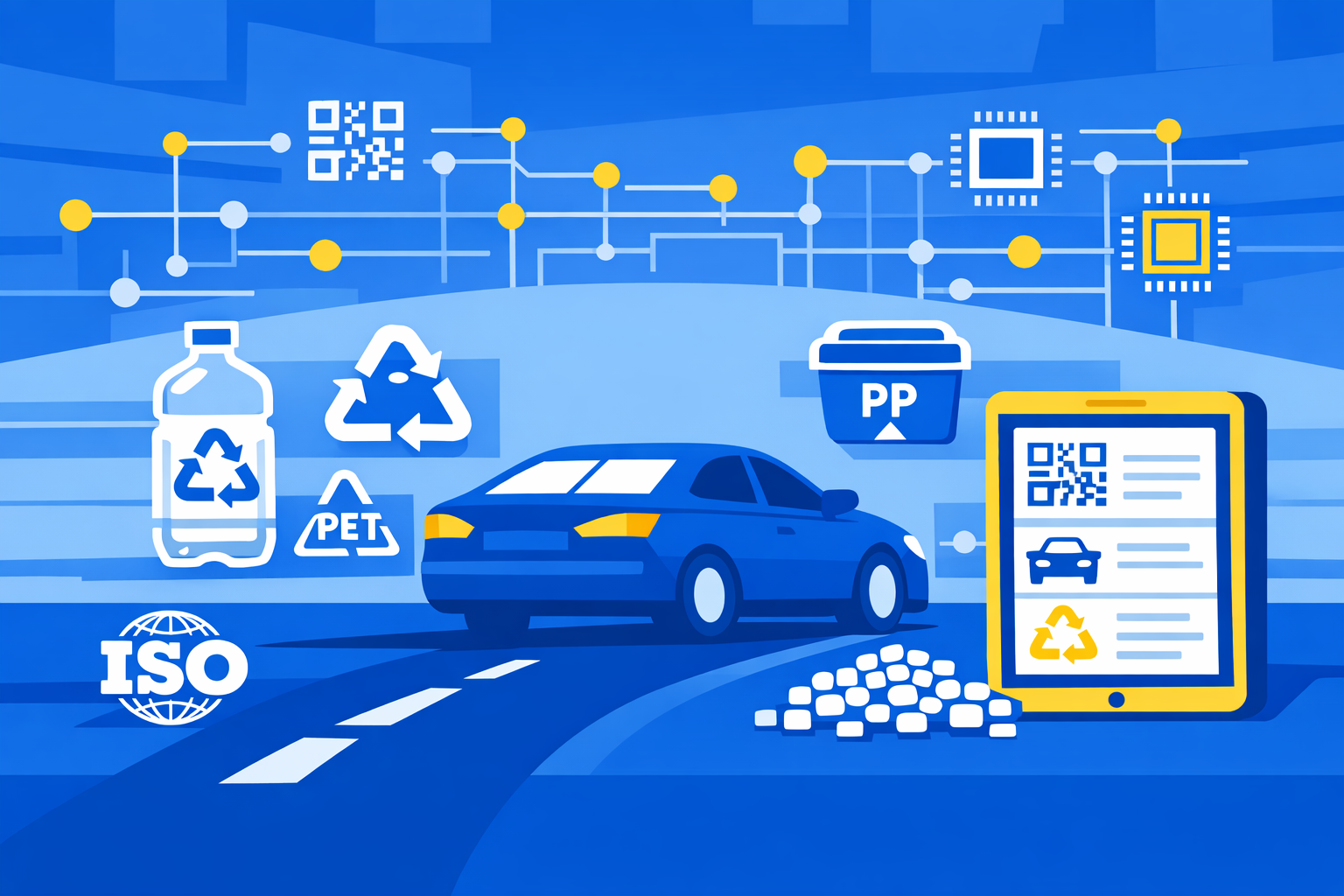
Cross-border auto parts shipments between the European Union and the United States are entering a new phase of digital traceability, as converging regulatory mandates push blockchain-backed packaging systems from pilot programs into structured commercial deployments aligned with GS1 standards.
Background
Two parallel regulatory forces are compressing the timeline for OEMs, Tier-1 suppliers, logistics providers, and carriers to implement end-to-end visibility in auto parts packaging. In Europe, the EU's Ecodesign for Sustainable Products Regulation (ESPR) - which entered into force in July 2024 - provides the legal basis for the Digital Product Passport (DPP), requiring products placed on the EU market to carry machine-readable, interoperable records of origin, materials, lot numbers, and lifecycle data. A central EU DPP registry is expected to be operational by July 19, 2026, serving as the central data hub for all DPP information in the EU. Mandatory DPP requirements are set to apply to battery storage systems and EV components beginning February 18, 2027. Critically, the obligation applies regardless of where a product is manufactured - meaning US suppliers exporting auto parts or batteries to the EU must comply with DPP disclosure requirements for those products.
Simultaneously, the EU's Carbon Border Adjustment Mechanism (CBAM) entered its definitive phase on January 1, 2026, requiring verified emissions data per shipment for iron, steel, and aluminium-intensive goods - categories encompassing a wide range of auto components. A December 2025 European Commission proposal further seeks to expand CBAM to approximately 18 categories of downstream goods, with vehicle components such as car doors explicitly cited as examples of products that would attract CBAM obligations. On the customs side, the EU's Import Control System 2 (ICS2) became fully consolidated as a mandatory framework with exclusive adoption of v3 messaging from February 3, 2026, requiring key cargo data including lot numbers and origin details to be submitted and validated before shipment or border arrival.
In the United States, no federal DPP mandate exists, but the Automotive Industry Action Group (AIAG) is actively developing voluntary supply chain transparency frameworks. US manufacturers serving European markets must implement full DPP compliance for those products regardless of domestic requirements. This regulatory asymmetry is accelerating adoption of shared traceability infrastructure on both sides of the Atlantic.
Details
The backbone for cross-border traceability is GS1's suite of identification and data-sharing standards. The GS1 Global Traceability Standard (GTS2) defines Critical Tracking Events (CTEs) - such as receiving, packing, shipping, and transporting - and Key Data Elements (KDEs) that describe each event as it occurs to a traceable object. Blockchain technology anchors these GS1-structured data streams in immutable form. According to supply chain analysts, integrating GS1 data into blockchain networks allows businesses to create tamper-proof records where every transaction and movement of a product is permanently logged. The EPCIS (Electronic Product Code Information Services) framework is the primary GS1 mechanism enabling this, with lot/batch-level identifiers requiring dynamic encoding on packaging labels that update at each supply chain handoff.
OEM adoption has accelerated sharply. In 2024, over 61% of Tier-1 automotive manufacturers reported active testing or deployment of blockchain-based systems, up from 39% in 2022. Supply chain logistics is one of the primary applications, with over 18 major automakers implementing distributed ledger technology to track parts and ensure compliance. Among named examples, BMW Group expanded its partnership with Circulor in 2024 to trace battery raw materials across multiple tiers using a permissioned ledger, ensuring adherence to the EU Battery Regulation. The France-based XCEED platform, developed by Renault with IBM, has also moved beyond initial pilots, allowing any supply chain party to access compliance histories for specific parts or components.
Market growth projections reflect the urgency. The global automotive blockchain market was valued at approximately USD 1.09 billion in 2025 and is projected to reach USD 2.12 billion by 2035, at a CAGR of 24.9%. The supply chain segment held the largest share of the Europe automotive blockchain market in 2024 at 37.7%, driven by the need for real-time visibility, counterfeit prevention, and end-to-end traceability across automotive components.
Data ownership and interoperability remain the most contested operational challenges. In 2023, over 47% of Tier-2 suppliers reported integration delays when implementing blockchain modules into legacy ERP systems, extending deployment cycles by an average of 9.2 months. Only 22% of vendors were following common API protocols, creating significant hurdles for seamless adoption across multi-tier supply networks. Diverging data privacy regimes - particularly GDPR in the EU versus sector-specific US rules - add further complexity. Ensuring compliance with regulations like GDPR while maintaining the integrity of a decentralized ledger requires careful governance of what data is stored on-chain versus off-chain.
OEM supplier contracts are being updated to reflect the new disclosure environment. Suppliers must now provide verified documentation covering materials, components, environmental data, and batch-level traceability as part of evolving procurement terms. For distributors and carriers, the shift introduces incremental labeling costs, systems integration expenses, and new obligations for advance data submission to customs authorities under ICS2.
Outlook
Eight harmonized European standards for the DPP data and interoperability framework are expected to be completed by 2026, providing a technical foundation for consistent data exchange across supply chains. As the EU's ESPR work plan extends DPP obligations progressively to additional product categories through 2030, pressure on US-based auto parts exporters to align with GS1-compatible blockchain infrastructure will intensify. Industry bodies on both sides of the Atlantic are expected to push for bilateral interoperability agreements that allow DPP and customs data to flow across jurisdictions without requiring proprietary platform adoption. For packaging engineers and supply chain directors, the near-term priority is establishing GS1-compliant lot-level identification on packaging that can feed both blockchain traceability networks and cross-border customs systems in a single, unified workflow.
For a closer look at how RFID and smart label technologies are being deployed in auto spare-parts logistics ahead of these mandates, see our earlier report: Smart Packaging Advances in Auto Spare-Parts Logistics.