Cold Chain 2026: Five Trends Reshaping Temperature-Controlled Logistics Across Pharma, Food, and Biotech
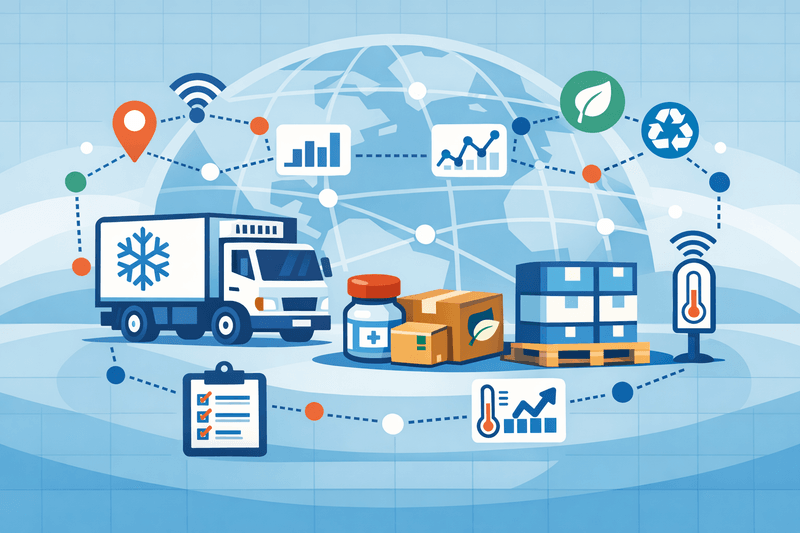
Cold chain logistics in 2026 is shaped by five converging trends: real-time IoT visibility, predictive analytics, decarbonization, standards evolution, and data integration. These developments are creating both operational and regulatory impacts across pharmaceutical, food, and biotech supply chains.
Background
The global cold chain logistics market is projected to grow from USD 435.8 billion in 2025 to USD 500.3 billion in 2026, driven by demand from pharmaceuticals, food safety regulations, and e-commerce grocery delivery .1Cold Chain Logistics Market Size & Insights Report [2026-2035] Real-time monitoring and digital traceability are becoming critical as temperature-sensitive shipments increase, particularly for vaccines and biologics, where minor deviations carry significant risks. Regulatory scrutiny and sustainability requirements further heighten these demands.2Cold Chain Logistics in 2026: 5 Trends Reshaping Temperature-Controlled Supply Chains | CXTMS
1. IoT-Driven Real-Time Visibility and Predictive Analytics
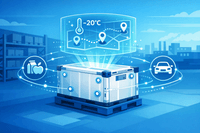
Operators now rely on continuous monitoring of temperature, humidity, and location using IoT sensors, moving away from traditional spot checks. Predictive analytics are being used to anticipate temperature excursions, enabling automated alerts and pre-emptive actions.2Cold Chain Logistics in 2026: 5 Trends Reshaping Temperature-Controlled Supply Chains | CXTMS For pharmaceutical shipments, such monitoring often supports compliance with GDP (Good Distribution Practice) requirements and can influence access to high-value contracts.2Cold Chain Logistics in 2026: 5 Trends Reshaping Temperature-Controlled Supply Chains | CXTMS
2. Sustainability and Decarbonization in Cooling Operations
Refrigeration units in transport can account for up to 40% of vehicle emissions, leading operators to adopt e-TRUs, solar-assisted refrigeration, advanced insulation, and route optimization to cut carbon output and spoilage.2Cold Chain Logistics in 2026: 5 Trends Reshaping Temperature-Controlled Supply Chains | CXTMS In warehousing, companies are increasingly using natural refrigerants such as CO₂ and ammonia, while energy-efficiency measures, including higher frozen storage temperatures (e.g., -15 °C), can reduce energy costs by 20-30%.3Refrigerated E Commerce Logistics: 2026 Guide to Cold Chain Success - tempk
3. Pharma Cold Chain Complexity and Packaging Innovation
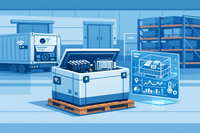
The growth of ultra-cold therapies (e.g., mRNA, cell, and gene therapies) is increasing demand for validated, multi-modal packaging that maintains temperatures below -80 °C. Innovations include packaging with vacuum-insulated panels, phase-change materials, and digitally enabled shippers.4Trends in Pharmaceutical Cold Chain Logistics Packaging The pharmaceutical cold chain packaging market is expected to grow from USD 6 billion in 2025 to approximately USD 6.57 billion in 2026, reflecting rising biologics and vaccine distribution.4Trends in Pharmaceutical Cold Chain Logistics Packaging
4. Smarter Last-Mile and Automation
The growth of e-commerce and DTC deliveries in food and pharma is intensifying last-mile delivery challenges. Solutions now include refrigerated smart lockers, reusable insulated containers, micro-fulfillment centers, and dynamic routing optimized for factors like traffic and weather.2Cold Chain Logistics in 2026: 5 Trends Reshaping Temperature-Controlled Supply Chains | CXTMS Automation through AMRs and AS/RS systems is producing considerable efficiency gains in cold storage operations.3Refrigerated E Commerce Logistics: 2026 Guide to Cold Chain Success - tempk
5. Integrated Data Ecosystems and Standards
Cold chain operations are integrating data from TMS, WMS, IoT platforms, and predictive systems through API-driven architectures and standardized formats. Blockchain and digital twins are being implemented to improve traceability and supply chain transparency.2Cold Chain Logistics in 2026: 5 Trends Reshaping Temperature-Controlled Supply Chains | CXTMS Regulatory frameworks are advancing, with stricter standards on electronic trackability, structured data, and thermal control in food logistics.5Trends already redefining cold chain logistics in 2026
Outlook
Implementation challenges differ by operator size, with smaller and mid-sized firms experiencing inefficiencies due to fragmented networks.1Cold Chain Logistics Market Size & Insights Report [2026-2035] ROI is becoming clearer as improvements in temperature control lower spoilage and operating costs, though initial investments in IoT and automation remain substantial. Industry organizations such as GCCA are increasing efforts around standards, certification, and advocacy for business-friendly regulation.6VOLUME ONE, ISSUE ONE | 2026
These five trends are redefining temperature-controlled logistics in 2026, requiring stakeholders in pharma, food, and biotech to adapt operationally, technologically, and institutionally for resilience and compliance.