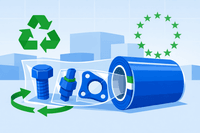
Honeycomb paper protective packaging is advancing from limited trials to broader adoption in automotive spare-parts logistics across Europe. This shift is driven by preparation for the EU's enhanced Extended Producer Responsibility (EPR) mandates and the Packaging and Packaging Waste Regulation (PPWR), which take full effect in August 2026. Industry sources note increased interest from OEMs and logistics providers in honeycomb carton liners, pallet wraps, and interior packaging due to their strength-to-weight ratio, recyclability, and cargo protection, which helps reduce freight voids.
Background
The EU's PPWR (Regulation (EU) 2025/40), effective since February 2025 and enforceable from 12 August 2026, sets mandatory requirements for packaging minimization, recyclability thresholds, bans on certain materials (including PFAS), recycled-content quotas, and stricter EPR obligations for packaging producers and users1PPWR Compliance Guide 2026: EU Packaging Requirements & Deadlines. Transport packaging, covering industrial and protective uses, falls under the PPWR's scope and must adhere to new weight and volume reductions, eliminate unnecessary protective materials, and facilitate take-back and reuse systems2PPWR and automotive logistics: How EU packaging rules will transform supply chains by 2026.
The global market for paper-based honeycomb transit packaging is projected to reach USD 2.6 billion by 2036, with the automotive sector currently representing 28.6 percent of demand, especially for engine components, metal castings, and precision assemblies3User | times-online.com - Paper-Based Honeycomb Transit Packaging Market Forecast 2026-2036: Global Market to Reach USD 2.6 Billion by 2036 at 8.0% CAGR. In Europe, honeycomb structures have cut plastic use by up to 40 percent and reduced weight by up to 15 percent in interior panel applications4Paper Honeycomb Market Size | Forecast 2026 To 2035.
Details
Industry testing shows that honeycomb packaging offers improved crash protection for fragile spare parts, reduces total packaging weight, and simplifies end-of-life processing through recyclability. Major logistics providers report increasing demand from regional distributors and OEM spare-parts handlers seeking solutions aligned with PPWR requirements.
Analysts note that deployment is challenged by supply infrastructure and scale limitations. Concerns include compatibility with automated packaging lines, initial costs for adapting corrugators or sourcing new material, and the need for recyclability certifications and traceability features-such as harmonized labeling or QR-code integration in preparation for PPWR Digital Product Passport requirements5The Complete Guide to PPWR Compliance (Regulation EU 2025/40).
Germany's specific EPR rules add complexity. Companies must register with the LUCID system, coordinate with dual recycling systems, file volume declarations, and ensure packaging aligns with both the German Packaging Act (VerpackG) and EU regulations6EPR Packaging Regulations 2026: EU Guide by Country | Eldris.
Outlook
Ahead of August 2026, packaging and supply chain professionals are expected to ramp up pilots of honeycomb protective packaging, focusing on total cost-of-ownership factors such as material sourcing, conversion expenses, freight efficiency, and recycling rates. Aligning supplier standards, certifications, and label integration will be critical for meeting operational and regulatory requirements under forthcoming PPWR and EPR mandates.