Automotive spare-parts packaging is shifting toward biaxially oriented polyethylene terephthalate (BOPET) films as OEMs and tier-one suppliers seek materials that combine mechanical durability with regulatory-compliant recyclability. The transition is accelerating as the European Union's Packaging and Packaging Waste Regulation (PPWR) takes broad effect from August 12, 2026, compelling supply chains operating in or exporting to the EU to audit and redesign packaging structures.
Background
The EU's PPWR-published as Regulation (EU) 2025/40 in the Official Journal on January 22, 2025 and entered into force on February 12, 2025-covers all packaging and packaging waste regardless of material or industry sector. The regulation mandates that all packaging placed on the EU market be recyclable by 2030, with plastic packaging required to incorporate increasing minimum levels of post-consumer recycled content by that same year. It supersedes the previous Packaging and Packaging Waste Directive 94/62/EC and, critically, applies to transport and industrial packaging categories that include automotive spare-parts wraps, protective overwraps, and multi-component laminate pouches widely used in aftermarket logistics.
The automotive aftermarket is a material-intensive environment. Spare-parts packaging must withstand vibration stress, temperature cycling, and long-distance transit across multiple customs jurisdictions-performance demands that have historically favored heavier, multi-layer laminates incorporating aluminum foil or nylon. Those structures present well-documented recyclability challenges, as laminated or coated film forms are not yet integrated into widespread recycling streams in many markets, according to market analysts.
Details
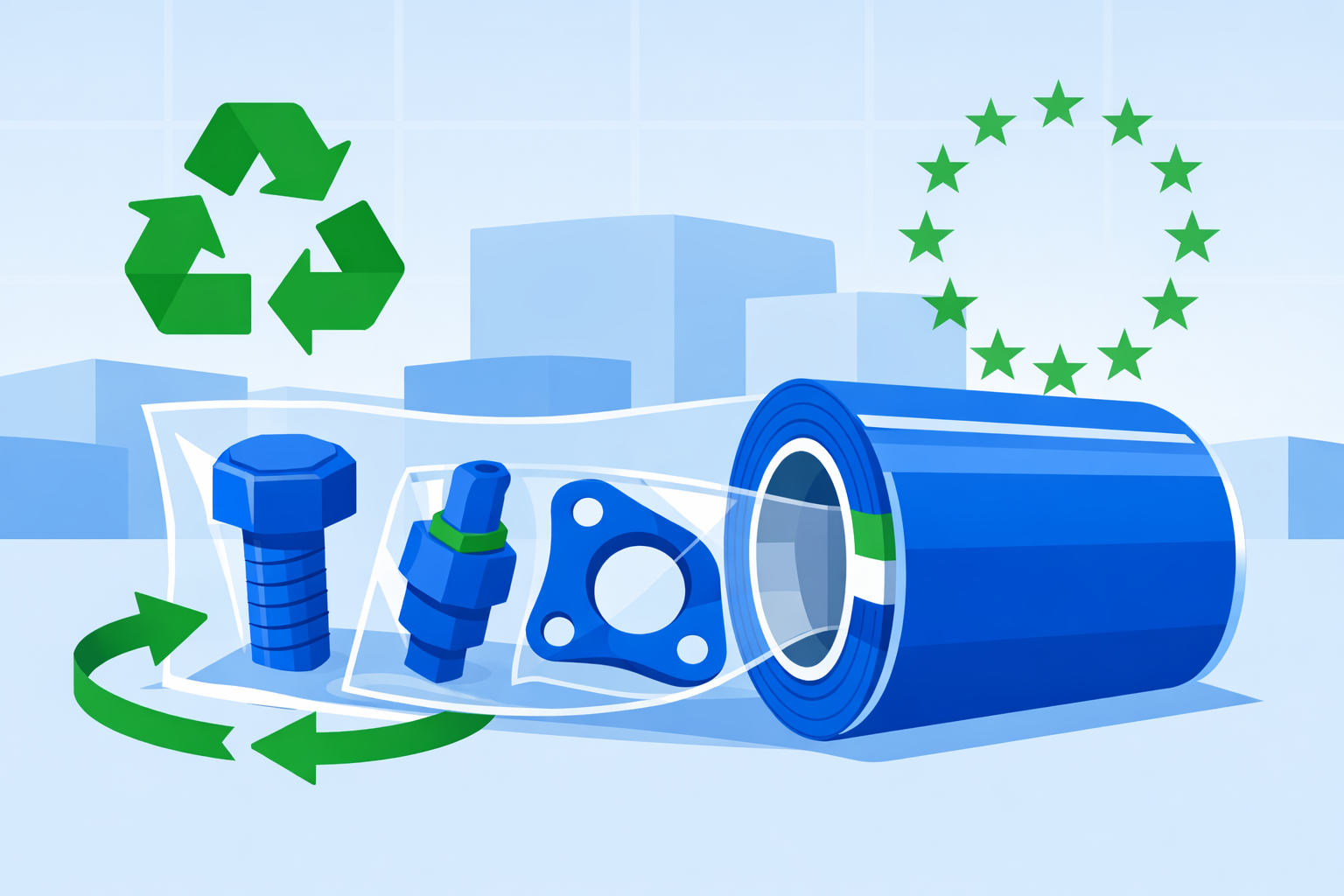
BOPET film is produced by biaxially stretching polyethylene terephthalate resin in two directions, a process that enhances tensile strength, dimensional stability, thermal resistance, and gas barrier properties. With a tensile strength of approximately 200 MPa and thermal stability up to 150°C, BOPET films match the rigors of automotive parts packaging, including wiring harness wraps, acoustic dampening laminates, and protective film-on-film pouches for precision components.
From a market standpoint, the global BOPET films market was valued at USD 10.49 billion in 2024 and is forecast to reach USD 13.22 billion by 2029, at a compound annual growth rate of 4.7%, according to ResearchAndMarkets. The broader BOPP and BOPET films combined market was estimated at USD 26.94 billion in 2025 and is expected to reach USD 28.72 billion in 2026, according to 360iResearch. Asia-Pacific accounts for approximately 43.9% of total BOPET market share, valued at USD 4.4 billion in 2024, reflecting the region's dominance in both film manufacturing and automotive parts supply, according to Market.us data.
For spare-parts packaging, BOPET's competitive advantage over traditional multi-layer laminates lies partly in the commercialization of mono-polymer and high-barrier single-substrate structures. Manufacturers are scaling up production of mono-polymer BOPET variants that streamline recycling streams while delivering mechanical properties comparable to traditional multilayer structures, according to 360iResearch. One commercially available example-Flex Films' F-UHB-M grade, manufactured at the company's Kentucky facility-moves converters from a four-ply laminate structure incorporating aluminum foil to an easier-to-recycle three-ply laminate structure without compromising barrier performance. The film achieves oxygen and moisture barrier values of 0.1 cc/m²-day and 0.1 g/m²-day respectively, according to the company.
However, recyclability claims require scrutiny in a cross-border context. While BOPET is chemically recyclable as a PET-based material, its integration into actual collection and sorting infrastructure remains uneven across EU member states and key automotive supply corridors in North America and Asia. The production process for BOPET is energy-intensive, and integration of the film into recycling streams is not yet widespread, particularly in laminated or coated forms, noted Market Research Future analysts. The PPWR's forthcoming Design for Recycling (DfR) criteria, which the European Commission must adopt by January 2028, will determine how recyclability performance grades apply to film-based industrial packaging-adding a further compliance variable for packaging engineers currently selecting materials for 2026 contracts.
Cost dynamics are also shifting. Lightweight BOPET structures reduce volumetric weight and, according to Global Growth Insights data, lightweight packaging formats have reduced logistics costs by up to 21% in comparable flexible packaging applications. For automotive parts distributors managing cross-border shipments, that reduction represents a tangible trade-off against current film premiums relative to conventional laminates.
Outlook
The August 2026 PPWR application date is a near-term forcing function. Companies placing packaging on the EU market-including non-EU automotive parts exporters-must meet new requirements on packaging design, sustainability, and labeling by that date, with conformity assessments and EU declarations of conformity required before products reach the market. Further DfR criteria expected by 2028 will refine recyclability grading in ways that could re-rank materials currently considered compliant. Packaging engineers and procurement leads in the automotive aftermarket will need to validate film structures against evolving delegated acts, not solely against current recyclability declarations from film manufacturers. Related developments in recycled-content benchmarks for automotive packaging-already being set by EU and North American regulators-are covered in this publication's earlier analysis of interim recycled-content targets for automotive packaging.