Early pilot programs deploying modular AI-powered packaging lines in automotive spare-parts warehouses have delivered 20%-30% throughput improvements, according to industry sources. Pilots conducted at OEM and tier-supplier sites in Europe beginning late 2025 tested adaptive robotic arms, smart sensors, and digital-twin simulations to streamline part-only packaging and reduce cycle times, sources involved in the deployments reported.
Background
Automotive warehousing faces increasing challenges from high SKU variety, labor shortages, and the need for greater precision in spare-parts logistics. Industry benchmarks indicate that dynamic warehouse technologies-including AI-driven packing systems and warehouse execution systems-can deliver throughput gains of 20%-70%, depending on automation complexity and pilot scope. Return on investment is typically realized within 12 to 24 months, according to implementation analysts and logistics publications. These systems leverage modular architectures, allowing gradual scaling and integration with existing Warehouse Management Systems (WMS).
Details
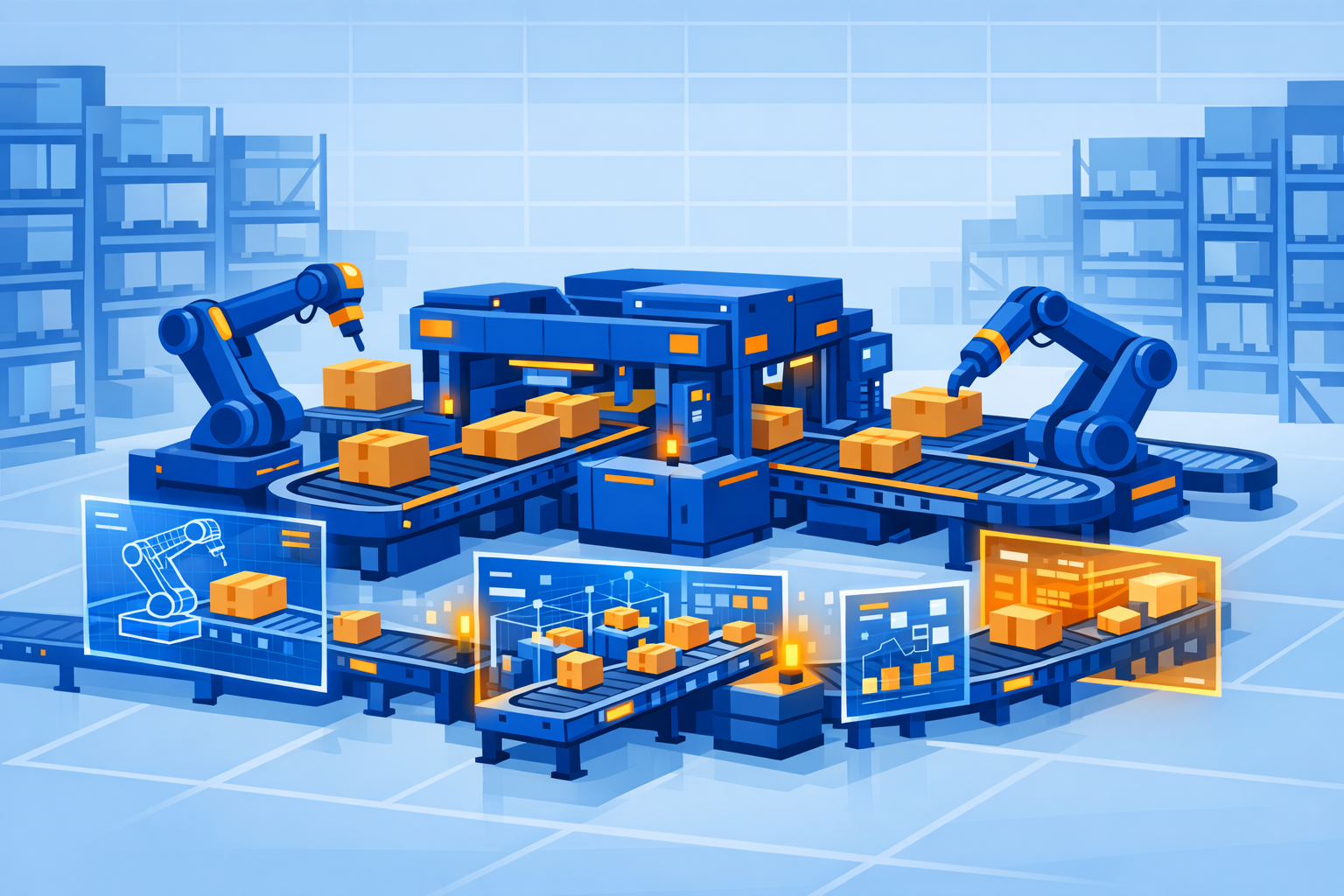
Pilots integrating modular robotic packaging modules with AI-controlled cartonization and sensor feedback achieved sharp reductions in cycle times. One pilot reported a approximately 25% drop in cycle time and throughput gains in the 20%-30% range, with improvements sustained over a 90-day period. Adaptive right-sizing algorithms selected optimal box sizes, while real-time sensor data adjusted packing flows dynamically.
Implementers deployed digital-twin simulations to model packaging line performance before live rollout. These simulations ingested sensor data, including item dimensions, belt speed, and robot movement, to predict bottlenecks, validate synchronization, and inform deployment strategy. This method aligns with industrial packaging case studies where digital twins increased line availability by more than 20%, reduced setup times by 30%, and cut waste by about 15% over several months.
Capital expenditures for modular lines aligned with broader warehouse automation trends. A configuration with robotic arms, sensory arrays, and AI-driven cartonization cost in the mid-six-figure range per segment. One operator estimated total deployment-including integration, training, and digital-twin development-at the lower end of the $0.9 million to $2 million range typical for multi-robot systems. Payback timelines matched the 12-24 month windows seen in similar automation projects.
Integration was a primary challenge, especially regarding legacy WMS compatibility and data standardization. Experts highlighted that AI performance depended on structured inventory and order data and cross-functional coordination for system optimization. However, modular approaches supported phased implementation by warehouse zone, reducing disruption and enabling metrics-based expansion.
Outlook
Wider rollouts are under evaluation by several OEMs and tier suppliers in Europe. Operators aim to expand modular AI lines to additional zones over the next 6-12 months, pending further benchmarking of throughput, error rates, and total cost of ownership. If pilots maintain expected gains, broader adoption could shift spare-parts warehousing toward adaptive automation and virtual modeling for efficient, scalable packaging operations.