US automotive OEMs are amending supplier contracts to comply with 2026 state-level Extended Producer Responsibility (EPR) mandates that increase recycled-content requirements in packaging.
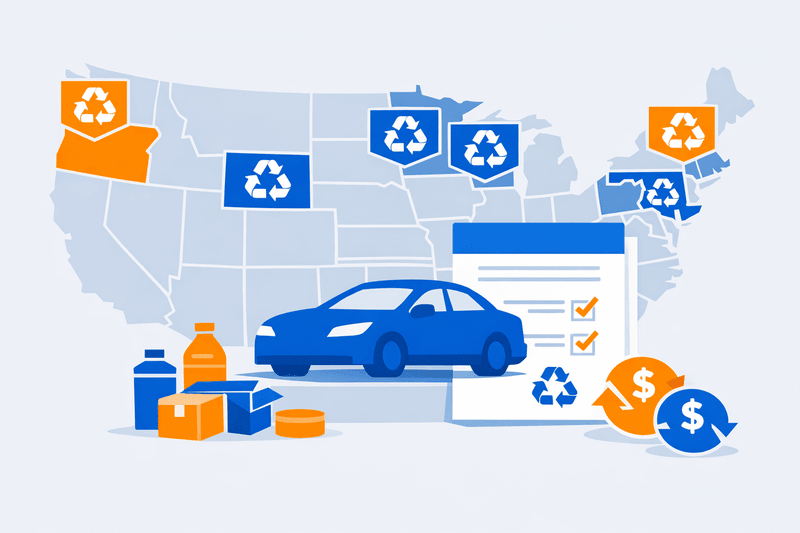
Multiple U.S. states-including California, Colorado, Maine, Maryland, Minnesota, Oregon, and Washington-have enacted packaging EPR laws. Full reporting cycles begin in 2025 and 2026, with fee structures linked to recyclability and recycled content. This regulatory shift is driving auto manufacturers to restructure supplier terms, according to EY. The diverse requirements across states are prompting OEMs to modify material sourcing and contract language to ensure compliance while maintaining packaging standards and supply chain continuity.1Extended producer responsibility and packaging strategy | EY - US
Background
State packaging EPR laws in the U.S. impose obligations such as producer registration, reporting, fee payments, and eco-modulated fees based on sustainable packaging design. For example, California's SB 54 requires all packaging to be recyclable or compostable by 2032, with reporting starting in 2025 and fees in 2027. Colorado's EPR program launches January 1, 2026, with supplier registration and fee invoicing also set for early 2026. Maine, Washington, Maryland, and Minnesota have comparable timelines for registration and fee obligations, reflecting a more stringent compliance landscape.2Whats driving sustainable Packaging in the United States in 2026
Details
OEMs operating in several states encounter complex compliance processes, as each jurisdiction defines "covered materials," exemptions, reporting methods, and fee structures differently. Packaging with higher recyclability or post-consumer recycled (PCR) content can reduce EPR fees, while non-compliant materials may incur surcharges. These requirements are increasingly factored into contract renegotiations with tier-1 and tier-2 suppliers, with OEMs demanding defined material declarations, recycled-content percentages, and audit capabilities.1Extended producer responsibility and packaging strategy | EY - US
Industry sources report that the Circular Action Alliance (CAA), a producer responsibility organization, will issue fee invoices in January and July 2026 for states such as California and Colorado, based on 2025 supply data. This timeline is prompting OEMs to complete material reviews and supplier negotiations in advance of invoicing.3News PRODUCT | Extended PRODUCT | Extended produce
OEMs are also assessing costs associated with eco-modulated fee structures. States that incentivize recycling or recycled content allow packaging with higher PCR levels to lower compliance expenses. Conversely, reliance on virgin or hard-to-recycle materials can increase fees. These dynamics are leading OEMs to secure contractual assurances that packaging components, including coatings and adhesives, meet recyclability and PCR standards.4Packaging Costs In 2026: Key Factors Explained
Outlook
OEM-supplier contract renegotiations are expected to continue through mid-2026 as automakers align packaging specifications with state-specific EPR requirements and fee schedules. As additional states finalize EPR policies, these cost and compliance pressures may extend into other industries. Future cost projections and supply chain resilience will rely on transparent recycled-content commitments and adaptable procurement strategies.