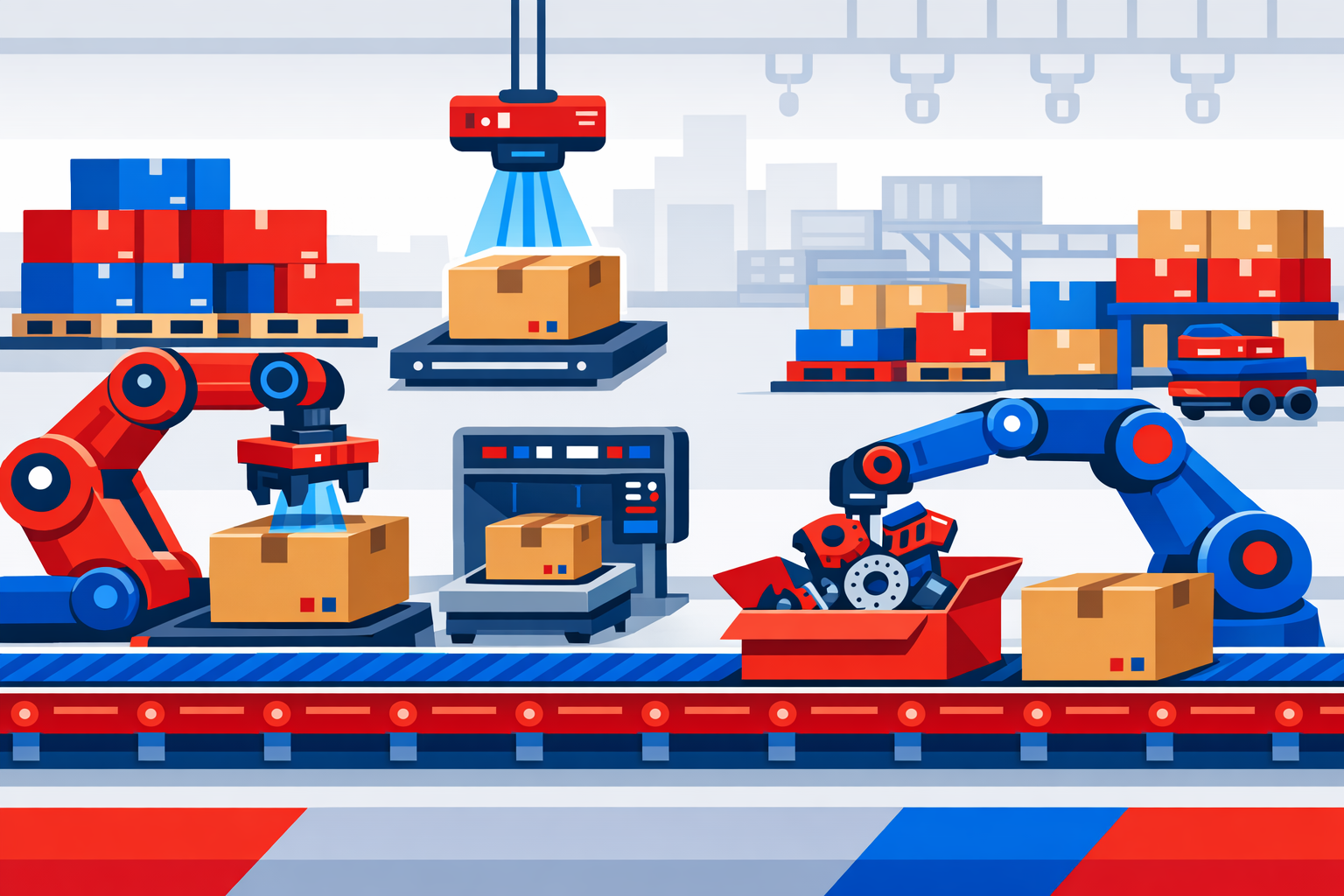
Automotive spare-parts distributors in North America and Europe are accelerating investments in AI-powered packaging and robotic handling systems as high SKU variability, tightening delivery windows, and looming regulatory deadlines converge on the sector. Brightpick, a provider of AI-powered robotic automation, announced a strategic partnership with NAPA in February 2026 to deploy more than 100 AI robots across distribution centers, following a successful pilot that began in 2025. The deal signals that in-line AI packaging and fulfillment technology-once confined to e-commerce-is gaining traction in the automotive aftermarket.
Background
Spare-parts distributors are increasingly investing in automation to ease labor requirements and improve picking efficiency and accuracy in order fulfillment. The automotive aftermarket presents a distinctive packaging challenge: NAPA alone operates nearly 6,000 auto parts stores and more than 16,000 service and collision centers across the United States, with distribution centers carrying approximately 800,000 parts, accessories, and supplies. Parts range from small gaskets to heavy brake rotors, each requiring different protection levels and box configurations.
According to PMMI's 2026 report, "Building an AI Advantage in Packaging Equipment," packaging and processing manufacturers are investing in smarter equipment, automation, and sustainable solutions to address labor shortages, supply chain challenges, and rising customer expectations. PMMI reports that AI applications in packaging have expanded significantly over the past two years as solutions have become more affordable and sophisticated.
The broader AI-in-packaging market underscores the scale of adoption. The AI-driven packaging sector was valued at approximately $2.7 billion in 2024 and is projected to reach $6.47 billion by 2034, growing at a compound annual growth rate of 10.28%, according to market research from Towards Packaging.
Details
The first NAPA-Brightpick project will include more than 100 robots to support high-volume processing, marking Brightpick's first automotive-sector customer and its largest U.S. customer to date, according to Jan Zizka, co-founder and CEO of Brightpick. "We're excited to expand our use of Brightpick automation technology with this partnership," said Justin Ducharme, EVP of Distribution and Logistics at NAPA. "This collaboration supports our goal of continuously improving how we serve our customers."
Vision-guided robotics are central to these deployments. Logistics and warehousing has emerged as the second-largest vertical for computer vision deployment, with applications including automated package dimensioning and weighing, high-speed barcode and label reading, and damage detection for incoming shipments. AI performs particularly well in high-mix, low-volume environments where manual reprogramming would otherwise hinder agility-a description that fits most auto-parts warehouses handling hundreds of thousands of SKUs.
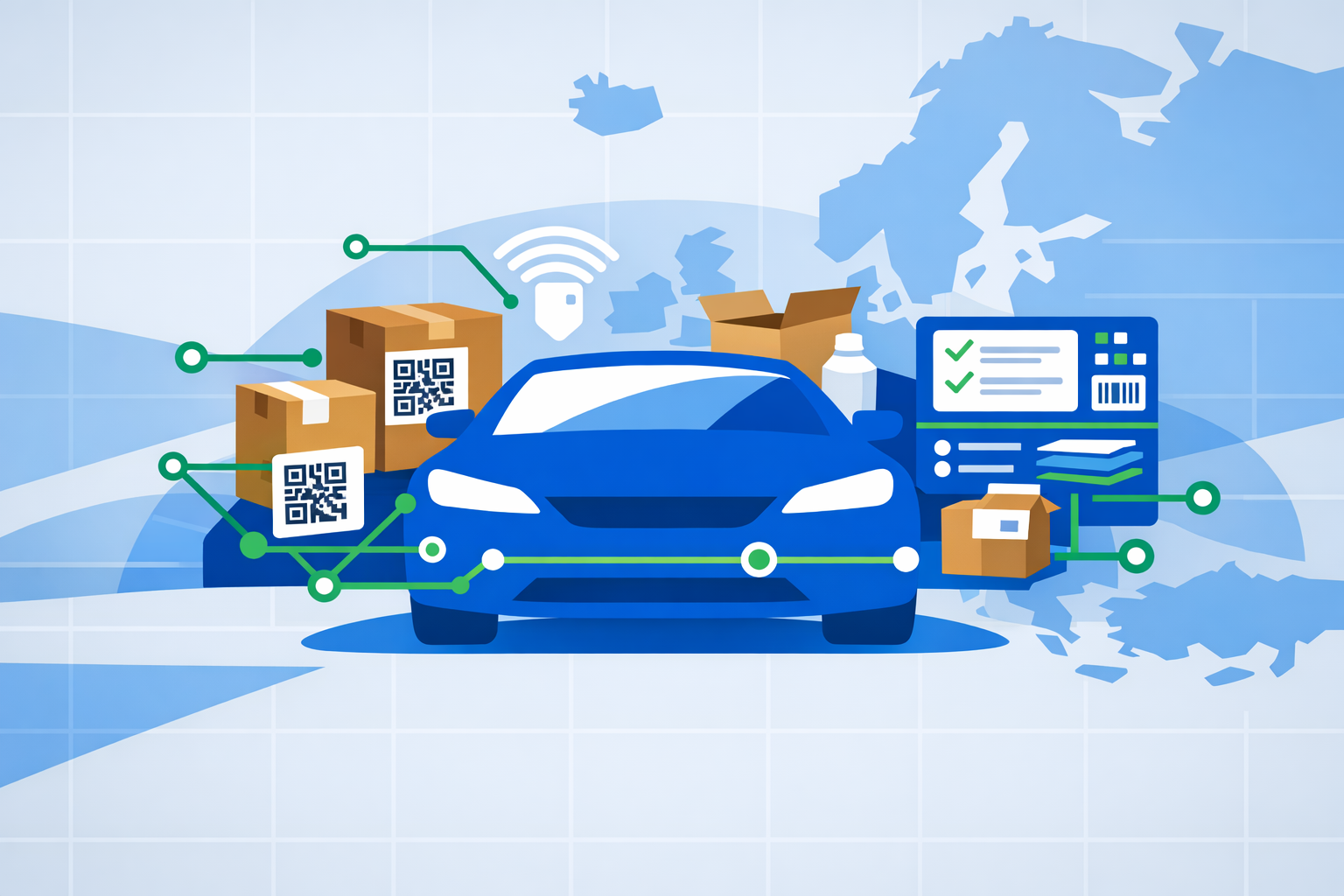
Regulatory pressure is compounding the urgency. The EU's Packaging and Packaging Waste Regulation (PPWR) will generally apply from August 12, 2026, requiring all packaging placed on the EU market to meet recyclability, labeling, and conformity assessment requirements. Lubomir Kroupa, COO of an environmentally focused packaging firm, noted that from August 2026, companies "will have to confirm to our customers that the packaging complies with the requirements," though conformity proof details remain unresolved. Under the EPR framework, producers bear financial responsibility for packaging's entire lifecycle, with fees modulated by recyclability classification starting in August 2026. In the United States, EPR programs are advancing at the state level alongside the PPWR and California's SB 343 redefinition of recyclability claims.
AI-driven packaging optimization directly supports compliance by right-sizing cartons, reducing void fill, and selecting recyclable materials in real time-capabilities that also lower dimensional weight charges and material costs.
Outlook
High implementation costs remain a restraint, as integrating AI technologies into packaging processes requires substantial investment in infrastructure, software, and skilled personnel. "Manufacturers are focused on building operations that are more efficient, resilient, and adaptable," said Jorge Izquierdo, vice president of market development at PMMI. "The trends emerging across packaging and processing reflect a clear industry priority: doing more with less while maintaining quality, safety, and sustainability." With the PPWR's August 2026 enforcement date approaching and U.S. state-level EPR obligations mounting, auto-parts distributors that delay packaging automation face rising compliance costs and competitive disadvantage.