Converging regulatory pressure from the European Union and a growing patchwork of U.S. state laws is driving automotive manufacturers and tier-one suppliers to accelerate adoption of recyclable, bio-based, and circular packaging materials across global supply chains.
Background
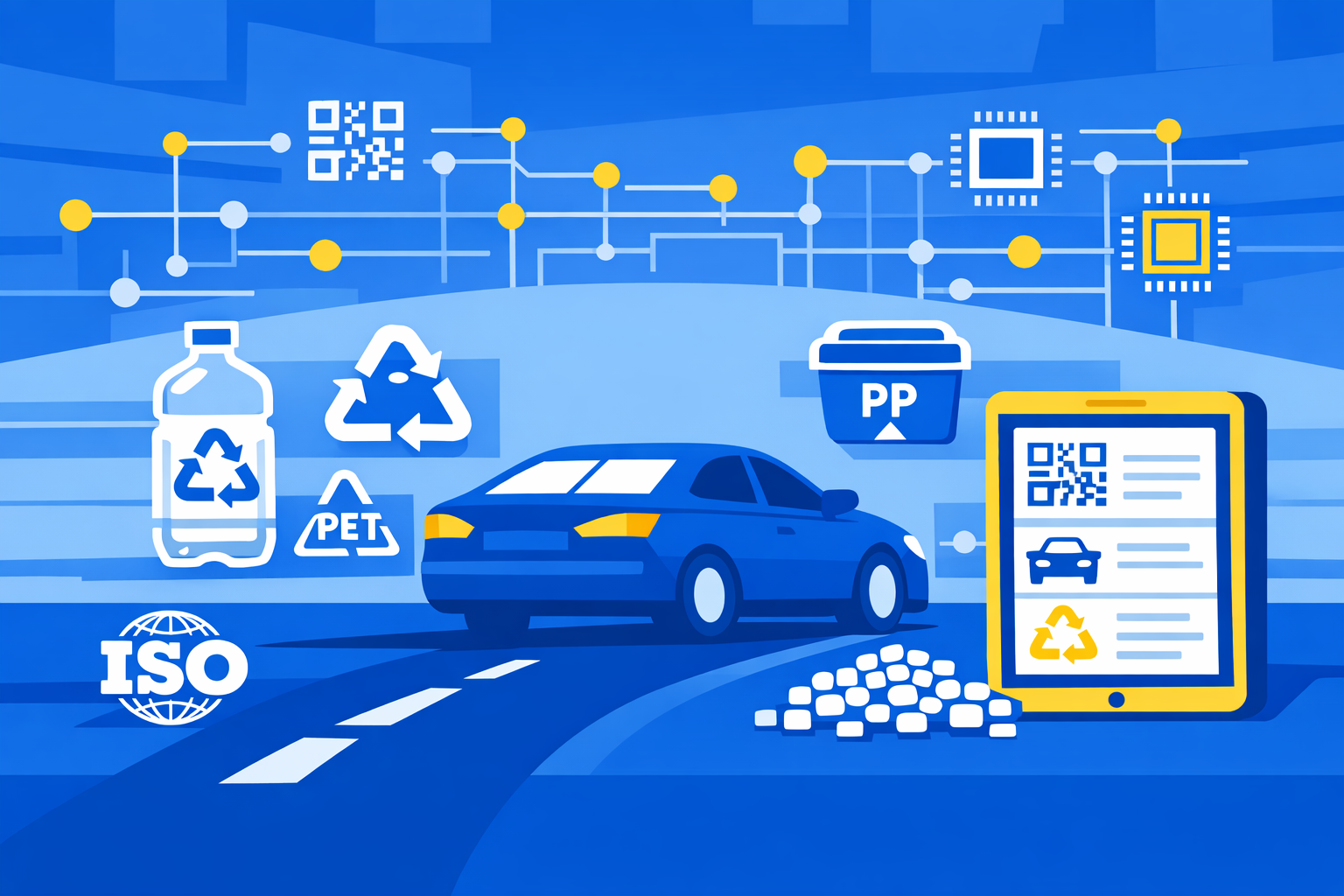
The regulatory landscape tightened significantly in early 2025. The EU's Packaging and Packaging Waste Regulation (PPWR) came into force on February 11, 2025, and is now legally binding. In mid-2025, updated legislative measures took effect under the EU Circular Economy Action Plan and the Sustainable Products Initiative, setting binding requirements for recycled content in plastics, digital product passports for traceability, and design-for-recycling mandates.
In the United States, Extended Producer Responsibility (EPR) frameworks are expanding rapidly at the state level. Oregon's SB 582, effective July 1, 2025, introduced an EPR program requiring producers of packaging, paper products, and food serviceware to fund and manage end-of-life recycling. Minnesota's Packaging Waste and Cost Reduction Act, signed into law in early 2024, targets the environmental and health impacts of packaging materials through reduced volumes and greater use of reusable, recyclable, and compostable options. EPR schemes and plastic taxes are also rendering non-recyclable packaging less viable, creating both pressure and opportunity to innovate.
Details
The material transition is visible at the OEM level. Stellantis plans to use 40% recycled content in vehicle plastics by 2030, partnering with European recyclers to source post-consumer polypropylene and polyamide compounds for non-visible structural parts such as battery trays and underbody shields. Tier-1 supplier Faurecia has developed PP and ABS compounds under its NAFILean and MATTrim brands with up to 50% recycled content and is rethinking seat structures by replacing permanent adhesives with mechanical fasteners to improve recyclability. BASF has introduced chemically recyclable polyamide grades, such as Ultramid Ccycled, which use pyrolysis oil feedstock certified through mass balance, helping OEMs meet recycled content targets without sacrificing component quality.
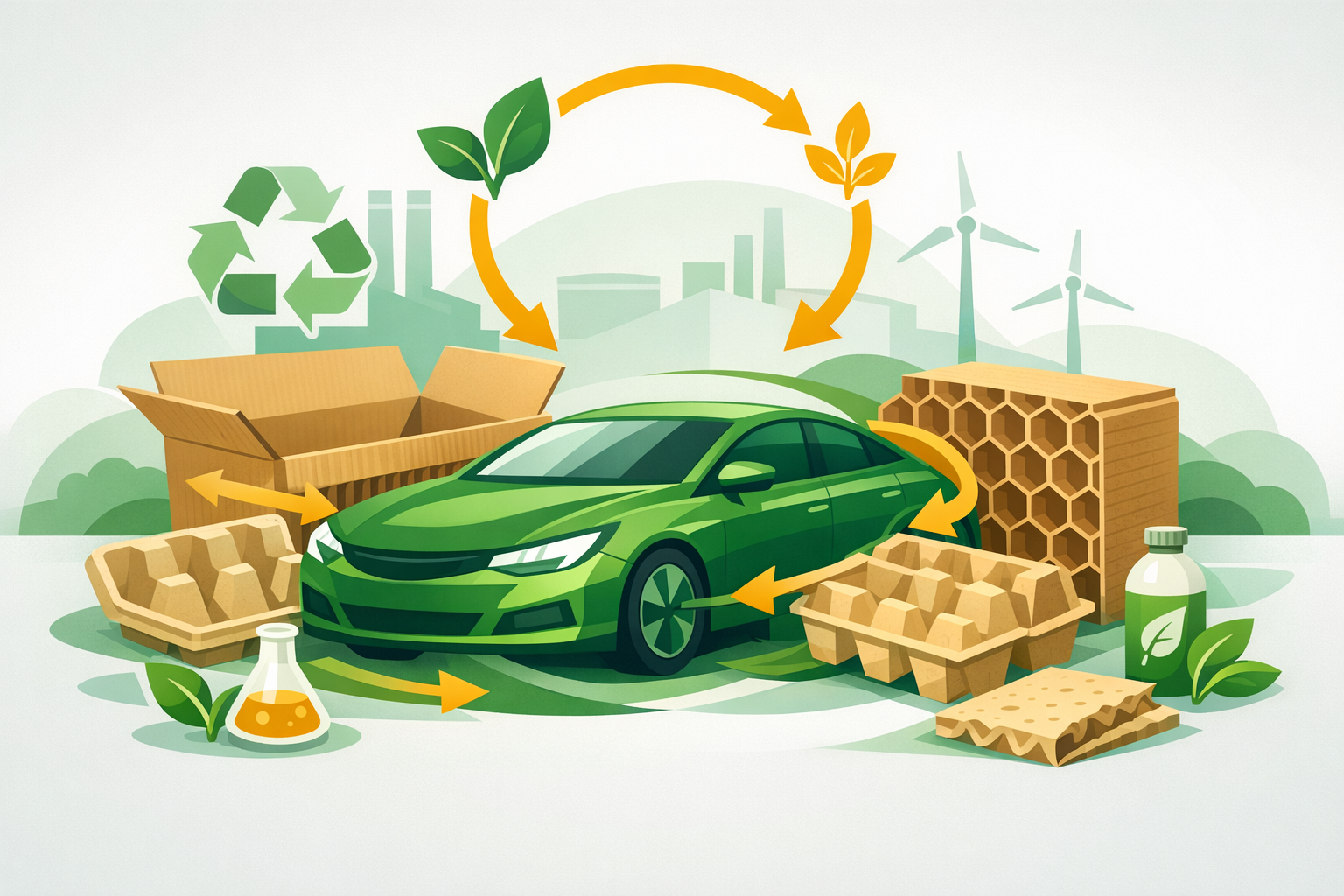
On the packaging side, biodegradable materials-molded pulp, bio-polymers, and agricultural by-products-are being deployed in automotive component transit, reducing landfill waste while providing reliable cushioning. Recyclable paper honeycomb structures and corrugated cardboard have become staples in eco-friendly automotive packaging, offering strong strength-to-weight ratios suited to transporting sensitive parts. Researchers and packaging manufacturers continue to explore new bio-based materials derived from renewable resources such as plant fibers, algae, and agricultural waste, which can decompose in natural environments without leaving harmful residues.
Market forecasts reflect the scale of the pivot. IDTechEx projects a 29.1% CAGR for recycled plastic content and a 25.1% CAGR for bioplastics in automotive applications between 2025 and 2035, though sustainable plastics are expected to account for only 18% of total automotive plastics by 2035-falling short of many automakers' sustainability goals.
Traceability is also becoming a compliance requirement, not merely a best practice. Starting in mid-2025, EU manufacturers must embed detailed material data into components through mandatory digital product passports, listing polymer types, additives, joining methods, and end-of-life handling instructions. Under the PPWR framework, packaging is evolving from a pure logistics element into a regulated part of the value chain, forcing manufacturers to shift from linear models to closed loops.
Cost pressures remain a significant factor. Early fee structures in California and Oregon's EPR programs are considered high by many producers, with California's $500 million plastic mitigation fund expected to push fees higher still. Reusable containers and specialized sustainable packaging can carry higher upfront costs, though life-cycle savings often offset the initial investment.
Outlook
Significant industry-wide action will be needed to accelerate the transition to sustainable plastics, with supply chain collaboration, investment in material innovation, and regulatory support identified as critical. In the U.S., EPR laws are expected to increasingly mandate design-for-recyclability, with incompatible materials such as multi-layer pouches potentially incurring higher fees or facing outright bans. Initiatives such as the Global Impact Coalition's Automotive Plastics Circularity project are fostering cross-sector collaboration, with industry observers noting that without circular plastics, the EV transition risks trading one sustainability problem for another.