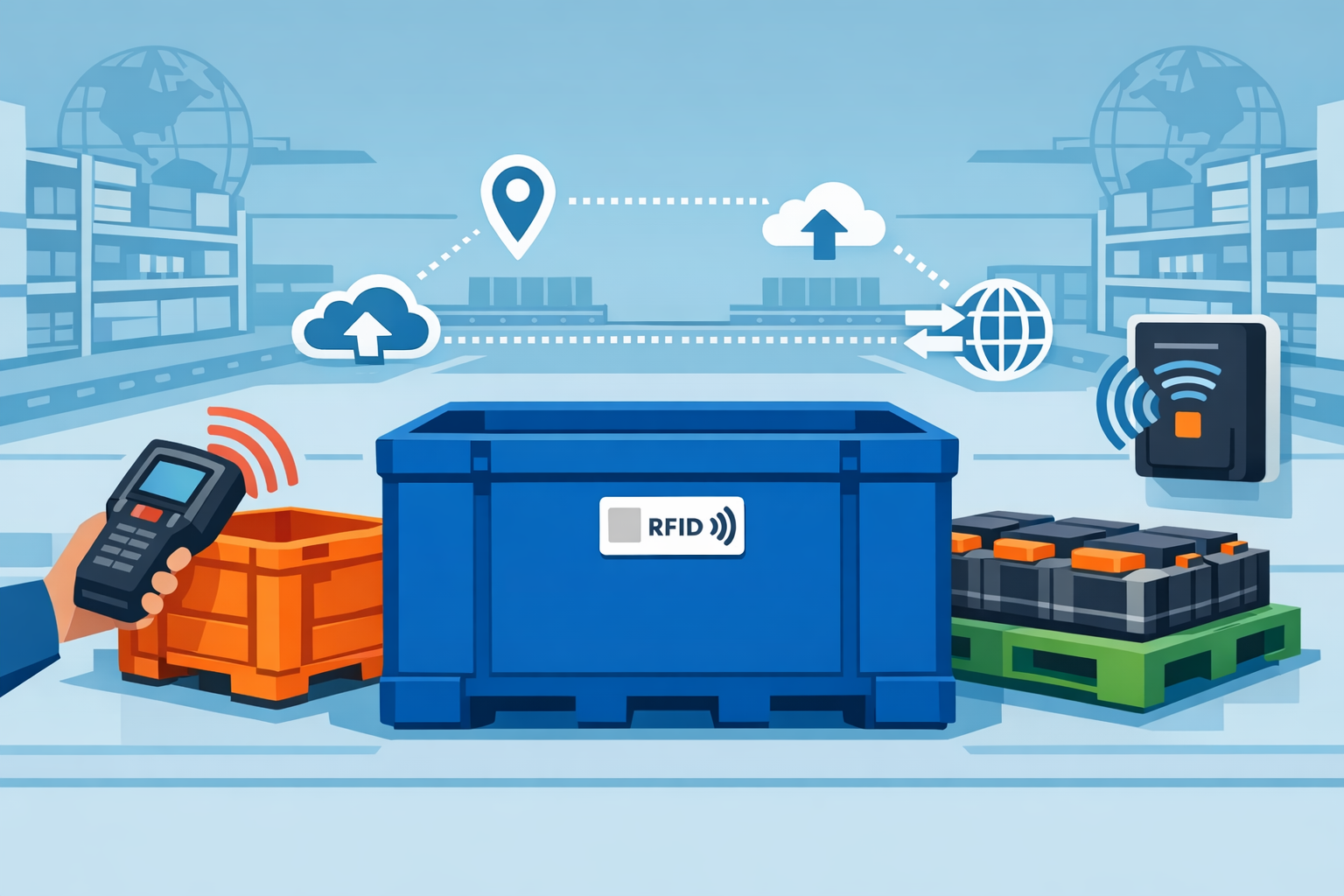
Automakers and tier suppliers are deploying RFID-tracked reusable packaging to secure electric vehicle (EV) battery components, improve visibility, and support sustainability. Recent implementations target real-time tracking, container condition monitoring, waste reduction, and streamlined cross-border battery logistics.
Background
The shift to electric vehicles has increased pressure on OEMs to secure complex, high-value battery supply chains. Packaging has evolved into a strategic asset, protecting components and reducing environmental impact. Industry 5.0 frameworks emphasize resilience and sustainability in packaging operations. RFID technology bridges physical assets with digital tracking systems, supporting this transition.{{cite:}}{{cite:}}
Details
Automakers are integrating RFID-enabled reusable transport items, such as crates and pallets, to enhance supply chain visibility and reduce packaging waste. Real-time location systems (RTLS) using RFID have lowered loss rates of reusable packaging assets, estimated by the industry at 5-10% annually.{{cite:}} These systems automate inventory management and strengthen accountability across supplier networks, supporting leaner logistics.{{cite:}}
Cummins has implemented RFID-tagged reusable plastic containers in its U.S. operations, tagging over 360,000 packaging pieces and installing readers at key supply chain points. The initiative boosts visibility from suppliers through distribution and is projected to eliminate about 84 million pounds of single-use packaging waste annually.{{cite:}} The project found that subsidizing technology costs for suppliers increased adoption and extended visibility beyond core facilities.{{cite:}}
Similar RFID-based packaging trials have been conducted for automotive engine components. A European pilot using passive UHF tags and fixed readers tracked engine containers, reduced circulation times, and located losses in real time. Plans are underway to expand tracking to more container types as a result of this success.{{cite:}}
Developments in sustainable RFID technologies are supporting these efforts. Paper-based, plastic-free RFID labels now offer up to 85% smaller environmental footprints and can integrate with current UHF RFID infrastructure.{{cite:}} These technologies align with both the visibility goals and ESG requirements of the EV battery and logistics sectors.
Outlook
OEMs and suppliers increasingly adopting RFID-tracked reusable packaging are generating operational efficiency and sustainability benefits. Challenges remain around international standardization and economic viability for large-scale deployments. Nonetheless, successful pilots indicate RFID-enabled packaging may soon become a standard in EV battery logistics.