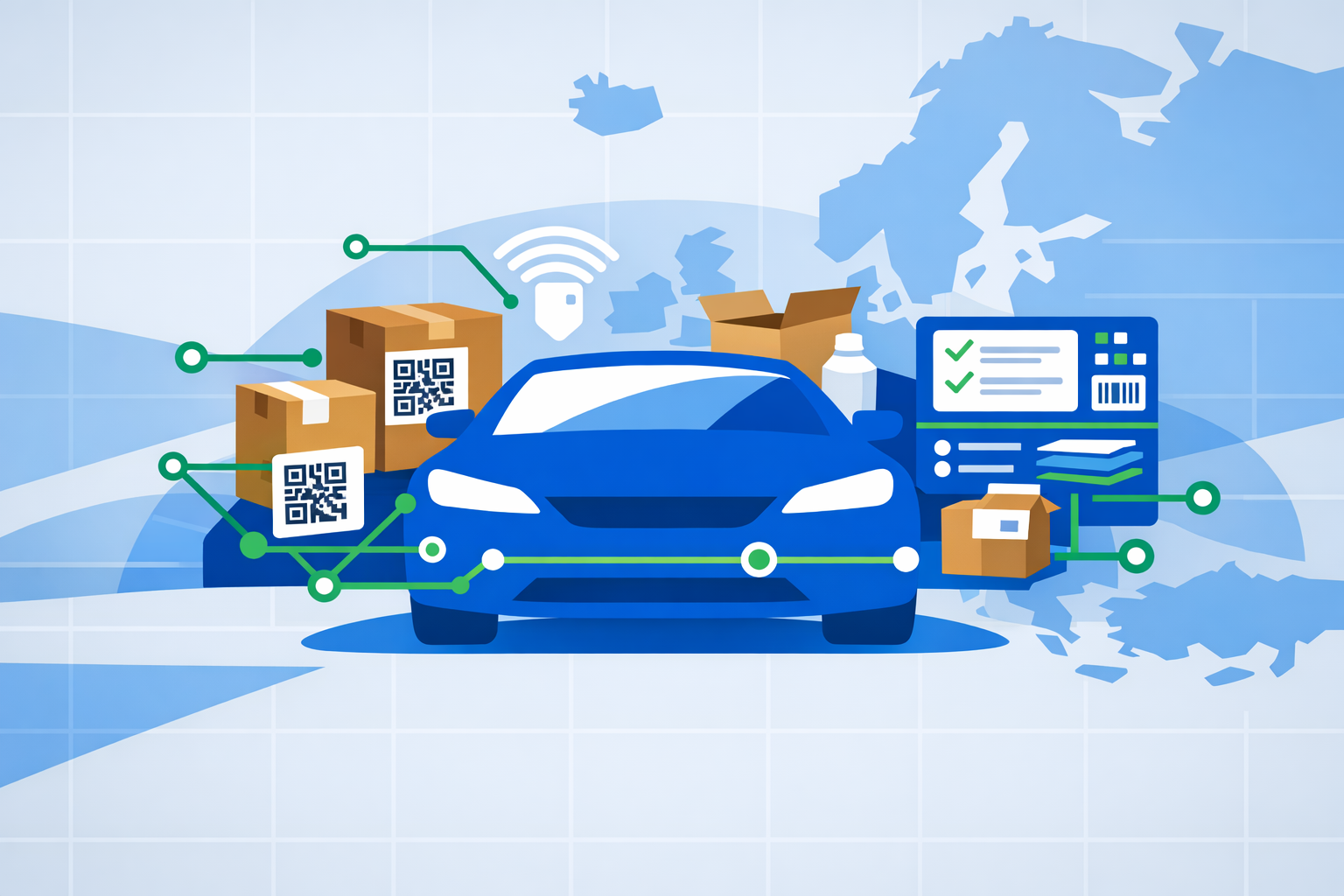
A multi-city pilot program combining electric delivery vehicles, dynamic routing software, and modular reusable packaging has completed an initial test run of zero-emission last-mile delivery for automotive parts, marking one of the more structured efforts to decarbonize a supply chain segment long dominated by diesel vans and courier handoffs.
The CodeZERO initiative - part of the EU's CIVITAS program and funded under the Horizon Europe framework - is a three-year project co-designing sustainable, zero-emission last-mile delivery and return solutions for urban environments. It operates across pilot sites including Antwerp, Milan, Oslo, and Utrecht, with a fifth city recently added to the program's automotive parts logistics component. The program brings together OEMs, parcel consortiums, city authorities, and logistics operators under a shared-use model designed to reduce vehicle idle time, optimize charging at city-designated hubs, and improve delivery reliability during peak hours.
Background
Urban last-mile delivery is among the costliest and most emissions-intensive segments of modern logistics. Last-mile delivery can account for more than 50% of total supply chain costs, while light commercial vehicles - the backbone of last-mile fleets - generate approximately 40% of total logistics sector CO₂ emissions, according to industry analysis. Cities across Europe and North America have responded with increasingly strict access controls: since 2019, the number of low-emission zones in Europe has grown by 40%, with over 320 zones now operating on the continent.
The automotive aftermarket presents a distinct logistical challenge. Sensitive components - including electronic control units, brake assemblies, and temperature-sensitive fluids - require consistent handling conditions during short-range transit between regional distribution points and urban repair shops or dealerships. Cold-chain optimization for automotive parts in the final mile has historically received less attention than pharmaceutical or food logistics. Previous coverage in this publication has examined how OEMs are deploying RFID-enabled reusable packaging for EV battery tracking[1] and smart packaging for spare-parts traceability[2]; the CodeZERO automotive pilot extends that logic into the delivery vehicle layer.
Details
The program's logistics platform uses real-time signals - including live traffic data, weather conditions, and prioritization inputs from dealerships and repair shops - to optimize routing and reduce unnecessary vehicle movements. City-specified charging hubs anchor the fleet's energy management, with shared-use access across consortium members intended to improve asset utilization rates.
On the packaging side, pilot participants are testing modular tote systems designed for reuse across delivery cycles, with return logistics built into the operational workflow. The approach aligns with wider market momentum: electric delivery vans, cargo bikes, and consolidation hubs are being deployed across urban supply chains, while reusable and recyclable packaging formats are gaining traction as part of broader decarbonization strategies, according to market analysis published in late 2025.
Industry participants report that real-time ETA visibility - enabled by the platform's tracking layer - has improved demand signaling for automotive workshops, potentially tightening warranty and maintenance service cycles. The global electric last-mile delivery vehicle market was valued at USD 21.3 billion in 2024 and is projected to reach USD 103.5 billion by 2034, at a compound annual growth rate of 18.3%, according to Global Market Insights, driven in part by tightening urban emissions mandates. In a related development, in 2025, Mitsubishi, Ample, and Yamato launched a commercial EV pilot in Tokyo featuring battery-swapping technology on last-mile fleets.
Several city authorities participating in or adjacent to the CodeZERO network are evaluating grants and congestion-charge exemptions for qualifying zero-emission fleets. Cities across the world are implementing zero-emission zones, with benefits including improved air quality and reduced urban congestion, according to the World Resources Institute. The EU's Clean Vehicle Directive similarly requires procurement of clean vehicles through 2030, creating a durable regulatory tailwind for fleet electrification by OEMs and logistics providers.
Outlook
Critics caution that the model's scalability depends on resolving key infrastructure and standardization gaps. Infrastructure availability remains one of the most pressing issues in the transition to zero-emission medium- and heavy-duty vehicles, with recharging large vehicle fleets requiring planning, skilled labor, and often distribution grid upgrades, according to the Global Commercial Drive to Zero initiative. Industry observers also flag the need for cross-brand data-sharing standards that protect intellectual property while enabling the cross-operator visibility required by shared-use fleet models.
McKinsey estimates that total cost of ownership for lightweight commercial battery electric vehicles is expected to reach parity with internal combustion engine vehicles by 2025 in the United States, a threshold that - if sustained - may remove the primary financial barrier to broader fleet procurement. Whether the CodeZERO automotive pilot can demonstrate comparable cost parity in a European multi-city context will be a key variable as OEMs and logistics providers negotiate preferred-partner terms for electrified delivery networks in the quarters ahead.