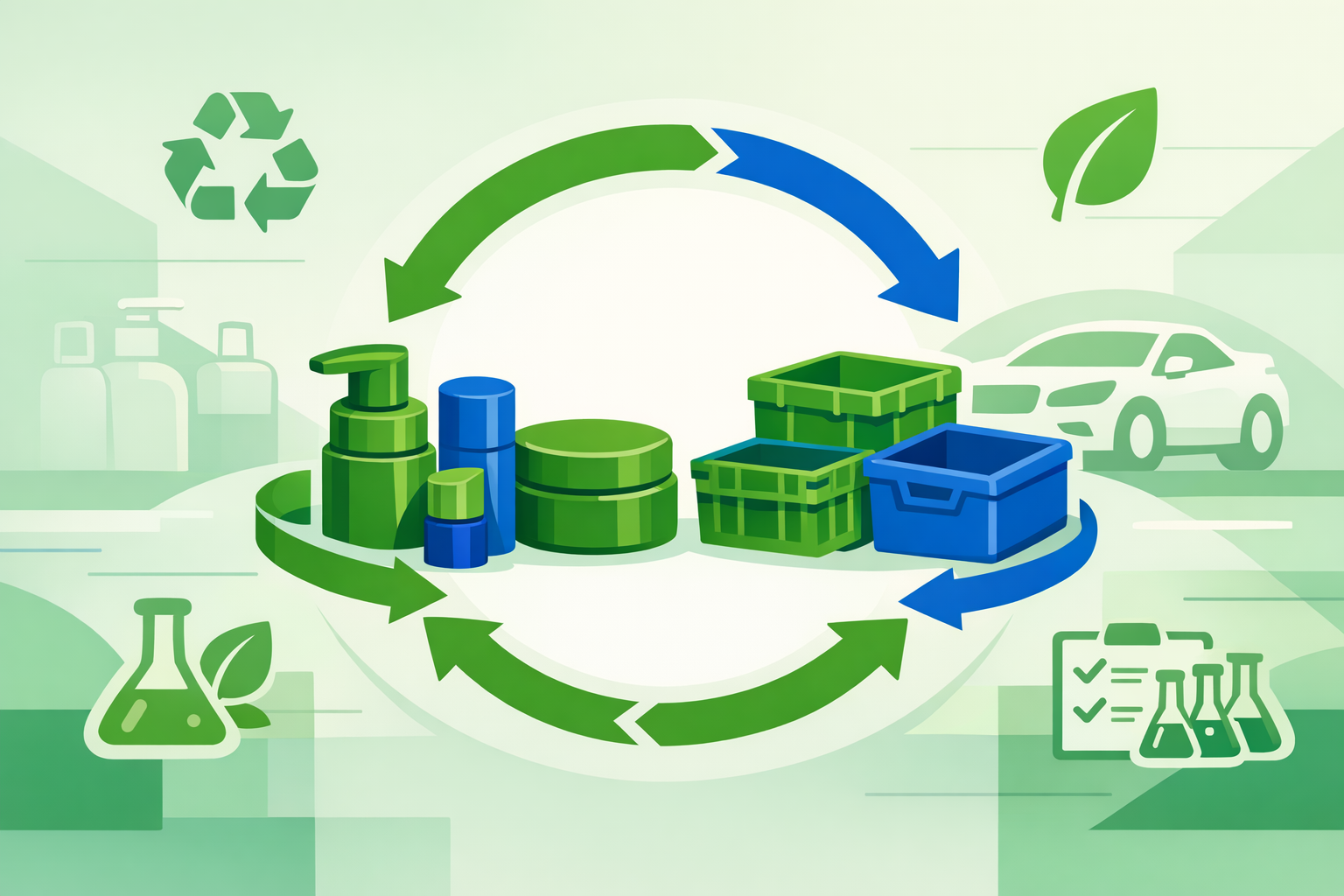
Cosmetics packaging companies Texen and Quadpack are advancing standardised recyclability, potentially influencing automotive packaging infrastructure through materials innovation and unified testing protocols.
Texen and Quadpack, both subsidiaries of PSB Industries, prioritize eco-design and recyclability in beauty packaging. They have developed recycled PP components, adopted bio-based materials, and implemented life-cycle assessment (LCA) tools. These efforts support the introduction of standard recycled PP caps and closures and the use of materials such as Sulapac, aligning with new EU regulations and recyclability frameworks. At the same time, the German Association of the Automotive Industry (VDA) has introduced its own sustainable packaging guidelines under VDA 4560, which address material efficiency and recyclability throughout the supply chain.
Background
Texen's eco-design strategy includes a material library with over 40 sustainable options, including post-consumer recycled plastics, bio-based, and compostable resins, as well as a proprietary LCA tool to support packaging innovation and CSR objectives. The group attained EcoVadis Platinum status and Science-Based Targets validation for CO₂ reduction in 2024, in anticipation of stricter regulation under the EU's Packaging and Packaging Waste Regulation (PPWR), which took effect in February 2025 and mandates design for recycling. Quadpack's 2024 Impact Report highlights shared sustainability goals, including plans to merge Texen and Quadpack sustainability teams beginning in 2025.
The automotive sector has addressed packaging sustainability with the VDA 4560 recommendation, released in January 2025. The guidance promotes sustainable packaging concepts across the value chain, focusing on material efficiency, waste reduction, and recyclability-objectives that parallel beauty packaging eco-design strategies.
Details
Texen's Rose facility manufactures standardised caps and closures using injection-moulded recycled PP to support recyclability. It also produces Sulapac-based solutions-bio-based, industrially compostable, and hard-plastic alternatives-for premium cosmetic packaging. Texen's PULSE LCA tool assesses lifecycle impacts across six indicators, including resources, biodiversity, and health, to inform material and design choices. The company reports that 93% of its product range now includes an eco-design option, in line with PPWR requirements. Quadpack's Impact Report confirms that, from 2025, its sustainability teams will collaborate with Texen to consolidate eco-design and operations, following its delisting from Euronext Growth. Texen and Quadpack are among the world's top five cosmetics packaging companies by revenue.
The VDA's January 2025 guidelines emphasize a circular economy approach for automotive packaging, recommending evaluation across suppliers, manufacturers, and recyclers to reduce environmental impact through reuse and recycling.
The EU's PPWR (Regulation 2025/40), effective since February 11, 2025, introduces obligations for recyclability, reuse, and recycled content in all packaging, expanding earlier design-for-recovery mandates.
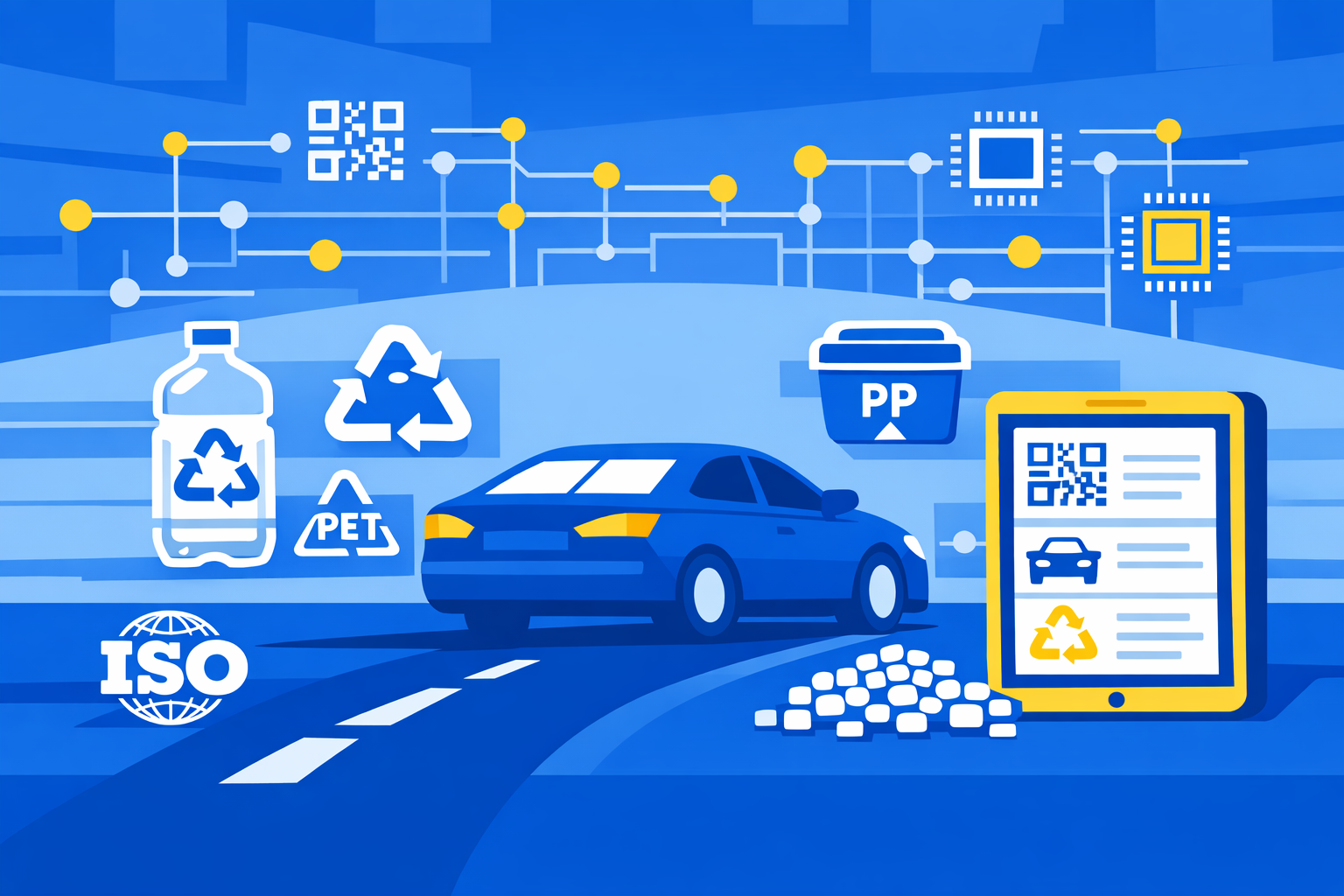
RecyClass continues to harmonize recyclability certification and design-for-recycling protocols across Europe and may offer a framework bridging cosmetics and automotive packaging requirements.
Outlook
Cross-industry collaboration on shared recyclability protocols and harmonised testing may drive convergence between cosmetics and automotive packaging. As EU regulations become more stringent, initiatives such as RecyClass could help standardize practices across sectors. Texen and Quadpack's focus on recyclable components and lifecycle assessment positions them as potential leaders in packaging sustainability across industries.