The U.S. Environmental Protection Agency is advancing two parallel regulatory tracks to establish national standards for end-of-life lithium battery management - a development set to reshape collection logistics, critical mineral recovery, and closed-loop supply chain strategies across the automotive sector.
The EPA indicated it will proceed with a rulemaking first announced by the Biden administration to improve the recycling and management of wastes from renewable energy generation by modifying existing "universal waste" requirements under the Resource Conservation and Recovery Act (RCRA) for lithium batteries and expanding the universal waste rule to cover waste photovoltaic solar panels. Separately, as required by the Infrastructure Investment and Jobs Act, EPA and the U.S. Department of Energy are developing an extended battery producer responsibility (EPR) framework addressing battery recycling goals, mandatory recycling cost structures, reporting requirements, product design, collection models, and transportation of collected materials - while promoting consistency across states.
Background
Federal oversight of lithium battery recycling has lagged behind EV market growth. No federal or state laws currently mandate EV battery recycling, nor has federal guidance expressly addressed how regulators should treat recycled batteries under existing law. The universal waste rule has covered all batteries since its inception in 1995; however, EPA's upcoming proposal would carve out lithium batteries from that long-standing category and establish modified universal waste requirements specifically addressing fire risks associated with such batteries.
The absence of a coherent national framework has produced a compliance patchwork. States may impose additional, more stringent requirements for lithium-ion battery management, complicating cross-border shipments of used batteries and recycled materials for automakers, suppliers, and recyclers operating across multiple jurisdictions. Several states have already enacted laws governing battery collection and recycling that differ in the obligations they impose on manufacturers and retailers and in the battery types they cover.
Details
On the rulemaking side, EPA's latest Regulatory Agenda projects a proposed rule in February 2026, with a final rule in August 2027. The planned regulation would replace a patchwork of state-level rules with a federal standard, offering clarity for automakers, recyclers, and environmental groups. It is designed to simplify hazardous waste classifications while introducing stricter safety measures for the storage, transport, and disposal of used lithium batteries. The proposed rule is expected to mandate standardised labelling, employee training, and flame-resistant packaging, while also limiting battery storage durations and tightening rules for cross-state transport, according to reporting on the rulemaking.
For the EPR framework, EPA began hosting a series of focused conversations in April 2025 on topics related to developing a national EPR framework covering all batteries. The framework will consider all battery chemistries and types, including large-format batteries for electric vehicles, energy storage, and industrial uses. In September 2025, EPA and DOE held a hybrid roundtable in Washington, D.C., to gather industry perspectives. Discussions covered definitions critical to battery EPR policies - including obligated producers and recycling - followed by sessions on producer responsibilities, enforcement mechanisms, and cost structures.
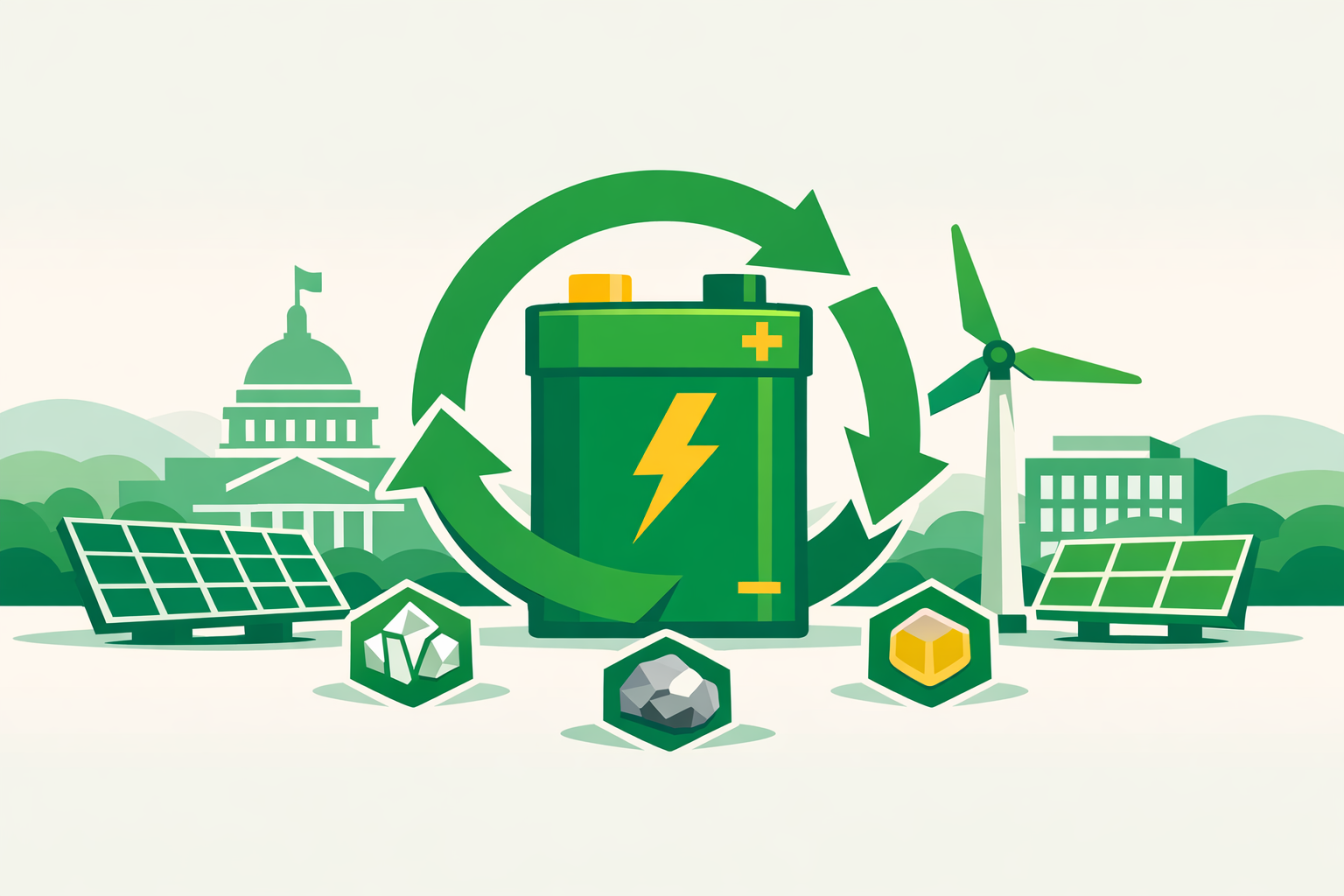
Critical mineral recovery sits at the core of both initiatives. According to the United States Geological Survey's 2022 list, aluminum, lithium, nickel, cobalt, manganese, and graphite - all commonly used in lithium-ion batteries - are critical minerals important to national security and the U.S. economy. The framework aims to support U.S. goals of reducing dependence on foreign energy sources by increasing the recycling and recyclability of critical minerals, while strengthening the domestic critical mineral supply chain and creating jobs. Companies such as Redwood Materials and Ascend Elements are viewed as early beneficiaries, as both operate facilities already aligned with stringent safety protocols and are positioned to absorb compliance costs.
Legal observers have flagged implementation risks. Questions remain about whether EPA has the legal authority to revise the universal waste rule for lithium batteries. The agency has not indicated that the proposal would address other critical RCRA issues associated with lithium battery recycling left unresolved in its 2023 Lithium Battery Guidance. Open questions include the regulatory status of "black mass" - the granular shredded material containing cathode and anode components - and the application of land disposal restrictions to battery recycling residues.
Outlook
EPA continues to develop the voluntary battery EPR framework, expected for publication in summer 2026. The agency is also preparing a Report to Congress outlining best practices for battery recycling, the current state of battery collection, and its next steps. For automotive supply chain professionals, the window between the February 2026 proposed rule and the August 2027 final rule represents a critical period for engaging with the rulemaking process, evaluating investments in mechanical and hydrometallurgical recycling processes, and aligning traceability and data-sharing protocols with anticipated federal requirements.