European automakers are accelerating material pilots that integrate algae-derived inks and seaweed-based bioplastics into cabin components, responding to a tightening regulatory framework that ties vehicle design to mandatory recycled-content targets, recyclability obligations, and forthcoming digital product passport requirements.
Background
The legislative backdrop is sharpening quickly. In December 2025, the European Parliament and Council reached a provisional political agreement on the new End-of-Life Vehicles (ELV) Regulation, with the compromise text published in February 2026. The agreed rules establish the EU's first binding recycled plastic content mandates for new vehicles: plastic used in each new vehicle type must contain a minimum of 15% recycled content within six years of the rules' entry into force, rising to 25% within ten years. At least 20% of those targets must be met through plastics recycled directly from end-of-life vehicles in a closed-loop model.
In parallel, the EU's Ecodesign for Sustainable Products Regulation (ESPR, Regulation (EU) 2024/1781) came into force on 18 July 2024, and the European Commission adopted the first ESPR Working Plan for 2025-2030 in April 2025. That plan introduces phased Digital Product Passport (DPP) requirements - a centralized EU digital registry is scheduled to be established by July 2026, with the first wave of mandatory DPPs covering priority sectors, including batteries and textiles, expected from 2027. Under the related ELV Regulation, all new vehicles will eventually require an Environmental Vehicle Passport, with technical specifications for the data framework currently under development.
Bio-based alternatives are attracting broader EU support. Between 2014 and 2023, the European Union invested approximately €559 million in 219 algae-focused projects through programmes including Horizon 2020, Horizon Europe, LIFE, and the European Maritime, Fisheries and Aquaculture Fund. The European Climate, Infrastructure and Environment Executive Agency (CINEA) published a factsheet in May 2025 highlighting that funding's role in advancing the algae sector. The EU's bioeconomy strategy, updated in 2018 and now undergoing further development, explicitly identifies investment in alternatives to fossil plastics made from materials including starch, lignin, and algae.
Details
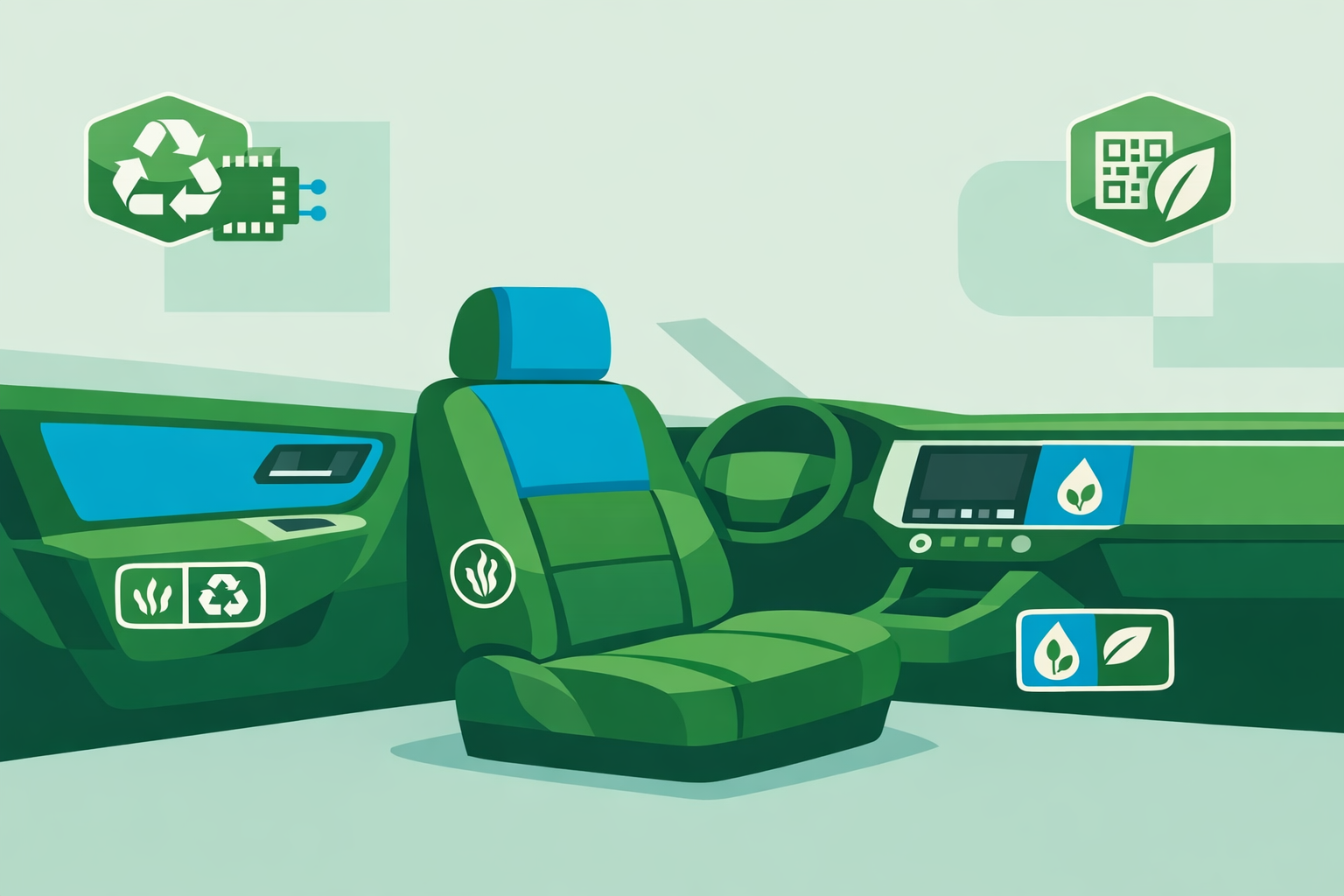
Against that regulatory backdrop, pilot programs within the European automotive supply chain are examining two distinct bio-based material categories: seaweed-derived biopolymers for structural trim and molded interior components, and algae-based pigment systems for surface coloring and labeling applications.
On the biopolymer side, seaweed-derived materials are being evaluated for door panels, dashboard surrounds, and other non-structural trims where polypropylene currently dominates. Seaweed can grow up to 60 times faster than terrestrial plants, offering a low-impact, rapidly renewable feedstock. Researchers and suppliers cite its absence of land-use competition with food crops as a key advantage over starch-based bioplastics. However, commercialization remains at an early stage. According to industry researcher Phyconomy, of the seaweed bioplastics start-ups tracked globally, only three are considered commercially mature, while 38 remain in the pilot phase and a further 98 are undergoing validation or scale-up processes. Supply chain readiness, consistent material properties, and cost parity with petroleum-based polymers remain central engineering challenges, according to market analysts at IDTechEx, who project bioplastics content in passenger cars will grow at a compound annual growth rate of 25.1% between 2025 and 2035.
On the colorant side, algae-derived inks - most notably those based on algae-black pigments as a direct substitute for carbon black - are entering qualification trials for printed surfaces, labels, and soft-touch interior substrates. Algae Ink formulations such as those from Living Ink Technologies are typically composed of around 16% algae cells and 63% water, with the remaining ingredients VOC-free. Unlike petroleum-derived carbon black, algae pigments are produced through a carbon-negative biological process. Analysts at Future Market Insights project the global algae ink market will grow at a CAGR of approximately 15%, reaching around USD 22.72 million by 2034 from USD 5.61 million in 2024. Automotive interior applications demand performance standards beyond current packaging or textile uses, including color stability under prolonged UV and heat exposure and resistance to abrasion and outgassing in enclosed cabin environments. Suppliers and OEM testing teams have identified long-term aging under real cabin conditions as a key qualification hurdle.
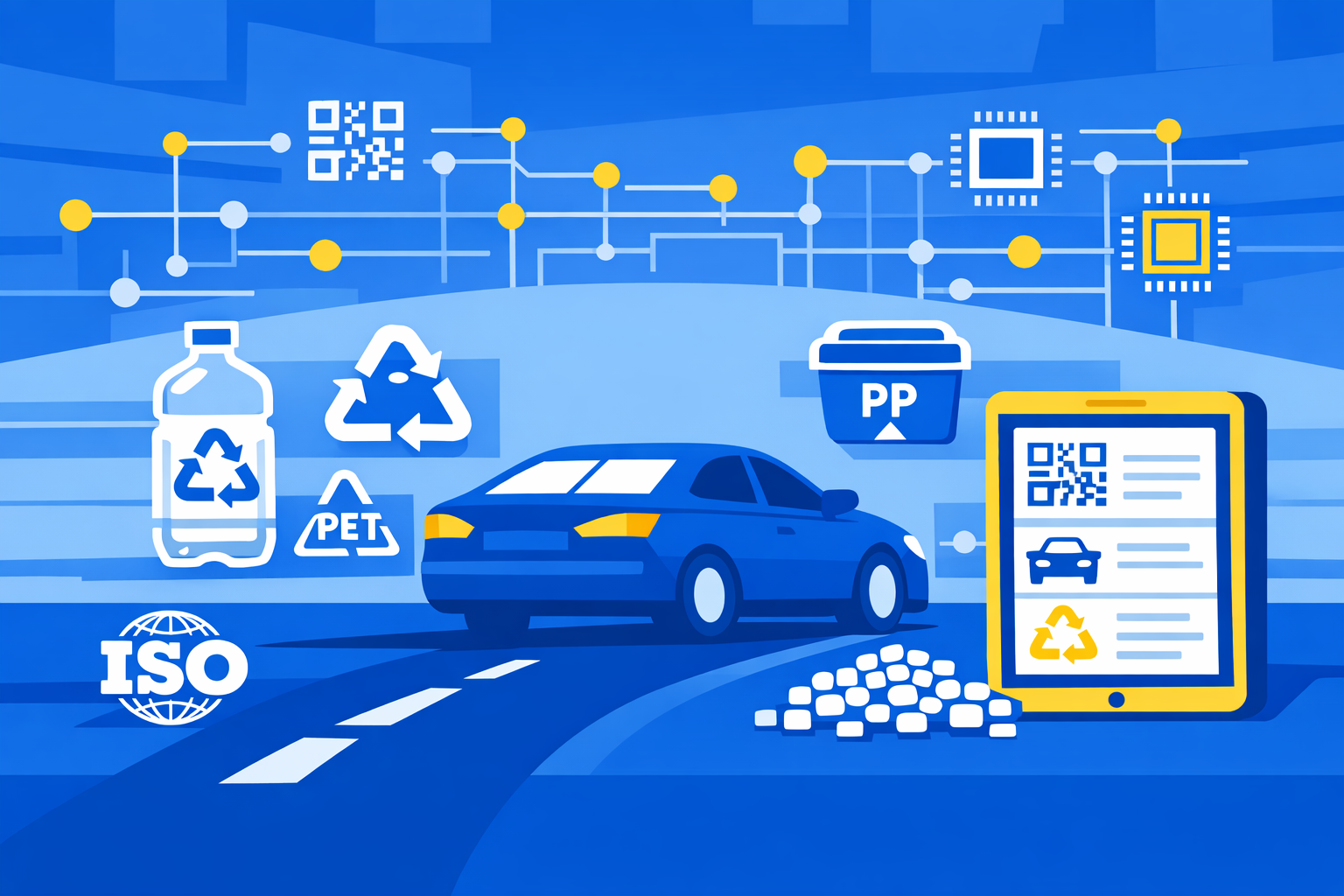
Material traceability is a converging challenge across both categories. DPP obligations will require that data fields including material composition, manufacturing locations, environmental metrics, recycled content, and recycling instructions be documented and accessible via a machine-readable identifier such as a QR code or RFID tag. For bio-based materials sourced from aquaculture or algae cultivation, establishing auditable feedstock traceability from harvest through compounding and component manufacture represents a new operational demand for chemical suppliers and OEM procurement teams alike. As Fredrik Malmfors, CEO of Swedish bio-based plastics company Lignin Industries, noted in comments reported by Euronews, "Long has mass bioplastic market adoption been capped by inconsistent material definitions from market to market."
Outlook
Formal adoption of the ELV Regulation and its entry into force will start the clock on recycled plastic content targets and vehicle circularity passport requirements. Full enforcement of the ELV Regulation is expected to begin in 2031, with rules for calculating and verifying recycled plastic content to be completed by end of 2026. For bio-based materials to register within DPP data structures, harmonized definitions and measurement methodologies for bio-based content must be integrated into the product-specific delegated acts the European Commission is drafting under ESPR. Supply chain partners - including biopolymer producers, chemical companies, and automotive tier suppliers - are building the partner ecosystems and data infrastructure needed to meet documentation requirements ahead of initial compliance windows.
Related coverage: EU and North America Establish Interim Automotive Packaging Recycled-Content Benchmarks