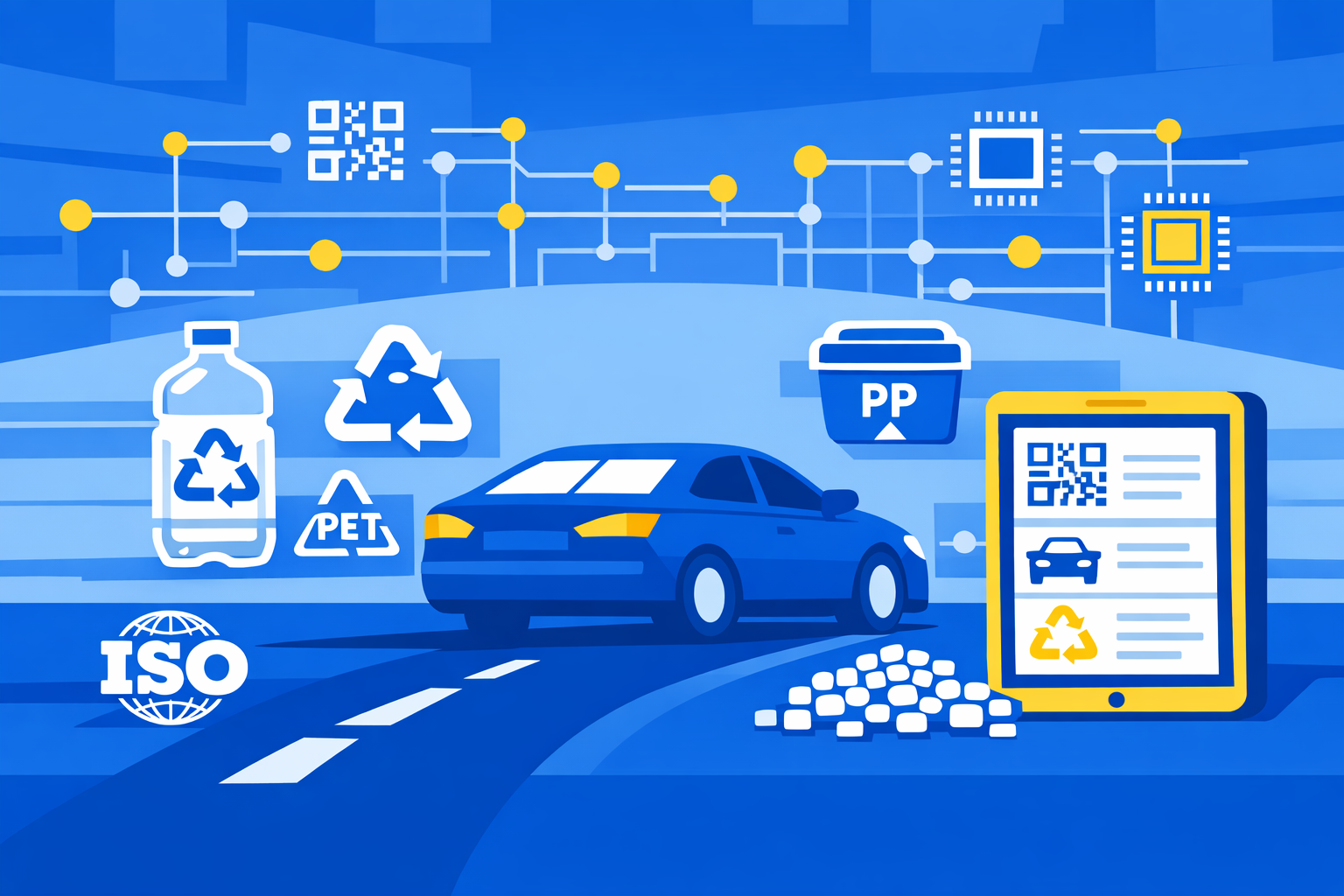
Automakers, tier suppliers, and packaging manufacturers across the European Union are accelerating compliance efforts as the bloc's Digital Product Passport framework extends mandatory traceability requirements to automotive packaging, components, and associated materials - creating a multi-year reform that industry sources call the most significant data-sharing shift the sector has faced.
Background
The EU's Ecodesign for Sustainable Products Regulation (ESPR), Regulation (EU) 2024/1781, entered into force in July 2024, establishing the legal foundation for Digital Product Passports across regulated product categories. The DPP is a structured digital record - typically accessed via a QR code, RFID tag, or NFC chip affixed to a product or its packaging - that stores verified data on material composition, recycled content, lifecycle status, and end-of-life pathways. On April 16, 2025, the European Commission adopted the first ESPR Working Plan for 2025-2030, identifying priority product groups and setting indicative implementation timelines through the end of the decade.
Two parallel regulations compound the automotive sector's compliance obligations. The Packaging and Packaging Waste Regulation (PPWR), Regulation (EU) 2025/40, entered into force on February 11, 2025, and its primary requirements become enforceable from August 12, 2026. Separately, EU legislators reached a provisional agreement in December 2025 on a new End-of-Life Vehicles (ELV) Regulation, consolidating the former ELV Directive and the 3R Type-Approval Directive into a single framework. The ELV Regulation introduces a Circularity Vehicle Passport, an EU-wide extended producer responsibility system, and mandatory minimum recycled plastic content targets for new vehicles.
Details
The first binding DPP mandate with direct automotive relevance is the battery passport. From February 18, 2027, all electric vehicle batteries and industrial batteries with a capacity above 2 kWh placed on the EU market must carry a Digital Product Passport accessible via a QR code, under Regulation (EU) 2023/1542. The battery passport must include electrochemical performance data, carbon footprint per kilowatt-hour, recycled content, and critical raw material sourcing information down to supply chain provenance. According to ISO/IEC Joint Technical Committee 5 on Digital Product Passports, announced in April 2026, global DPP interoperability standards are under development, with substantive technical deliverables expected from 2028.
For automotive packaging specifically, the PPWR imposes obligations on all industrial packaging placed on the EU market and significantly broadens the definition of "manufacturer" to include any entity that fills industrial packaging and places it on the market or imports packaging into the EU. According to industry analysts at Automotive Logistics Media, car manufacturers and OEM suppliers are currently cautious about PPWR implementation readiness, while manufacturers of transport and protective packaging for the automotive industry acknowledge that numerous compliance details remain unresolved ahead of the August 2026 general application date.
The EU's regulatory approach to DPP data architecture is deliberately decentralized. According to the European Commission's framework, the DPP shall be based on a decentralised data system managed by economic operators, with a backup copy required through an independent "digital product passport service provider." The EU Central DPP Registry is scheduled to go live by July 2026, enabling market surveillance bodies and customs authorities to issue and verify product passport identifiers. For automotive supply chains managing components sourced from hundreds of suppliers across dozens of countries, this architecture creates significant integration demands. According to data from Loftware's 2025 survey, only 18% of global manufacturers are currently using digital product passports, though 63% expect wider adoption within three years. Industry analysts estimate that data collection for DPP-compliant supply chain traceability typically requires 12 to 18 months to set up properly.
Packaging suppliers face parallel pressure from both ESPR and PPWR. Under PPWR, the PFAS ban on packaging materials applies from August 2026, and a mandatory data carrier on packaging - enabling machine-readable access to material and recyclability data - is required from approximately 2028. Regulators have confirmed that where packaged products already require a DPP under ESPR, packaging data must be integrated into the same passport record, eliminating duplicate compliance workflows but requiring coordinated data standards across suppliers and OEM customers.
The CIRPASS-2 pilot program, funded under the Digital Europe Programme, is testing DPP implementation through sector-specific pilots covering textiles, electronics, tyres, and construction materials. CIRPASS-2 delivered the EU DPP Core Ontology requirements in March 2025, which serve as the de facto interoperability reference for sector pilots. GS1 Digital Link, which embeds a product's Global Trade Item Number in a QR-code URL resolving to structured DPP data, is explicitly recognized under ESPR as a valid product identifier. The EN 1821x series of DPP standards entered public enquiry in mid-2025, with final publication as EN standards expected in 2026.
Outlook
The convergence of ESPR, PPWR, and the ELV Regulation means automotive packaging suppliers and OEMs face overlapping compliance windows between 2026 and 2030, each requiring verified material data to flow across multi-tier supply chains. Between 2028 and 2030, the ESPR's scope is expected to extend to packaging and plastics, at which point virtually all packaging sold in Europe will need to carry a digital identifier. According to EY analysis, early movers are already treating DPP readiness as a digital transformation priority, using pilot programs to build data infrastructure before binding product-specific delegated acts arrive - a window that, for many automotive packaging formats, is closing within 12 to 18 months.