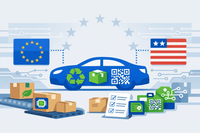
EU regulators have introduced a digital traceability framework to verify recycled-content levels in automotive packaging. Pilot programs will begin in 2025, with full-scale adoption targeted for 2026. The framework uses machine-readable labels and a shared digital ledger to track material origin, recycling status, and lifecycle data from suppliers to OEMs. Its goal is to support compliance with extended producer responsibility (EPR) credit schemes, improve transparency, and reduce risks of counterfeit or mislabeled packaging.
Background
The traceability initiative is based on the EU's Packaging and Packaging Waste Regulation (PPWR, Regulation (EU) 2025/40), effective from 11 February 2025 and applicable from 12 August 2026 . PPWR requires harmonized, machine-readable labeling of packaging materials, including information on recycled content, compostability, and reusability, typically delivered via QR codes or other open digital formats 1Verordnung (EU) 2025/40 (Verpackungsverordnung). The policy aligns with the European Green Deal and circular economy strategy, establishing minimum recycled content thresholds for plastic packaging by 2030 and stricter recyclability performance by 2038 2Packaging - Consilium.
Details
The framework links packaging labels with a digital ledger to capture data on recycled content, material origin, and lifecycle stages. Pilot programs will roll out in 2025, with automotive sector adoption expected in 2026 for service, transport, and sales packaging. The measure aims to streamline audits and support 2026 procurement cycles as suppliers map bills of materials, increase data capture at points of use, and align with standardized digital identifiers. Integration will require IT and data collection investments; however, analysts expect future benefits including reduced non-compliance risk, better end-of-life outcomes, and increased consumer trust. Automated traceability should also aid supplier diversification by clarifying packaging origins and credentials.
Outlook
As pilots advance, stakeholders are reviewing interoperability with non-EU systems, especially North American traceability frameworks, and evaluating the costs of retrofitting existing packaging lines. Enforcement beginning in 2026 will influence contract negotiations and material sourcing in the automotive sector. If successful, the framework could guide digital traceability standards in other industries and support wider EU circular economy initiatives.