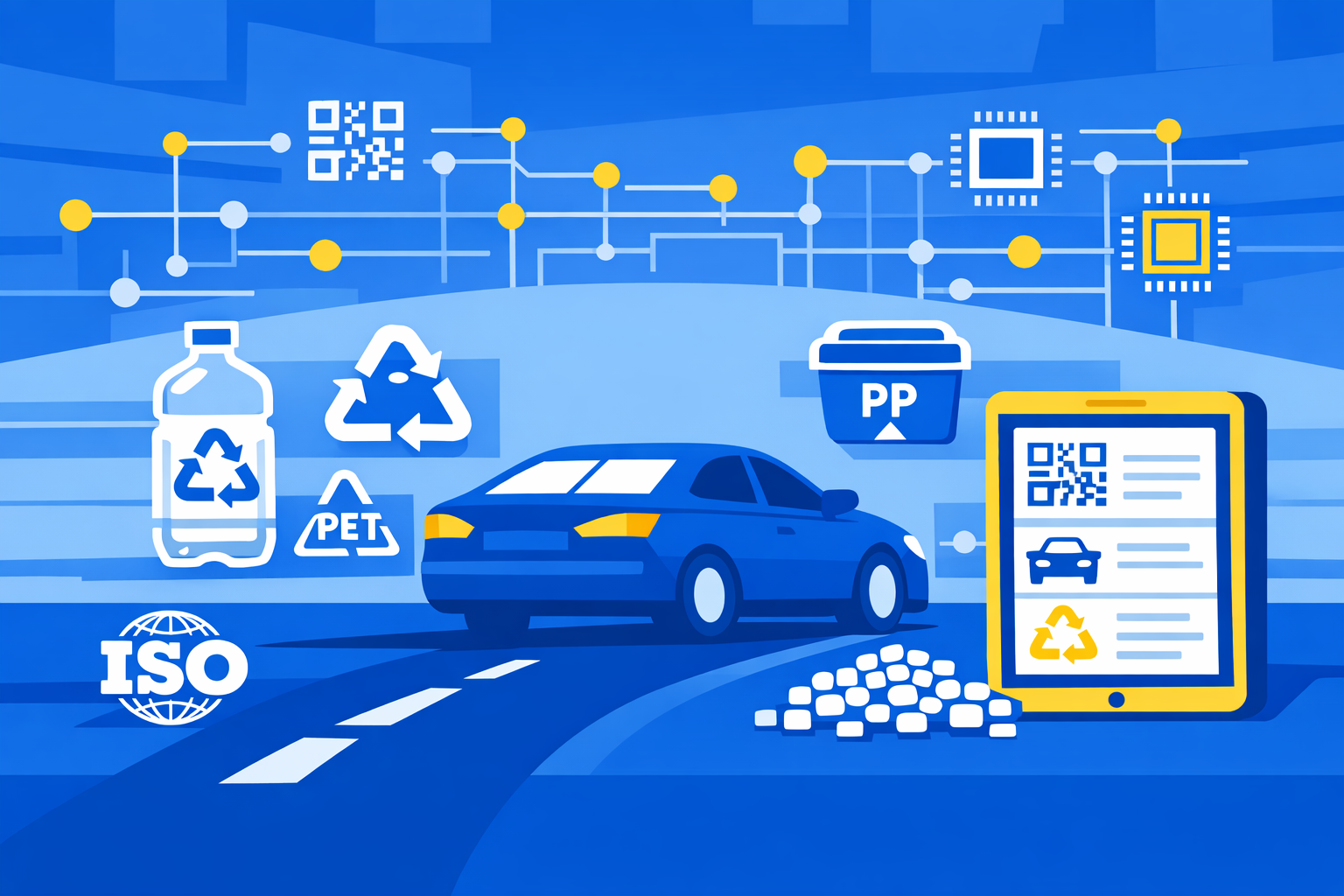
European automakers and their packaging suppliers face a convergence of two major regulatory frameworks that will require machine-readable proof of recycled-plastic content across packaging value chains, with initial compliance deadlines starting in August 2026.
The EU's Packaging and Packaging Waste Regulation (PPWR), formally Regulation (EU) 2025/40, entered into force in February 2025 and applies uniformly across all member states from August 12, 2026. In parallel, the Ecodesign for Sustainable Products Regulation (ESPR), which underpins the Digital Product Passport (DPP) framework, is building toward mandatory sector-specific rollouts starting in 2027. Together, the two regulations demand that packaging placed on the EU market be documented, verified, and digitally traceable - a shift that industry analysts say will fundamentally alter sourcing and auditing practices for original equipment manufacturers (OEMs) and their Tier 1 and Tier 2 suppliers.
Regulatory Background
The PPWR replaces the previous Packaging and Packaging Waste Directive (94/62/EC), creating a single, directly applicable legal framework with no room for member-state variation. From August 12, 2026, every unique packaging type placed on the EU market must be covered by a signed Declaration of Conformity - a legally binding self-declaration confirming that packaging meets the regulation's sustainability requirements.
From January 2030, mandatory minimum recycled-content thresholds for plastic packaging take effect under PPWR Article 7, with targets ranging from 10% to 35% depending on packaging type. A critical compliance detail: only post-consumer recyclate (PCR) counts toward these targets; post-industrial recyclate does not satisfy PPWR Article 7, even though many suppliers currently market such material as "recycled content."
On the DPP side, the European Commission adopted the ESPR Work Plan 2025-2030 on April 15, 2025, listing priority product categories for phased ecodesign and DPP requirements between 2026 and 2030. Packaging and plastics are identified as high-probability future additions to the DPP scope, alongside chemicals and consumer goods. For automotive plastics specifically, EU measures introduced in mid-2025 set legally binding requirements for recycled content in plastics, digital product passports for traceability, and design-for-recycling mandates.
Data Collection Challenges
As of April 2026, 29 delegated acts from the European Commission required to define technical standards for the PPWR remain outstanding, meaning exact Design for Recycling criteria and recyclability grading methodology are not yet fully defined.
The automotive sector faces particular exposure. For DPP compliance, between 60% and 80% of required data typically originates from suppliers across multiple tiers, many of which have differing technical capabilities. Industry surveys underscore the concern: according to KPMG's 2026 European Digital Product Passport Readiness Survey, 81% of European companies lack structured lifecycle data required for DPP compliance. According to automotive logistics trade reporting, car manufacturers and transport packaging suppliers in the automotive industry are not yet ready to meet PPWR requirements, with numerous practical implementation details - including how requirements will be mapped in ERP systems - still unresolved.
Ernst Hahn, managing director at a packaging solutions firm, noted that "for many companies, the implementation of the PPWR currently means a high level of organisational effort combined with a great deal of uncertainty," and that "numerous questions regarding practical implementation - such as role allocation in complex supply chains - have not yet been conclusively clarified."
The PPWR also redefines manufacturer responsibility in ways that directly affect automotive OEMs. Under the regulation, the company that determines packaging specifications or places its trademark on packaging is classified as the manufacturer and bears legal responsibility for signing the Declaration of Conformity, maintaining technical documentation, and being auditable by authorities.
Outlook
The European Commission must adopt implementing acts by December 31, 2026, establishing the official methodology for calculating, verifying, and certifying recycled content from post-consumer plastic waste. Until those acts are finalized, companies in the automotive packaging chain are building proof infrastructure using chain-of-custody tracking and mass balance accounting as the most likely compliant methodology.
Industry frameworks such as Catena-X, which supports standardized data exchange across automotive supply chains, and GS1 Digital Link standards for DPP identifiers are viewed as key enabling infrastructure. The DPP architecture is designed to interface with established European regulatory databases, including the SCIP database for substances of concern and ICSMS for market surveillance, to avoid duplication across compliance systems. Packaging suppliers unable to provide verified recycled-content documentation and recyclability assessments risk removal from automotive supply contracts as OEMs move to satisfy both PPWR declarations and anticipated DPP data fields simultaneously.