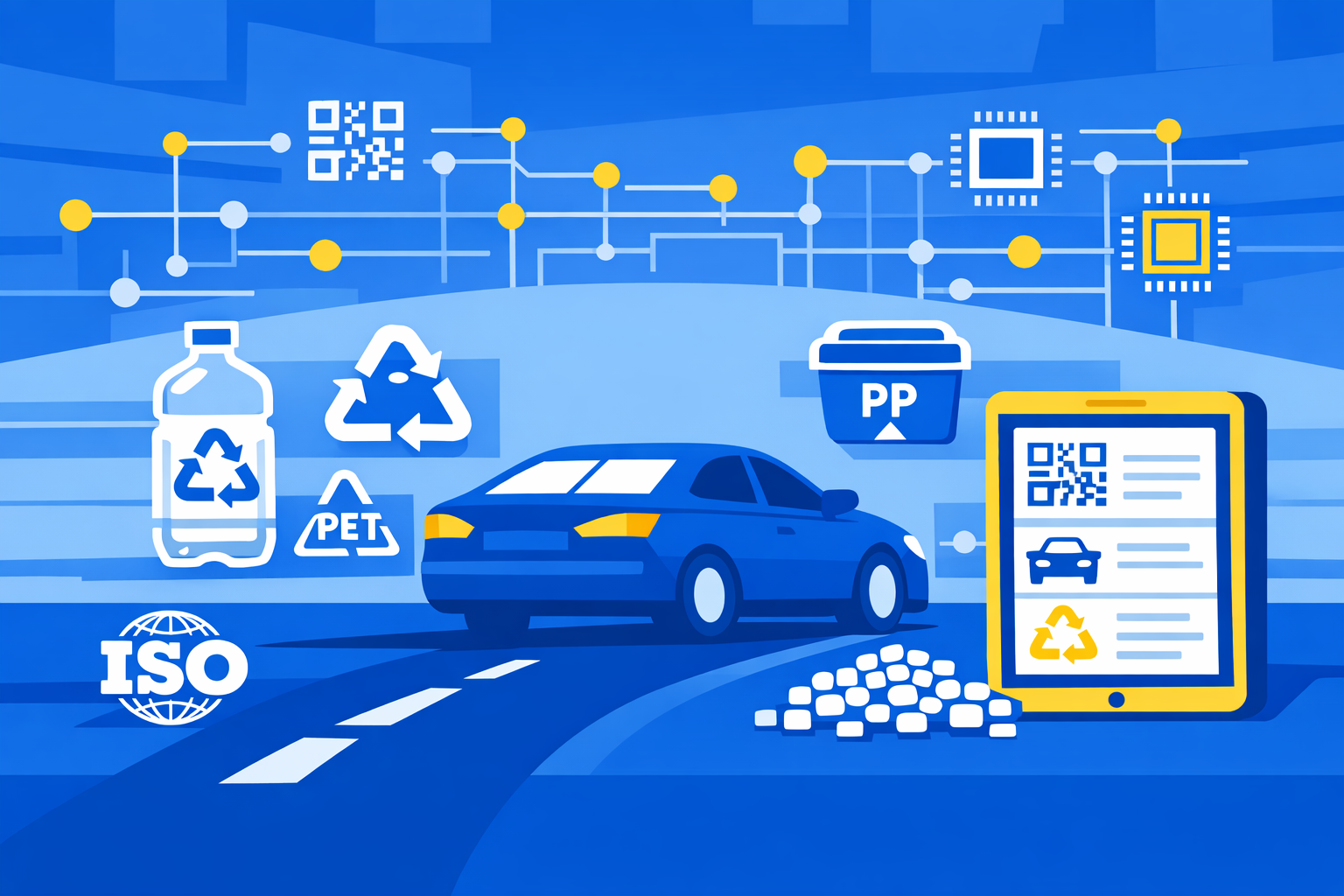
The European Union is extending its Digital Product Passport framework to cover automotive packaging materials, imposing new traceability and recycled-plastics certification requirements on original equipment manufacturers and their supply chains. The move draws on two converging regulations - the Packaging and Packaging Waste Regulation (PPWR) and the Ecodesign for Sustainable Products Regulation (ESPR) - signalling a step-change in how circularity is verified and reported across Europe's vehicle manufacturing sector.
Background
The PPWR, formally Regulation (EU) 2025/40, was adopted in December 2024 and entered into force on 11 February 2025, with general application beginning 12 August 2026. The regulation replaces the long-standing Packaging Directive 94/62/EC and applies directly across all EU member states, creating a uniform legal framework for every type of packaging placed on the Union market, regardless of material or origin.
In parallel, the ESPR, Regulation (EU) 2024/1781, entered into force in July 2024 and introduces the Digital Product Passport as a mandatory digital data carrier for regulated product categories. According to the European Commission, the DPP creates "a common digital language for product information across value chains," enabling structured data sharing among manufacturers, suppliers, and recyclers.
The automotive sector is already within the DPP's immediate scope. From February 2027, digital product passports will be mandatory for all industrial and electric vehicle batteries placed on the EU market under the Battery Regulation (EU) 2023/1542. That battery passport is widely regarded as the reference model for how sector-specific DPPs will be designed and extended to other automotive material streams, including packaging.
Details
Combined regulatory pressure from the PPWR and ESPR directly affects packaging materials used throughout vehicle manufacturing - from component transit packaging and ESD solutions to aftermarket parts shipments. Under the PPWR, from 2027, all packaging entering the EU market must carry a digital identifier, such as a QR code, linking to structured environmental data including material composition, recycled content, and recyclability performance.
On recycled content, the PPWR sets binding minimum thresholds for plastic packaging. From January 2030, minimum recycled content requirements for plastic packaging will range between 30% and 65%, depending on the category. For the automotive sector specifically, EU rules under the mid-2025 legislative package set a minimum recycled content target of 25% or more in automotive plastics components by 2030, with leading OEMs already moving to comply. Stellantis has announced plans to use 40% recycled content in vehicle plastics by 2030, partnering with European recyclers for post-consumer polypropylene and polyamide compounds.
DPP data fields relevant to automotive packaging will require suppliers to disclose polymer types in accordance with ISO 1043, additives and fillers, joining methods, and end-of-life handling instructions. Under the ESPR, the first horizontal DPP technical infrastructure - covering core interoperability standards and data exchange protocols - is being finalised through CEN/CENELEC JTC 24, with specifications expected between late 2025 and 2027. The Commission launched a public consultation on DPP service provider certification requirements in April 2025, with a final summary report published in August 2025.
Supply chain partners at every tier face new data obligations. Packaging producers and brand owners must gather and maintain verified documentation covering material composition, recycled content percentages, recyclability grades, and environmental performance indicators including carbon data. The PPWR does not exempt micro or small enterprises from its core obligations. Smaller suppliers, which dominate automotive tier-2 and tier-3 networks, are expected to face particular challenges building the IT infrastructure needed for structured, machine-readable compliance data.
The regulatory architecture also intersects with existing frameworks. Where a packaged product already carries a DPP under the ESPR, the same passport must also contain the packaging-related information required under the PPWR, avoiding duplication but significantly increasing the data burden on OEMs that source packaging from multiple suppliers across different jurisdictions.
Outlook
By 2030, digital product passports are expected to be required across most regulated product categories in the EU market, with packaging and plastics identified as likely inclusions in the ESPR's 2028-2030 delegated acts. For automotive OEMs, the convergence of DPP mandates and recycled-content thresholds means supply chain partners unable to provide certified, machine-readable circularity data risk losing access to EU procurement contracts ahead of formal enforcement. Companies that invest early in ERP and product lifecycle management system upgrades aligned with DPP data standards stand to absorb compliance costs more efficiently as obligations escalate through the decade.