The European Union's new Packaging and Packaging Waste Regulation introduces mandatory end-of-life labelling requirements affecting suppliers, manufacturers, and distributors of automotive components across all 27 member states. Regulation (EU) 2025/40 sets out sustainability and labelling requirements for packaging throughout its life cycle, covering production, use, and waste management. The rules aim to simplify waste sorting, boost recycling rates, and replace the fragmented national frameworks that have long complicated cross-border automotive supply chains.
Background
Until now, no standardised labelling requirements for packaging existed in the EU. While packaging is generally not subject to mandatory labelling under German law, France already imposes specific labelling obligations that also apply to packaging originating abroad. The PPWR seeks to harmonise these inconsistent national regulations by introducing uniform labelling requirements.
The PPWR was adopted on 19 December 2024 and entered into force on 11 February 2025, replacing the Packaging and Packaging Waste Directive. Its core provisions apply from 12 August 2026. The automotive sector sits at the intersection of two converging regulatory streams: the PPWR governs all packaging used to ship or protect components, while a separate provisional agreement reached by the European Parliament and Council in December 2025 addresses vehicle-level circularity rules covering the entire vehicle lifecycle from design to end-of-life treatment.
The automotive manufacturing industry is among the largest consumers of primary raw materials such as steel, aluminium, copper, and plastics, yet makes limited use of recycled materials. Although recycling rates for end-of-life vehicle materials are generally high, the scrap metals produced are of low quality and only small amounts of plastic are recycled.
Details
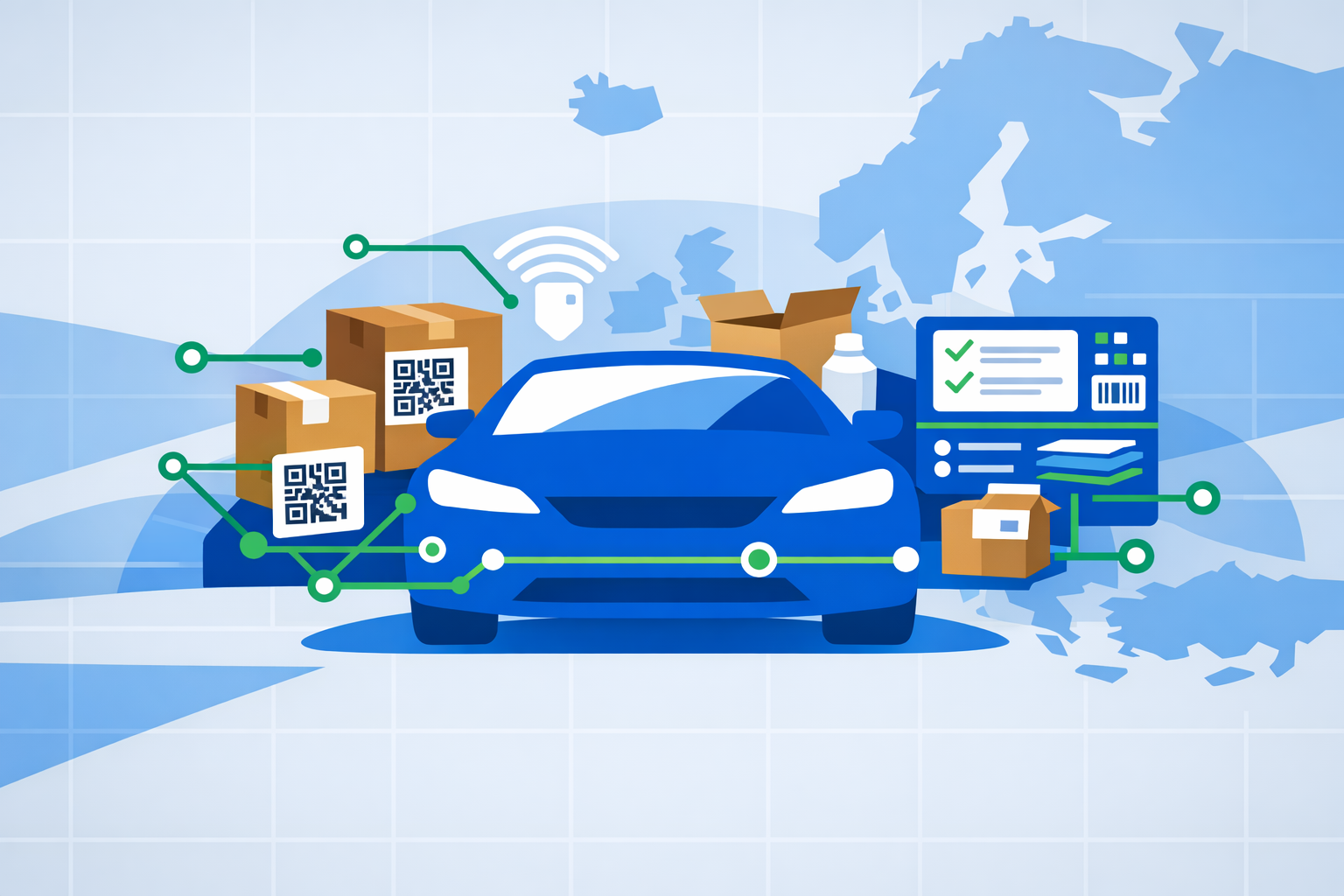
The PPWR applies to all packaging placed on the EU market, including packaging produced, supplied, or sold from outside the EU, and to packaging waste generated in the EU. The regime imposes obligations on manufacturers-covering both packaging manufacturers and packaged-product manufacturers-as well as suppliers, importers, distributors, authorised representatives, and fulfilment service providers. This scope directly captures automotive tier-1 and tier-2 suppliers shipping parts, batteries, and related components to EU customers or factories.
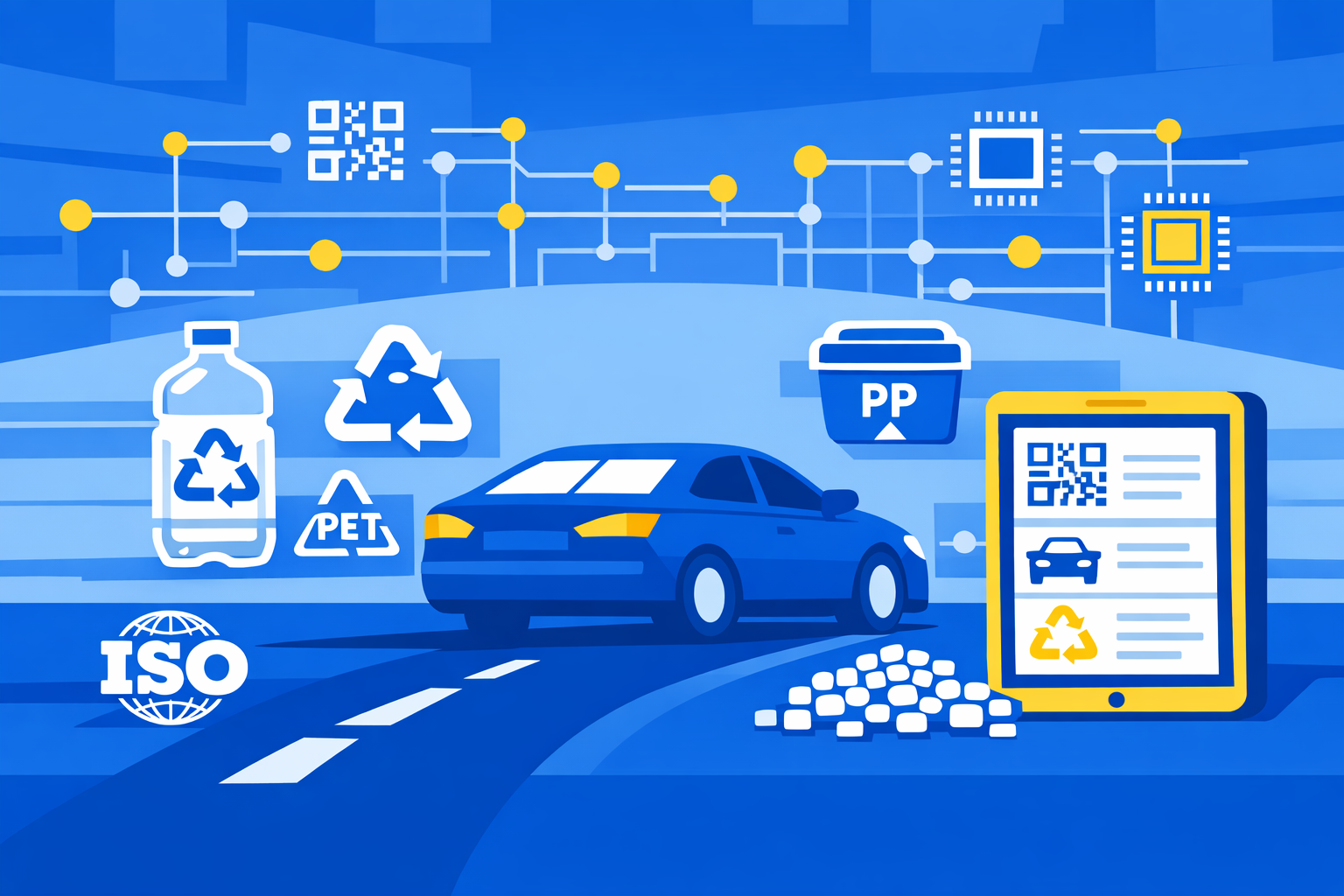
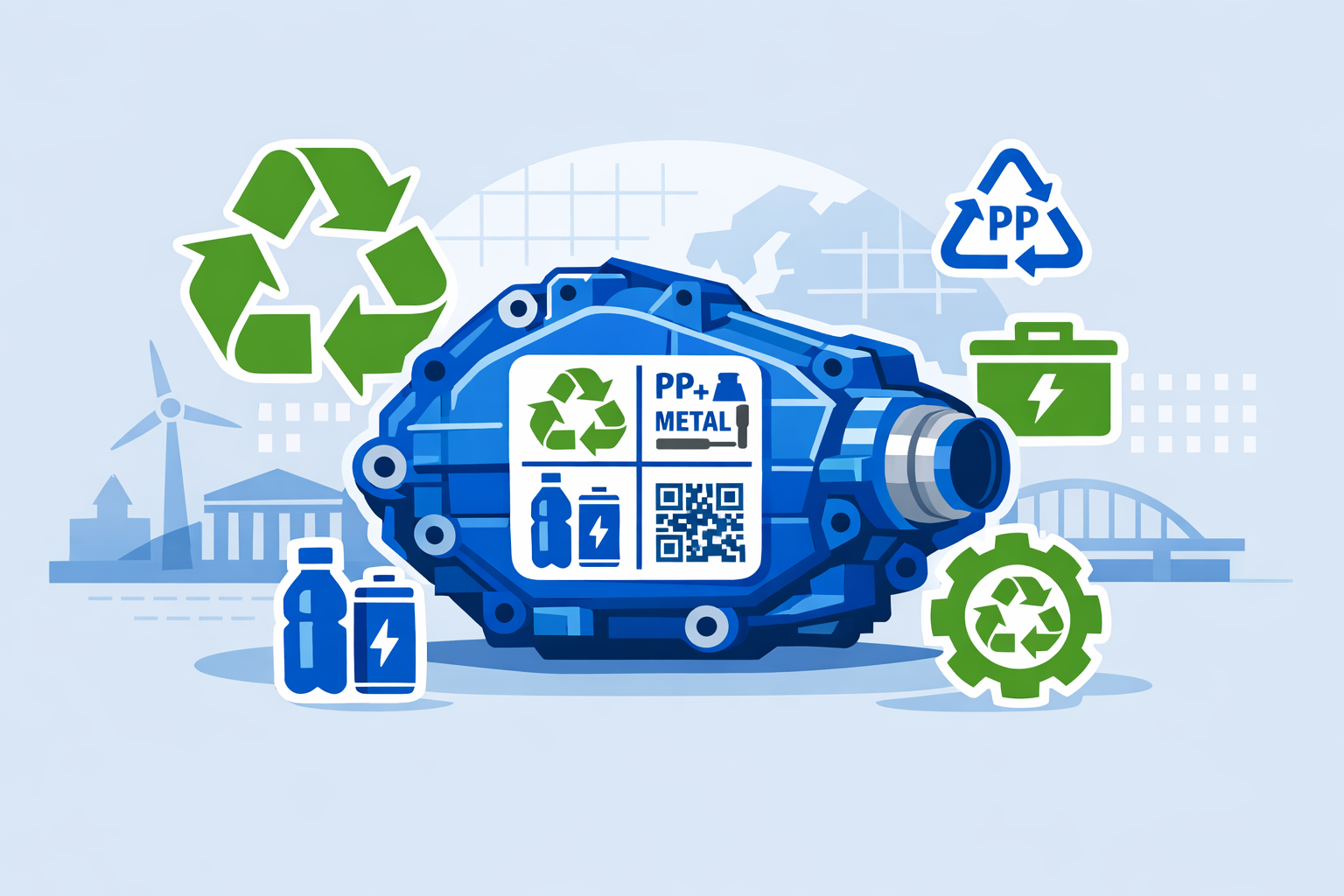
On labelling specifically, from 12 August 2028-or, if later, 24 months from the adoption of relevant implementing acts-packaging placed on the EU market must bear a harmonised label clearly indicating material composition and providing instructions for correct sorting and recycling. Required information includes material composition details presented as easily understandable pictograms. The Commission will define the specific pictograms in implementing acts before 12 August 2026. The PPWR also permits voluntary digital labelling, such as QR codes or another open data carrier format, to supplement physical labels.
For reusable packaging-widely used in automotive component logistics-from 12 February 2029 packaging intended for reuse must bear a harmonised reusability label. These labels must clearly indicate that the packaging is reusable. Additional reusability information, including the availability of any reuse system or collection points, must be accessible via a QR code or other open data carrier format.
The PPWR represents a structural shift in how packaging is designed, specified, sourced, circulated, tracked, and financed across automotive supply chains. With August 2026 approaching, logistics leaders cannot afford to treat packaging as an afterthought. The regulation reaches deep into purchasing, IT, plant operations, and cross-border flows, with significant financial implications for non-compliance. Industry publication Automotive Logistics noted that car manufacturers and OEM suppliers remain cautious about PPWR readiness, with numerous implementation details still to be clarified.
Extended producer responsibility (EPR) adds a financial dimension. Under the PPWR, producers bear financial responsibility for the entire life cycle of their packaging, including collection, sorting, recycling, and disposal costs. EPR fees must be modulated based on recyclability, recycled content, reusability, and the presence of substances of concern, incentivising ecodesign.
The greatest compliance effort stems not from individual bans or labelling rules but from establishing reliable packaging and product data. Companies must be able to demonstrate at any time what materials their packaging contains, the recycled content percentage, and the packaging's role for the respective product.
Outlook
The European Commission has released FAQs and implementation guidance to clarify key aspects of PPWR compliance ahead of the 12 August 2026 application date. Businesses placing packaging on the EU market-including manufacturers, importers, distributors, and e-commerce operators-should assess their obligations now to ensure timely compliance. The EU's goal is to make all packaging on its market recyclable in an economically viable way by 2030. Automotive suppliers with complex, multi-tier cross-border supply chains face the greatest transition burden and, according to industry analysts, should prioritise packaging audits, supplier data collection, and IT system alignment before the August 2026 core requirements take effect.