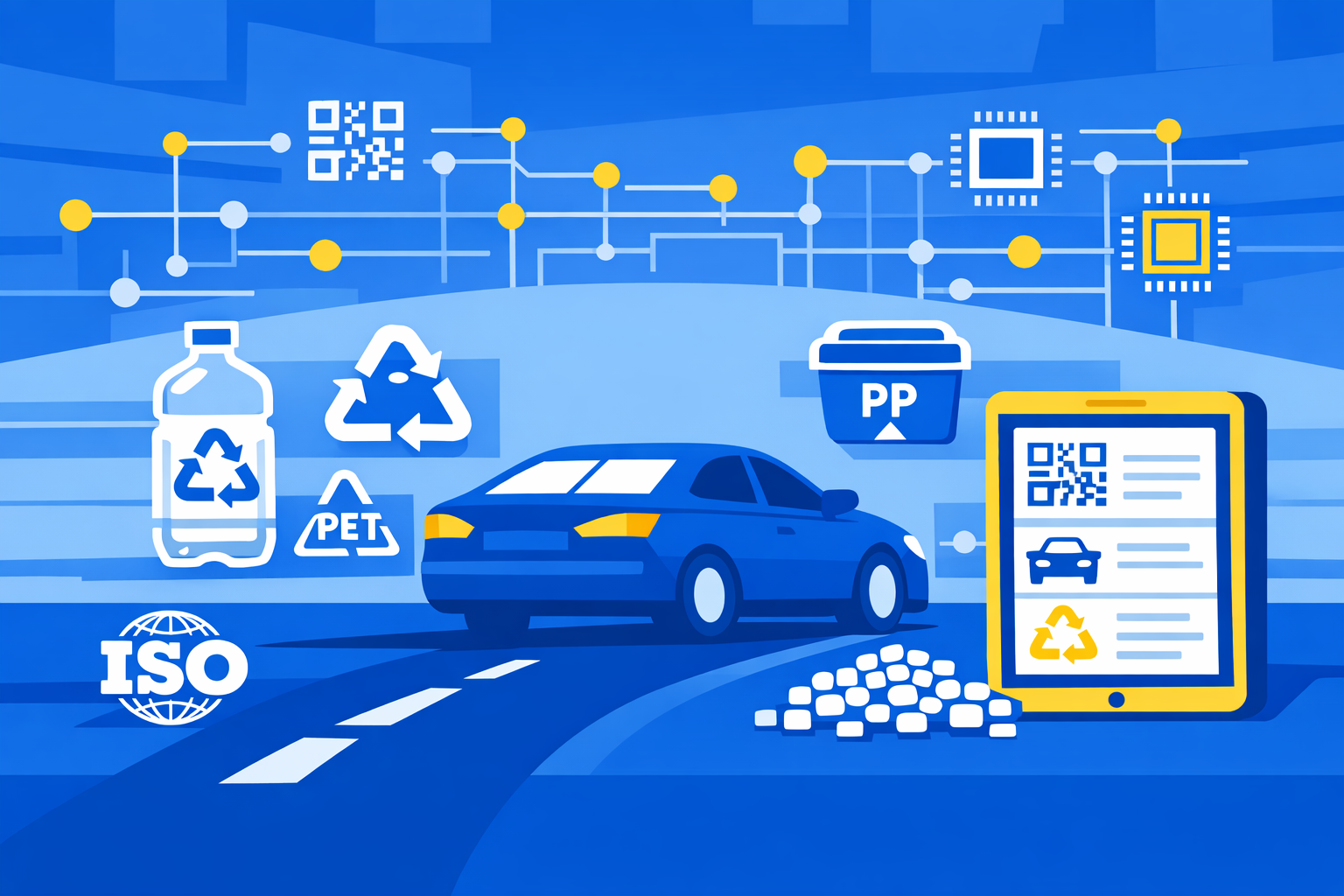
The European Union is extending its Digital Product Passport framework to automotive packaging materials, imposing new traceability and data-sharing requirements on carmakers and their suppliers as two overlapping regulatory regimes tighten their grip on the sector.
Background
The DPP is anchored in Regulation (EU) 2024/1781, the Ecodesign for Sustainable Products Regulation (ESPR), which entered into force in July 2024. The ESPR replaces the older Ecodesign Directive and broadens its scope beyond energy-related products to cover nearly all goods sold in the EU market, including imports. Under the framework, a DPP is a structured digital record containing verified data on a product's materials, origin, environmental performance, and end-of-life guidance-accessible via a scannable identifier such as a QR code or RFID tag on the product or its packaging.
Running in parallel, the Packaging and Packaging Waste Regulation (PPWR, Regulation EU 2025/40) entered into force on 11 February 2025 and will generally apply from 12 August 2026. The PPWR covers all packaging regardless of material or origin and mandates requirements on recyclability, recycled content, material composition disclosure, and extended producer responsibility. According to the European Commission, the regulation aims to make all packaging on the EU market recyclable in an economically viable way by 2030.
Together, these two regulations create a converging compliance environment for automotive OEMs. The PPWR requires companies to maintain detailed, evidence-based data on packaging material composition, recycled content, recyclability performance, and substance restrictions. That data infrastructure overlaps directly with what ESPR delegated acts are expected to require in future DPPs.
Details
The DPP rollout is phased by product category. The EU Central DPP Registry is scheduled to go live on 19 July 2026, providing shared infrastructure for recording and exchanging product passport data. The first mandatory DPP deadline in the automotive sector arrives on 18 February 2027, when battery passports become compulsory for all electric vehicle and industrial batteries above 2 kWh placed on the EU market, under Regulation (EU) 2023/1542. That passport must include battery composition, carbon footprint broken down by lifecycle stage, recycled-content data, and state-of-health performance metrics, according to regulatory guidance.
For automotive packaging materials specifically, the ESPR Working Plan 2025-2030, adopted by the European Commission on 15 April 2025, identifies packaging as an anticipated product group for DPP requirements in the 2028-2030 phase. Exact data fields and compliance dates will be confirmed through product-specific delegated acts the Commission is currently developing. Once published, OEMs and their tier suppliers will need to document packaging material composition, recycling credentials, and end-of-life handling in machine-readable, interoperable formats linked to a unique product identifier compliant with ISO/IEC 15459:2015.
Technical standard-setting work is already underway. The CIRPASS-2 project, funded under the Digital Europe Programme, is testing DPP implementation through pilot programs and has published the EU DPP Core Ontology as the interoperability reference for cross-sector data exchange. GS1 Digital Link with GTIN is the recognized product-identifier pattern under ESPR, and standards work across CEN, CENELEC, and ECLASS is expected to yield final EN standards in 2026.
From 2027, the PPWR also requires packaging to carry digital identifiers-such as QR codes-linking to structured environmental information including material composition, recyclability, and reuse details. For OEMs already managing vehicle component data pipelines, this creates overlapping compliance streams: one for the product passport under ESPR, and one for packaging labeling under PPWR. According to compliance analysts, a unified QR code strategy handling both compliance requirements is more efficient than two separate implementations.
The compliance burden falls disproportionately on smaller suppliers. Industry observers note that most manufacturers currently rely on scattered supplier documents and static product reports rather than structured, machine-readable sustainability data. Building DPP-ready data infrastructure typically requires 12 to 18 months, according to published readiness guidance. Suppliers operating across borders face the added challenge of data sovereignty requirements, as EU GDPR obligations on data storage may conflict with rules in other jurisdictions where global automotive supply chains operate.
The regulation applies regardless of where packaging is manufactured. All products in the relevant categories that enter the EU market, regardless of their country of manufacture, must have a corresponding DPP, according to the ESPR. This means North American, Asian, and other non-EU automotive suppliers distributing parts into European markets must ensure their packaging data protocols interface with EU passport requirements.
Outlook
The European Commission is expected to publish a delegated act establishing requirements for certified DPP Service Providers following a public consultation launched in April 2025-a step that will clarify how packaging passport data must be stored, accessed, and verified by third parties. For automotive packaging specifically, OEMs should anticipate pilot data-collection programs with select suppliers ahead of the 2028-2030 window, alongside revised supplier-scorecard metrics reflecting new DPP data demands. Industry bodies including ECLASS and GS1 are in active dialogue with the Commission to align data schema standards before sector-specific delegated acts are finalized.