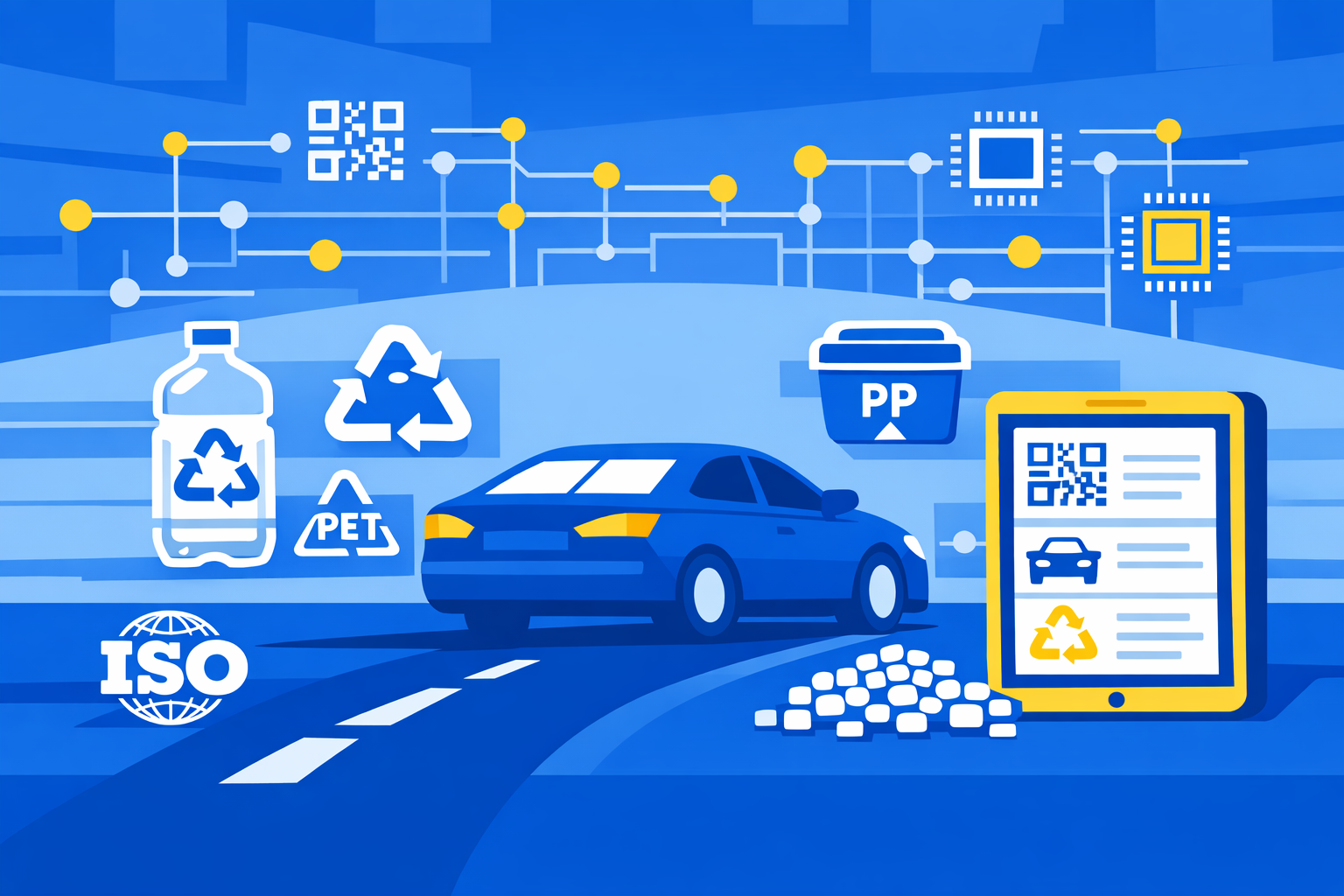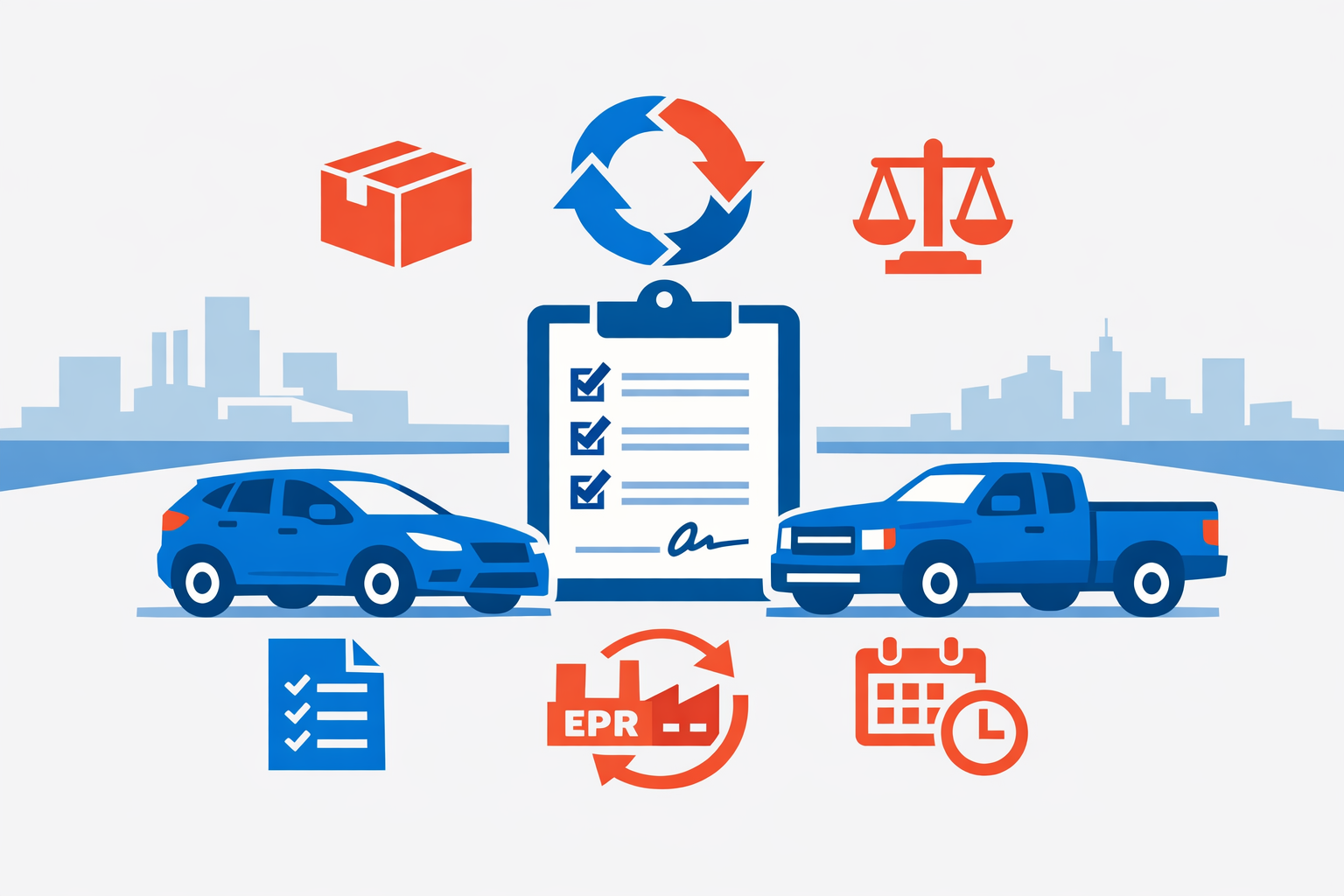
Auto OEMs and their tier-one suppliers are accelerating renegotiations of cross-border packaging contracts as simultaneous regulatory deadlines in the European Union and several US states compel the industry to embed recycled-content mandates, audit rights, and liability clauses into supply agreements ahead of enforcement in August 2026.
Background
The pressure stems from two converging regulatory tracks on overlapping timelines. In the EU, Regulation (EU) 2025/40 - the Packaging and Packaging Waste Regulation (PPWR) - entered into force on February 11, 2025, and will generally apply from August 12, 2026, replacing the long-standing EU Packaging Waste Directive with a single, directly applicable legal framework across all Member States. Unlike its predecessor, which permitted significant national discretion, the PPWR applies uniformly, eliminating the regulatory arbitrage some cross-border supply chains had previously exploited.
A parallel development in the automotive sector has deepened the compliance imperative. In December 2025, the European Parliament and Council reached a provisional agreement on a new End-of-Life Vehicles (ELV) Regulation, with the compromise text published in February 2026. The deal introduces, for the first time, mandatory recycled plastic content targets for new vehicles - setting a minimum of 15% recycled plastic per vehicle type within six years of the rules' entry into force, rising to 25% within ten years, with 20% of that share required to originate specifically from end-of-life vehicles.
In the United States, no unified federal EPR framework exists for packaging. According to packaging industry group Ameripen, seven US states have passed EPR laws for packaging and three more have launched needs assessments, with only Oregon having formally launched a full program so far. California, Colorado, Oregon, and Washington have all advanced producer registration, data reporting, and eco-modulated fee schedules timed to 2026 deadlines.
Details
The structural divergence between the EU's centralized regulatory model and the US's fragmented, state-driven approach poses the central challenge for cross-border automotive supply chains. According to compliance consultancy Tetra Tech Sustainable Markets, companies operating in both markets must manage two parallel systems - one unified and prescriptive, and one evolving and decentralized.
For OEMs selling into the EU, the stakes are immediate. According to compliance specialist Ferry Vermeulen of 24Hour AR, "on 12 August 2026, legal market access 'breaks' because companies are prohibited from placing new packaging on the Union market without a signed EU Declaration of Conformity and valid national producer registrations". Vermeulen has also warned that distribution chains face legal exposure, as retailers must reject stock containing banned PFAS chemicals or lacking mandatory technical documentation.
The PPWR places the full burden of proof on producers and importers. From August 2026, it will no longer be sufficient for automotive companies to rely on supplier declarations - companies must themselves demonstrate compliance through documented assessments, conformity records maintained for five to ten years, and EPR producer registration. According to Automotive Logistics Media, purchasing departments are becoming the decisive lever, as new packaging requirements must be translated into supplier specifications, contracts, and cost models.
Research from the same source indicates the automotive sector is underprepared: only approximately 10% of companies have created the structural foundations crucial for PPWR compliance, including clearly defined responsibilities, a reliable data basis for packaging, and a systematic portfolio analysis.
Automotive component suppliers are responding through long-term procurement contracts, hedging strategies, and increased use of recycled materials, according to S&P Global Mobility, though the ability to pass through cost increases to OEMs remains uneven. Additionally, 75% of automotive suppliers are prioritizing sustainability practices, including the use of recycled materials and environmentally friendly manufacturing processes, according to S&P Global's 2026 automotive supplier outlook.
The PPWR also introduces eco-modulated EPR fees, meaning packaging that is difficult to recycle or disrupts recycling streams will attract higher fees, while compliant and high-performing designs benefit from lower financial burdens. This mechanism creates direct financial incentives for OEMs to push recycled-content and recyclability requirements down the supply chain through contractual obligations.
For earlier coverage of US-specific EPR dynamics and recycled-content benchmarking, see: US Auto Packaging EPR Rules Spur Recycled Content Strategy Shift and EU and North America Establish Interim Automotive Packaging Recycled-Content Benchmarks.
Outlook
The EU Commission must publish the methodology for calculating and verifying recycled content in plastic packaging by end of 2026, a date that will determine how OEMs and suppliers formalize post-consumer recycled (PCR) thresholds in their next contract cycles. Recyclability performance grade implementing acts are required by January 1, 2028, with full recyclability mandates for all packaging taking effect from January 1, 2030. For the automotive sector specifically, formal adoption of the ELV Regulation - pending European Parliament and Council ratification - is expected to trigger a further wave of supply chain contract revisions tied to vehicle-level recycled plastic content targets phasing in through the 2030s.