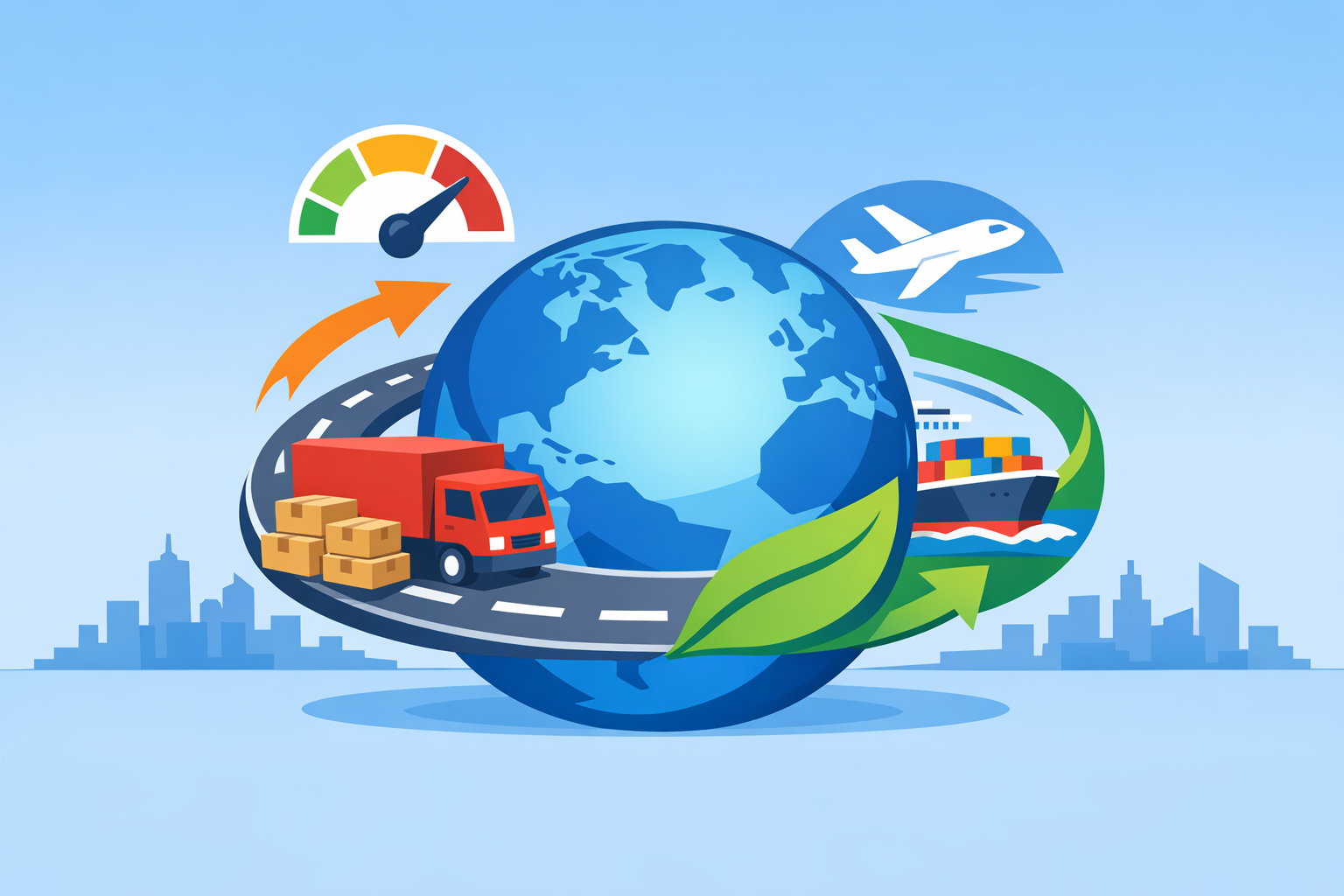
Fast shipping continues to drive increased emissions across global packaging logistics, as companies and regulators work to balance delivery speed with sustainability. Rising consumer demand for rapid delivery disrupts optimized transport planning, often forcing carriers to dispatch underfilled vehicles or rely on air freight, which is significantly more carbon-intensive. A study by MIT's Center for Transportation and Logistics found that emissions increase by 10-12% when speed is prioritized over efficiency. Next-day and same-day deliveries worsen this trend, while delaying deliveries by one to two days can cut carbon output by up to 36%. Delays of three to four days can achieve reductions of up to 56%[1].
Background
Governments and businesses are prioritizing Scope 3 emissions-indirect emissions from supply chains-as part of broader climate strategies. Under the EU's Corporate Sustainability Reporting Directive (CSRD), companies with over €40 million in turnover or more than 250 employees must begin reporting Scope 1, 2, and 3 emissions in 2025. This requirement compels shippers to track carbon emissions in logistics through freight forwarders and carriers[2]. Logistics operators are responding with consolidation practices and routing optimization to reduce carbon intensity per delivery. Companies such as Bunzl have adopted dynamic routing systems and telematics to improve fleet utilization and reduce emissions[3].
Delivery Optimization and Emissions Accounting
Advances in routing technology and delivery consolidation are proving effective. Bunzl's use of Ortec and Microlise transport management systems enables real-time rerouting and higher truck fill rates, contributing to measurable emission reductions[3]. Academic research also points to methods like Differentiated Pickup Point Offering (DPO), which leverages reinforcement learning to dynamically assign pickup locations. DPO can reduce total emissions by up to 9% compared to home delivery models and by 2% on average versus standard pickup options[4].
Achieving transparency in emissions accounting remains a significant challenge. Retailers and logistics providers face increasing regulatory pressures such as the CSRD, driving investment in standardized CO₂ calculators based on ISO and GLEC frameworks to produce audit-ready data for stakeholders[2].
Policy and Market Drivers
Consumer preferences are evolving in response to decarbonization efforts. Oliver Wyman's analysis of six European markets-France, Germany, Italy, Spain, Sweden, and the UK-found that 87% of online shoppers are willing to alter purchasing habits for environmental reasons. The favored approaches include order grouping (26%), national shipping (16%), and in-person pickup (16%). In contrast, fewer than 13% support delayed deliveries, despite their greater emission reduction potential[5].
Global maritime logistics, representing 3% of projected 2025 greenhouse gas emissions, is also under pressure to decarbonize. The International Maritime Organization aims to cut shipping emissions by 40% by 2030. However, recent proposals for mandatory emissions charges have been blocked by major industry stakeholders, underscoring geopolitical complexities in regulatory progress[6].
Outlook
Logistics providers are tasked with balancing fast delivery and emissions reduction through shipment consolidation, optimized routing, modal transitions, and engagement with customers on delivery timing and options. Regulatory incentives and improved emissions transparency are expected to accelerate adoption of sustainable shipping practices across the packaging and supply chain sectors.