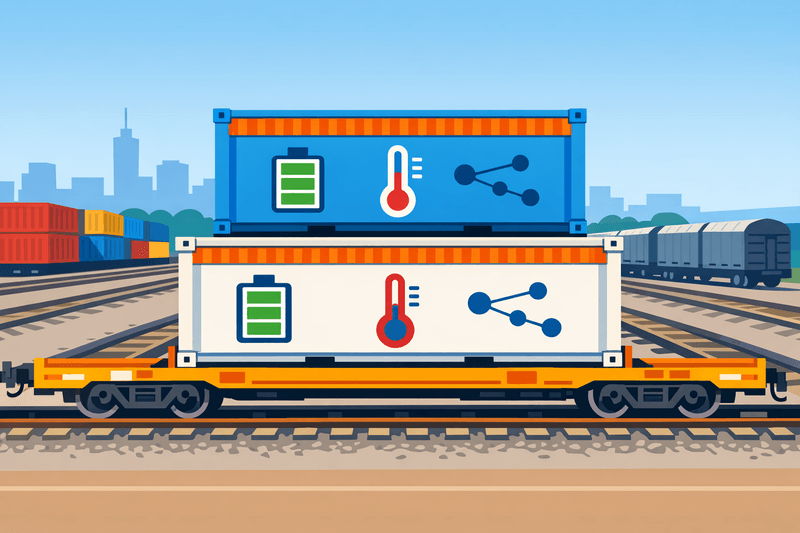
Automakers are shifting EV battery transport from long-haul trucks to intermodal rail to improve speed, safety, and sustainability. Rail freight is expanding to accommodate heavier EV payloads and stricter carbon regulations in Europe and North America. Predictive analytics and modular, temperature-controlled packaging are being used to mitigate thermal risks during transit.
Background
Electric vehicles accounted for about 14.6 percent of new car registrations in Europe in 2023, with projections ranging from 50 to 70 percent by 2030. The increased weight and larger formats of EVs have exposed a structural capacity gap: only about 25 percent of Europe's current automotive rail fleet can efficiently handle these vehicles.1Decarbonization & Automotive Logistics: Why Rail Is Essential
Details
Forecasts indicate a 4.4 percent compound annual growth rate for North American automotive rail freight through 2036, driven by rising EV logistics demand.2Finished Vehicle Logistics in 2026: Trends, Technology & Market Growth Logistics providers are adopting modular packaging systems with insulation and monitoring sensors to address thermal safety. For instance, FLEX Logistik employs an AI-powered risk detection engine that tracks thousands of real-time data points-including temperature and voltage. Predictive alerts support containment and escalation protocols when anomalies appear.3Battery Logistics in the Electric Future - FLEX. Logistik
Rail intermodal services are leveraging digital transformation. Transportation management systems now interface with real-time rail visibility and analytics tools, enabling precise tracking of EV battery shipments and proactive thermal risk prevention.4Top intermodal - multi carrier logistics trends for 2026 | Maersk With secured rail capacity and strategic lane planning, carriers are mitigating previous limitations related to wagon availability and regulatory compliance.
Outlook
As demand for EV battery logistics grows, transport operators plan to expand fleets of temperature-controlled intermodal containers and train-compatible modular units. Enhanced predictive analytics across rail and road networks are expected to further reduce transit risks and optimize the use of rail wagons. The industry will continue to monitor developments in fleet readiness, regulatory frameworks, and AI-driven safety technologies.