Gen Z's growing influence as a car-buying cohort is accelerating pressure on automakers to overhaul vehicle interior materials, supply-chain disclosure practices, and packaging strategies - translating consumer values into concrete product development and regulatory compliance decisions.
According to a Kantar study, younger generations - particularly millennials and Gen Z - are driving change in the automotive market, with sustainability becoming a top purchasing priority. Known as the most climate-conscious generation, Gen Z prioritizes sustainability over brand names: approximately 75% of Gen Z respondents surveyed by the World Economic Forum said they prefer sustainable products. Yet the same cohort is skeptical of surface-level claims, with 58% wary of brands that assert sustainability without verifiable proof, according to research cited in a 2025 Gen Z purchasing behavior report.
Background
Over half of Gen Z consumers considering a new vehicle are evaluating battery electric or plug-in hybrid options, with 63% also considering hybrids, compared to 37% considering a gas-powered vehicle. More than half agree that by 2030 they would accept only EV options when purchasing a new vehicle. This orientation is extending beyond powertrain choice to the composition of the cabin itself.
Alongside the shift to electric vehicles, carmakers are focusing on the sustainability of interior materials. According to Plastics Europe, 12% and 15% of the average modern car weighing 1,500 kg is made up of plastic materials. Traditional automotive interiors have long relied on petroleum-based materials such as vinyl and synthetic leather, which are neither biodegradable nor renewable.
Details
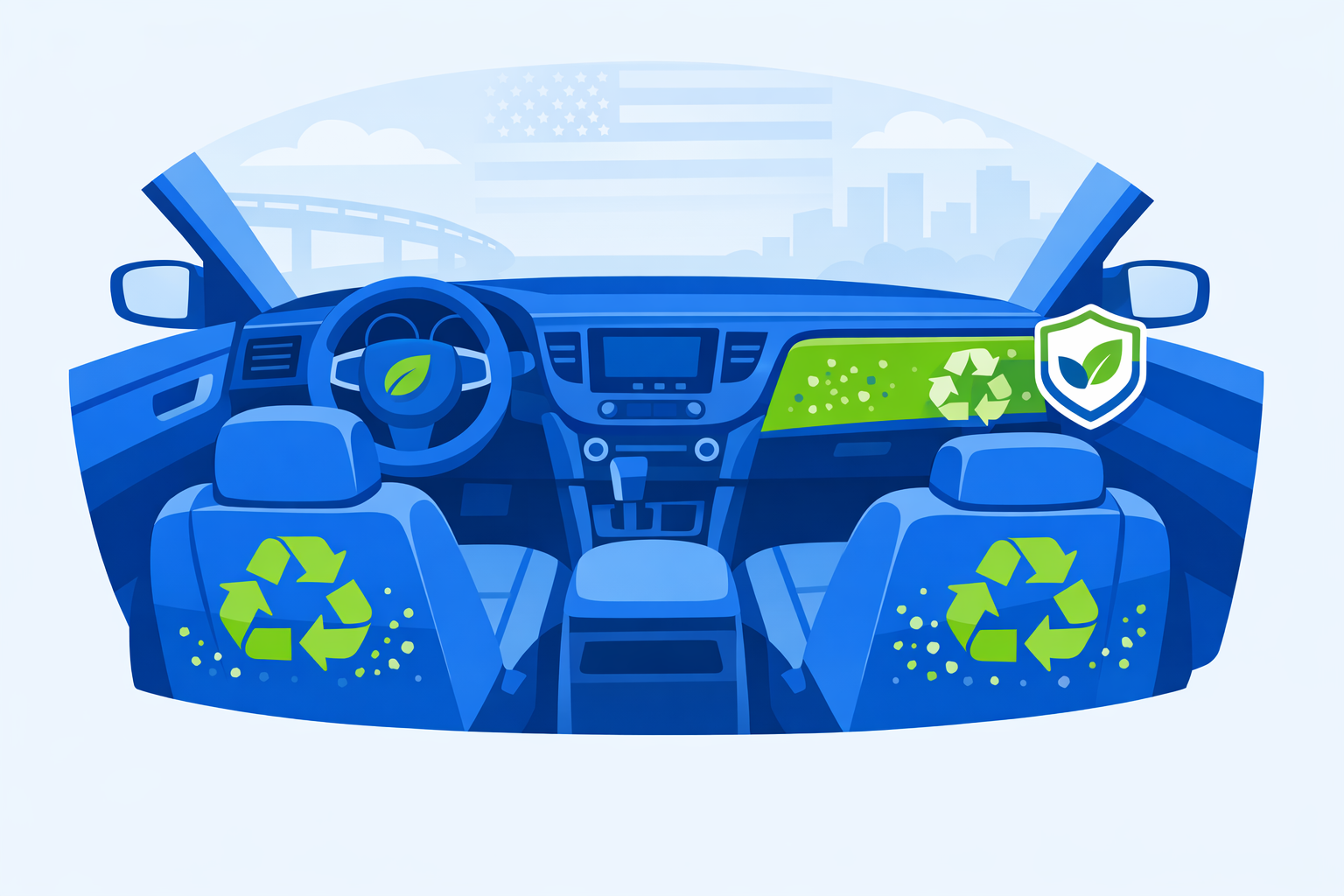
Major OEMs have set quantified benchmarks. Volvo has targeted 25% recycled and bio-based content in its new cars by 2025 as part of its ambition to become a fully circular business by 2040. The brand developed its own material, Nordico, consisting of recycled polyester from PET bottles and PVC made from bio-attributed material sourced from Swedish and Finnish forests. Mercedes-Benz has set a net carbon-neutral fleet target by 2039, working under its Ambition 2039 programme to close material cycles and increase the proportion of recycled materials in its vehicles. The brand's leather-free trim option includes a microfiber nonwoven fabric containing up to 73% recycled material, applied to seat covers, steering wheels, center consoles, and door panels.
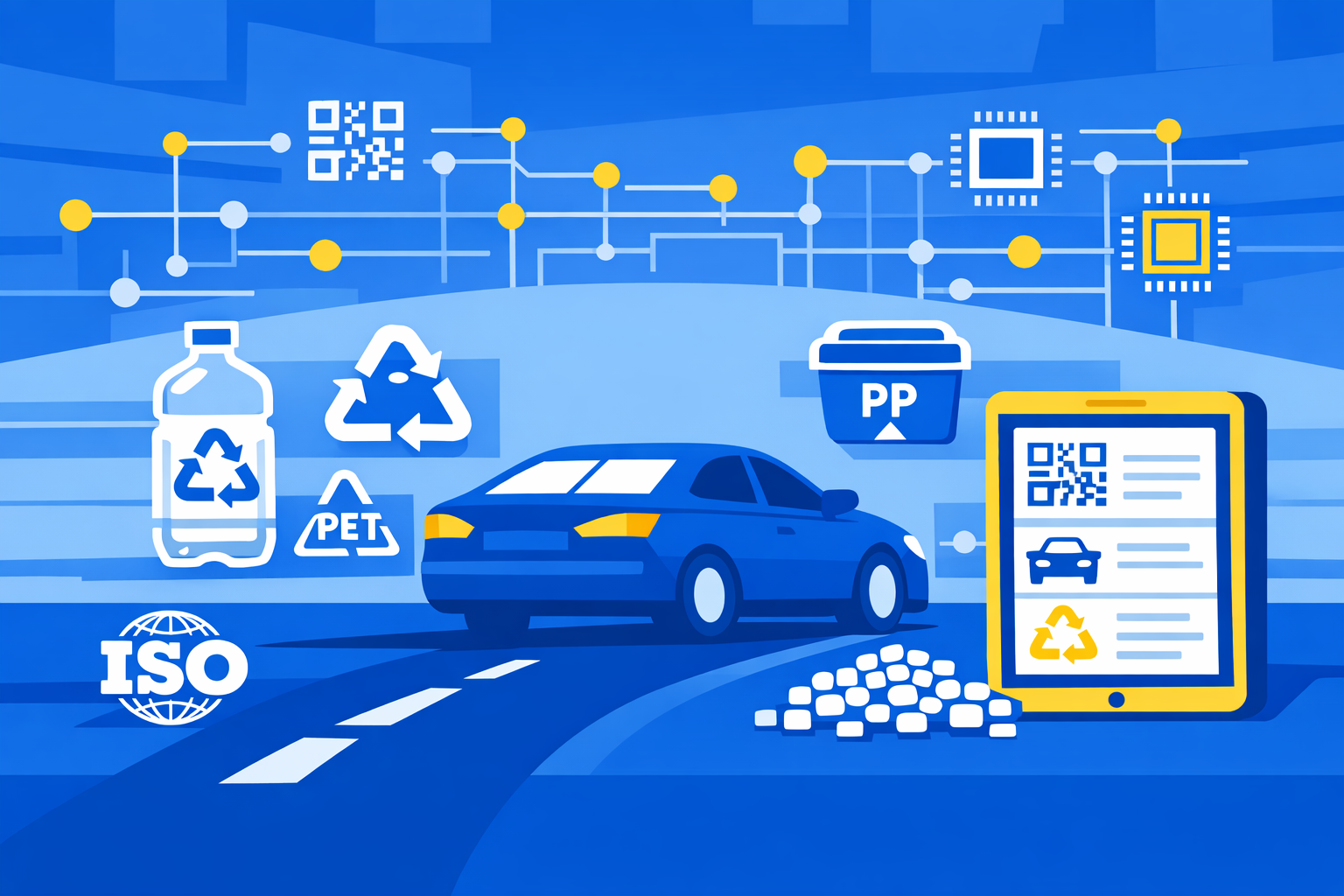
BMW is pursuing circularity through material innovation and digital traceability. Trim parts in its Neue Klasse EV, expected in 2025, will be made from 30% recycled fishing nets and ropes. BMW Group is also testing interior panels made entirely from recycled thermoplastics, focusing on mono-material design to simplify disassembly. Its i Vision Circular concept includes digital material passports accessed through QR codes embedded in parts.
Polestar's Model 3 uses 100% Econyl polyamide carpeting derived from fishing nets, a 100% recycled PET headliner, and a flax composite for inner door panels described as 40% lighter than conventional plastic. The company states 80% of raw material in its aluminum interior trim panels comes from post-industrial discards. On the supply side, Stellantis has committed to 40% recycled content in vehicle plastics by 2030, partnering with European recyclers to source post-consumer polypropylene and polyamide compounds.
Bio-based alternatives are also gaining ground. Pineapple leather (Piñatex), mushroom leather (Mylo), and cactus leather are emerging as cruelty-free options in premium interior applications. NFW has developed Mirum, a non-petroleum leather alternative made from natural rubber, natural fibers, plant oils, natural pigments, and minerals, replacing traditional animal-based or synthetic leather without polyurethane coatings.
Supply-chain transparency is an equally pressing dimension. Gen Z consumers research where products come from and how they are made, with approximately 30% actively reviewing a company's environmental policies before purchasing. On the regulatory side, updated EU legislative measures began taking effect in mid-2025 as part of the EU Circular Economy Action Plan and the Sustainable Products Initiative, setting legally binding requirements for recycled content in plastics, digital product passports for traceability, and design-for-recycling mandates. Starting in mid-2025, manufacturers must embed detailed material data into components through mandatory digital product passports.
The EU's Corporate Sustainability Due Diligence Directive (CSDDD) further requires firms to monitor, report, and address adverse human rights and environmental impacts across their supply chains. Suppliers outside the EU - from wire harness producers in Mexico to mining companies in Chile - may still need to meet EU due diligence standards if they supply European carmakers, effectively exporting EU sustainability rules worldwide.
Outlook
Use of recycled plastics and bioplastics in automotive applications is expected to grow significantly between 2025 and 2035, with forecast compound annual growth rates of 29.1% for recycled plastics and 25.1% for bioplastics, according to IDTechEx. Industry projections estimate the global automotive textiles market will grow from approximately $36 billion in 2024 to nearly $54 billion by 2034, creating opportunity for recycled and bio-based materials. As EU digital product passport requirements broaden and Gen Z's purchasing power expands - estimated at $450 billion and growing - automakers and their tier suppliers face compounding pressure to make materials provenance as transparent as performance specifications.