The global corrugated automotive packaging market is on track to grow from $4.8 billion in 2026 to $6.4 billion by 2033 - and the infrastructure race to serve it is accelerating. On May 20, 2026, International Paper (NYSE: IP) broke ground on a new $225 million sustainable packaging facility[1] in Brandon, Mississippi. For automotive packaging engineers, supply chain directors, and procurement leads in the Mid-South, the project is more than a construction milestone - it signals where regional packaging capacity, circular material flows, and decarbonization infrastructure are heading.
Project at a Glance
| Metric | Detail |
|---|---|
| Total Investment | $225 million (greenfield) |
| Facility Size | 468,000 square feet |
| Site Area | 80 acres, East Metro Center, Brandon, MS |
| Jobs Created / Retained | 150 high-quality manufacturing jobs |
| Projected Operations Start | Q4 2027 |
| Proximity to Existing Plant | < 10 miles from Richland (Jackson) box plant |
| Primary Output | Sustainable corrugated packaging solutions |
| Groundbreaking Date | May 20, 2026 |
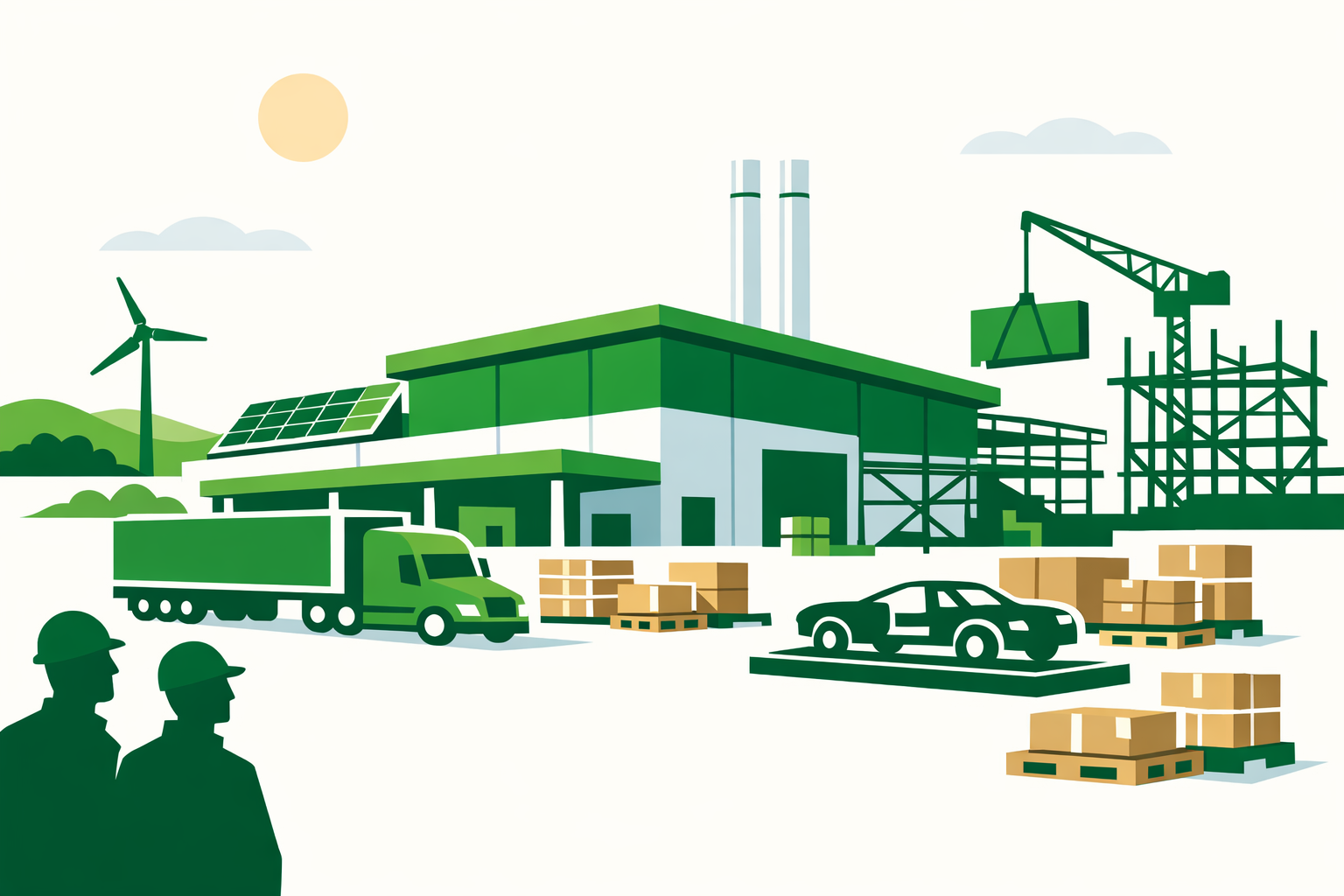
Company leaders, state and local officials, customers, project stakeholders, and community partners gathered on May 20 in Brandon, Mississippi, to mark construction of the new 468,000-square-foot corrugated packaging plant on an 80-acre site in the East Metro Center. Operations are expected to begin in Q4 2027.
"This groundbreaking represents an important step forward for International Paper, our customers, and the communities we serve across the Mid-South," said Keith Townsend, group vice president and general manager, IP North America Packaging Solutions East.
Replacing Aging Infrastructure With a Modern, Efficient Footprint
The Brandon facility is a greenfield replacement strategy, not a simple capacity addition. Employees at the existing Richland plant will transition to the new facility upon completion. Townsend described the investment as supporting IP's strategy "to optimize our box plant system and focus capital where it drives the greatest return," with the goal of "strengthening our service model and ability to provide customers with the highest quality sustainable packaging solutions."
Designed to improve reliability, product quality, and cost position, the new facility supports growth in key market segments while reinforcing IP's commitment to operational excellence, sustainability, and customer-focused innovation.
For automotive customers, this matters in practical terms. Older box plant infrastructure often constrains both grade specifications and throughput consistency needed for high-volume, just-in-time automotive production lines. A modern facility offers tighter tolerances on board strength, more consistent moisture content, and the ability to run lighter-weight grades without sacrificing stack strength - all critical factors for packaging exterior and interior auto components at scale.
Regional Hub Dynamics and the Auto Packaging Loop
Mississippi's Mid-South corridor has become an increasingly important node in the Southeast auto manufacturing network, with assembly and Tier 1 supplier plants concentrated across Mississippi, Alabama, Tennessee, and Georgia. Locating a large-format corrugated facility within this geography shortens supply lines, reduces freight emissions, and supports the responsive replenishment cycles that lean automotive production demands.
IP's new Brandon facility will serve a wide range of industries with sustainable corrugated packaging solutions designed to protect products, enhance supply chains, and support sustainability goals.
The proximity advantage compounds over time. Localized supply chains and strong OEM partnerships are increasingly critical for mitigating risk and ensuring reliable delivery - particularly as automakers continue to absorb lessons from post-pandemic supply disruptions.
IP's existing recycling infrastructure strengthens the circular case further. The company recovers, processes, buys, or facilitates the sale of more than 7 million tons of fiber annually - representing 12% of the entire U.S. market for recycled cardboard. A newer, more efficient plant feeding into that established recovery network means the Brandon facility can, in principle, close the loop more tightly for regional automotive customers: packaging leaves the plant, protects auto parts in transit, returns as old corrugated containers (OCC), and re-enters the fiber stream.
As earlier reporting on fiber-based packaging in automotive supply chains documented, recycled-content corrugated fiber can achieve recycling rates up to 85% in North America and be recycled up to seven times - metrics that increasingly appear in OEM supplier scorecards.
Decarbonization Pressures Are Reshaping Auto Packaging Specs
The Brandon investment arrives as ESG expectations from automakers reshape packaging procurement from a cost-center conversation into a compliance and Scope 3 emissions conversation.
A significant share of Scope 3 supply chain emissions is linked to waste management. By optimizing secondary and tertiary packaging and improving pallet and container preparation processes, businesses can reduce unnecessary waste, associated carbon emissions, and costs.
Policies emphasizing recyclability, waste reduction, and circular-economy compliance are increasing demand for corrugated solutions to replace plastic packaging in automotive logistics. Integrated suppliers offering closed-loop recycling systems enable OEMs to recover used packaging and reintroduce it into production cycles - capabilities that align closely with automakers' ESG reporting and Scope 3 emissions reduction targets.
On the regulatory front, pressure is escalating from multiple directions simultaneously. Seven U.S. states now enforce Extended Producer Responsibility laws for packaging, and all seven required producer reporting by May 31, 2026 - the first simultaneous multi-state compliance deadline in EPR history. Globally, the EU's Packaging and Packaging Waste Regulation (PPWR) becomes enforceable across the EU in August 2026, activating harmonized packaging design, labeling, recyclability, and EPR requirements.
For auto supply chains with global footprints, this regulatory convergence compresses the timeline for upgrading to recycled-content corrugated packaging that can meet both domestic EPR reporting and EU recyclability requirements from a single supplier relationship.
What the Brandon Facility Means for Auto Packaging Strategy
For Procurement and Packaging Engineers: With IP's Brandon facility targeting Q4 2027 production, auto packaging RFP cycles beginning in mid-2026 through early 2027 represent a strategic window to negotiate supply agreements that lock in recycled-content corrugated specs and regional delivery terms before full capacity is committed.
The facility also creates specific opportunities around three strategic levers:
1. Packaging Redesign for Lightweighting Modern corrugating lines can produce lighter-weight grades - particularly for automotive interior components like trim, headliners, and infotainment modules - without sacrificing the compression strength needed for multi-tier stack heights in transit. Lightweighting to reduce material use and freight costs ranks among the major trends driving corrugated specification changes, and a new facility is better positioned to run these grades reliably at volume.
2. Recycled-Content Specification Standardization Industry guidance from the Suppliers Partnership for the Environment - developed collaboratively with Ford, General Motors, Honda, Stellantis, and Toyota - helps automakers and their suppliers identify opportunities to design and source sustainable packaging for automotive manufacturing and service parts operations. A regional supplier operating modern equipment makes it more feasible to standardize recycled-content percentages across vehicle platforms, reducing procurement complexity and enabling traceable material declarations.
3. Material Traceability and ESG Reporting IP's Sustainability in Motion® program is integrated into its North American mills, recycling plants, and hundreds of box plants, providing a chain-of-custody documentation framework that increasingly feeds directly into Scope 3 carbon accounting and supplier ESG audits. Automotive OEMs facing investor-level ESG scrutiny are beginning to require this level of supply chain transparency from packaging vendors.
Economic and Workforce Context
"IP's $225 million investment is a monumental win for our economy, secures 150 high-quality manufacturing jobs for our workforce, and positions Rankin County as the premier hub for industrial investment," said Noel Daniels, Chairman, Rankin First Economic Development Authority.
Daniels noted the East Metro Center was developed specifically to attract world-class industrial partners, adding that "this sophisticated operation doesn't just create and retain jobs, it solidifies Rankin County's position as the premier hub for industrial innovation in Mississippi and the Southeast."
Mississippi's alignment of state incentives with workforce development programs provides a structural cost advantage that, over time, feeds into packaging price competitiveness for the regional automotive customer base.
Takeaways for Packaging and Supply Chain Professionals
- Production timeline: Operations are expected to start in Q4 2027 - relevant for any RFP or packaging redesign project beginning now.
- Circular fiber loop: IP's established recovery network handles more than 7 million tons of fiber annually, making the Brandon plant a credible anchor for closed-loop packaging programs in the Mid-South auto corridor.
- Regulatory alignment: With seven U.S. states in active EPR enforcement and the EU PPWR taking effect in August 2026, switching to verifiably recycled-content corrugated from a regional supplier addresses both near-term compliance and longer-term Scope 3 reporting requirements.
- Lightweighting opportunity: New infrastructure is better equipped to run evolved corrugated grades, enabling weight and material reductions without compromising protection for sensitive auto components.
- Supplier diversification: For OEMs and Tier 1 suppliers currently dependent on distant corrugated suppliers, the Brandon facility offers an opportunity to reduce inbound freight mileage and associated cost and emissions exposure.
The Brandon groundbreaking is a concrete indicator that the corrugated packaging industry is investing in the regional, circular infrastructure auto supply chains increasingly require. Packaging engineers and supply chain directors evaluating 2027 and 2028 sourcing strategies should factor this new capacity - and the procurement windows it opens - into their planning cycles now.