Specialized Packaging Group (SPG) has opened a collaborative Innovation Center in Silicon Valley, positioning the facility as a co-development hub where customers work directly with SPG engineers to accelerate sustainable packaging from concept through final validation. The center brings design, engineering, and validation under one roof to meet growing demand for packaging that addresses product protection, efficiency, and sustainability goals. The opening marks a further expansion by Charlotte, North Carolina-based SPG, which serves the automotive, aerospace, electronics, and medical technology sectors.
Background
SPG is one of North America's largest independent protective packaging providers, operating more than 30 manufacturing and design facilities across the continent with a network of more than 200 manufacturing partners. Since its acquisition by Altamont Capital Partners in 2020, SPG has accelerated efforts to transform packaging materials and raise environmental standards. The Silicon Valley location was telegraphed earlier in the year; CEO Paul Budsworth had signaled that the new facility would "offer expanded testing services and collaborative development" as the company deepens its investment in closed-loop recycling and materials innovation.
The center also arrives amid broader industry pressure to reduce packaging waste in automotive supply chains. The Suppliers Partnership for the Environment, whose membership includes Ford Motor Company, General Motors, Toyota, Stellantis, Honda, Robert Bosch, and Magna International, released guidance in 2024 calling for packaging designs that "minimize automotive packaging waste and address barriers to recyclability and reuse in the design phase."
Details
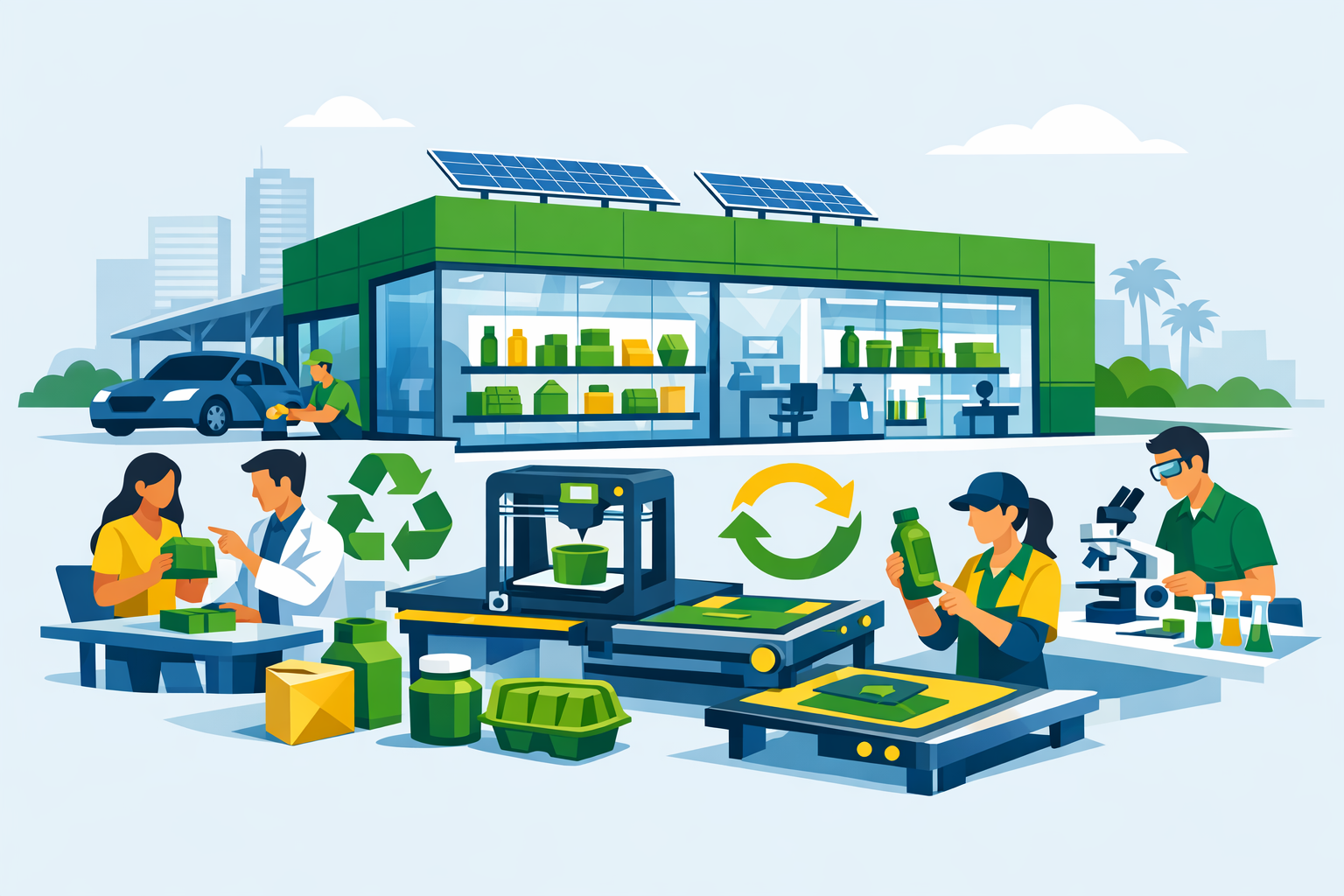
Designed as a space where customers work directly with SPG design engineers, the Innovation Center supports packaging development from early concept through final validation. By combining rapid prototyping with on-site testing, partners can reduce material waste and significantly improve speed to market.
The facility features a dedicated lab, a showroom highlighting SPG's sustainable materials, and advanced prototyping equipment, including a CNC cutting table and 3D printers for immediate fit testing. To ensure performance and compliance, the center includes in-house, ISTA-certified testing capabilities: a vibration table, free-fall drop tester, compression tester, incline impact tester, and environmental thermal chamber.
"The Innovation Center gives our customers direct access to the tools, expertise and testing capabilities needed to move packaging ideas from concept to launch faster," said Joe Gumbis, Chief Commercial Officer, SPG.
Located in the heart of Silicon Valley, the center also strengthens SPG's ability to support data center and cloud infrastructure equipment providers and other high-tech industries.
SPG's sustainability record provides context for the center's ambitions. According to the company's inaugural 2025 Impact Report, SPG achieved a more than 50% reduction in greenhouse gas emissions intensity while doubling company revenue, and increased use of recycled or renewable materials in packaging by one-third. The company also converted more than 12 million pounds of scrap into new packaging products and cut plastic packaging use by nearly half, replacing virgin plastics with alternatives including EcoFoam™ and EcoBubble™. Closed-loop systems have been developed for major industries, including data centers, solar, and automotive.
On the materials side, SPG offers solutions including molded pulp with higher recycled content, monomaterial polyethylene foam for easier recycling, and engineered reusable systems. The company integrates closed-loop processes by collecting used materials from customers, processing them, and turning them back into high-performance packaging.
Outlook
SPG's leadership has stated that sustainability is no longer a separate initiative but a core driver of product development, with customers "demanding solutions that both meet their performance needs and align with their sustainability goals." The Silicon Valley location positions SPG to engage technology-sector customers-including those managing automotive electronics supply chains-at early design stages, where material selection and packaging architecture decisions carry the greatest downstream impact on recyclability and transport efficiency. Whether the open-access testing model spurs broader industry standard-setting, particularly for automotive supply chain applications, remains to be seen as the center moves from launch into active customer engagements.