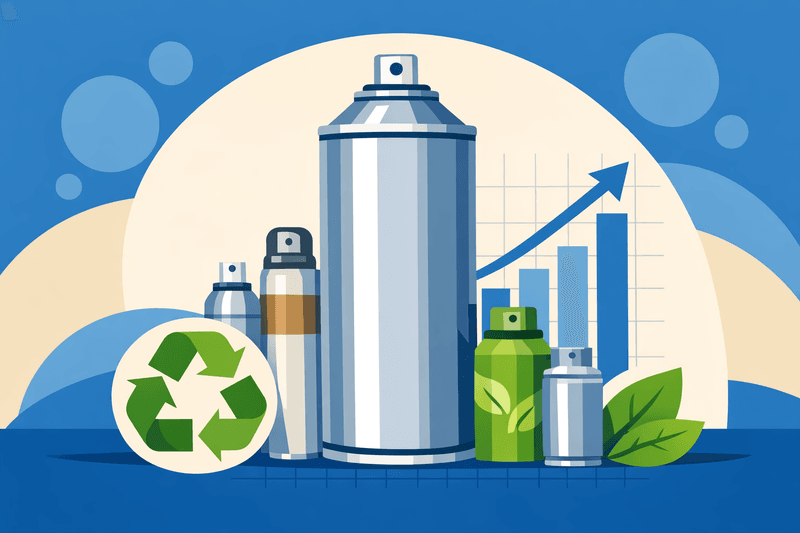
The global sustainable aerosol packaging market reached USD 1.15 billion in 2025, with projections of USD 2.98 billion by 2035, indicating a compound annual growth rate of about 10%.
In Europe, Beiersdorf completed its transition to 100% post-consumer recycled aluminium aerosol cans for brands including NIVEA MEN and 8×4. This transition began in 2024 and scaled regionally last year.
Ball Corporation and Henkel received recognition for the lightweight ReAl Gen 2 alloy 150 ml aerosol can, produced for Henkel's Fa brand and awarded the ADF Sustainable Innovation Award at the 2025 Global Aerosol & Dispensing Forum. The ReAl Gen 2 is currently Europe's lightest impact-extruded aerosol can.
Unilever increased investments in its Global Packaging R&D Centre to accelerate development of recyclable and compostable materials for its aerosol brands.
Background
Rising regulatory requirements and corporate sustainability targets are driving adoption of recycled and lower-impact materials in aerosol packaging. The FMCG sector remains focused on reducing carbon footprints, aligning with circular economy standards, and complying with evolving EU packaging directives-key forces shaping ongoing innovation.
Details
A recent study by Towards Packaging (a Precedence Research affiliate) provides the market size and growth forecasts referenced above.
Beiersdorf adopted fully recycled aluminium cans through collaboration with Ball Corporation, aiming to lower packaging emissions. Kelvin Oecksler, packaging development lead, described the initiative as a "bold step toward true circularity."
At Paris Packaging Week 2025, Ball Corporation's ReAl Gen 2 alloy aerosol can received the ADF Sustainable Innovation Award. Katharina Moller-Racke, Ball's senior key account manager for Europe, noted the can's support for both sustainability goals and cost efficiencies. André Pastore Bertin, Henkel's R&D head, stated the collaboration was essential to achieving a 90% reduction in GHG emissions across Scopes 1, 2, and 3 by 2045.
Unilever's expanded investment in packaging R&D demonstrates a strategic push for scaling recyclable and compostable aerosol solutions, aligning with regulatory and consumer expectations.
Outlook
The projection of the sustainable aerosol packaging market reaching USD 2.98 billion by 2035 indicates ongoing sector growth. As major FMCG companies extend their investment in material innovation and operations, the market is poised to generate further interest among packaging suppliers and chemical manufacturers.
In the years ahead, supply chain participants can anticipate stricter regulatory oversight, increased collaboration among branding and packaging partners, and wider adoption of low-carbon, high-recyclability aerosol formats.