Most auto parts distributors are still planning their response to 2026 recycled-content mandates. One major US operator has moved from planning to testing - and the downstream implications for supplier relationships extend well beyond a packaging swap.
A significant US auto parts distributor has launched a pilot program to transition all packaging across its two largest distribution centers to 100% recycled-content materials. The rollout is structured as a phased feasibility evaluation covering three primary packaging categories - small component boxes, protective inner packaging, and outer shipping cartons - with performance, cost, and logistics under formal review.
The timing is deliberate. As of early 2026, seven US states - California, Colorado, Maine, Maryland, Minnesota, Oregon, and Washington - have active EPR laws for packaging and paper products. These programs are moving from legislative theory into binding compliance, and the financial exposure for distributors operating across multiple states is now measurable. Industry observers tracking the broader shift in US and European automotive packaging note that 2026 is the tipping point year for enforcement.
What the Pilot Actually Tests
The distributor's program is not a branding exercise. It is a structured operational trial with defined success criteria across five sequential phases.
{{component:STEPS_PLACEHOLDER}}
Key performance indicators span compression resistance, moisture behavior, damage rates in live transit conditions, and barrier retention across packaging categories. Recycled-content materials - including post-consumer recycled (PCR) corrugated board, recycled-content protective cushioning, and PCR-resin-based inner packaging - must match or exceed the functional specifications of the virgin materials they replace.
Product protection is non-negotiable. Automotive components range from sensitive electronics and sensors to heavy mechanical assemblies. Precision-fit packaging helps protect delicate automotive parts such as electronics, sensors, and lithium-ion batteries from damage during transit. Any degradation in protection performance directly affects warranty exposure, returns, and customer satisfaction.
Supplier Contracts Are the Real Story
The packaging transition may be visible on the warehouse floor, but the substantive change is happening in procurement documents.
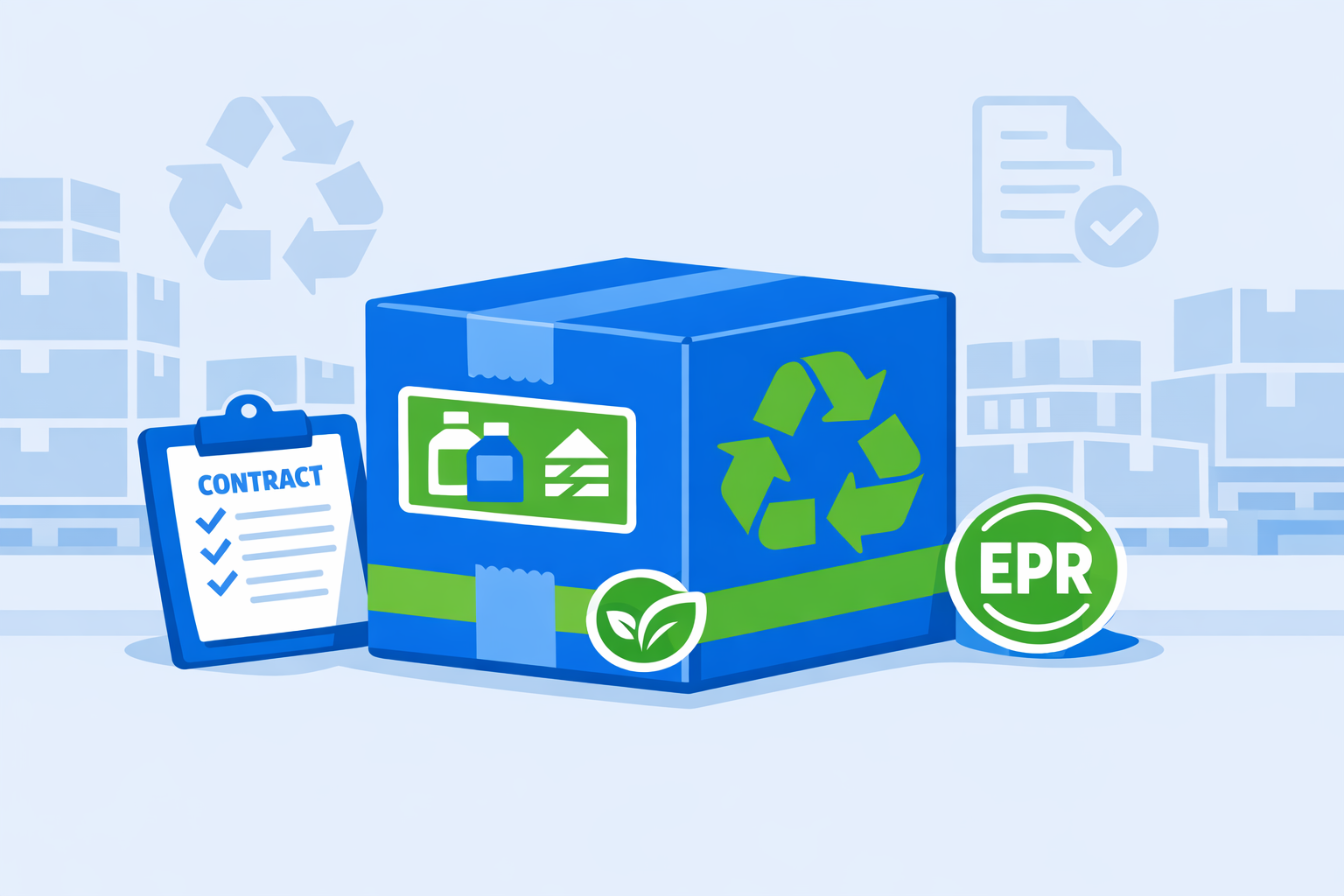
The distributor's pilot includes phased supplier collaboration agreements introducing new contractual language that requires recycled-content materials to meet or exceed existing specifications. Suppliers are invited to participate through a staged commitment, giving them time to adjust formulations and production lines in parallel with demand signals - an approach designed to avoid supply disruption while progressively raising the floor.
Emerging contract provisions include:
- Recycled-content minimums - specifying a floor percentage of PCR material by packaging category, aligned with state EPR requirements and voluntary targets
- End-of-life disposal expectations - defining how packaging waste is managed post-delivery, with liability shifting toward suppliers
- Supplier waste accountability clauses - holding suppliers responsible for packaging-related waste created within the distributor's network
- Labeling compliance requirements - ensuring recycled-content claims on packaging are accurate and defensible under state truth-in-labeling laws, including California's SB 343
These provisions reflect a broader industry shift. Extended producer responsibility (EPR) makes brands financially and operationally responsible for packaging they place into the market, including what happens to it after end use. When that responsibility flows contractually to suppliers, procurement becomes the primary mechanism for managing compliance exposure.
The industry will increasingly embed sustainability clauses - recycled-content minimums, end-of-life disposal expectations, and supplier responsibility for packaging-related waste - into long-term procurement contracts.
- Distributor spokesperson
The Regulatory Pressure Behind the Pilot
The distributor's initiative is directly shaped by the accelerating pace of US packaging regulation. State-level EPR enforcement is no longer a future consideration - it is an active compliance obligation in multiple distribution-relevant jurisdictions.
{{component:TABLE_PLACEHOLDER}}
What makes 2026 different is momentum: early EPR legislation has moved from pilot programs to operational systems with fees, reporting obligations, and compliance deadlines.
At the automotive industry level, the financial impact is already visible. Through an industry working group, seven original equipment manufacturers reported paying approximately $1.1 million to Oregon alone - an early signal of what unmanaged packaging EPR exposure can cost at scale.
On the demand side, the EU Packaging and Packaging Waste Regulation (PPWR), published in January 2025 and generally applicable from August 2026, adds a parallel international compliance layer for distributors serving export markets or European-linked supply chains. The EU PPWR establishes binding minimum recycled content thresholds for plastic packaging ranging from 10% to 65% depending on the category and timeline.
The PCR Cost Challenge
Cost remains the most significant operational variable in the pilot. Recycled resins are projected to maintain approximately a 20% price premium over virgin alternatives globally in 2026, with supply constraints creating upward pressure in high-demand segments. This structural gap between PCR and virgin material costs[1] has been identified as a primary barrier to broader adoption.
The distributor's revised cost model directly addresses this. Rather than assuming PCR parity with virgin materials, the model accounts for:
- Resin price volatility windows - particularly during seasonal demand spikes when competition for PCR feedstock intensifies across consumer goods, beverage, and industrial sectors
- Total cost of ownership - comparing not just material costs but EPR fee savings from using higher-PCR-content packaging under eco-modulated state fee structures
- Long-term contract mechanisms - locking in volume commitments with recycled material suppliers[2] to reduce spot market exposure
Markets for recycled materials have long been defined by boom-and-bust volatility, with prices swinging alongside changes in virgin resin costs, consumer demand, trade policy, and global economics. The distributor's approach - modeling cost against EPR fee offsets rather than simple material-cost comparison - represents a meaningful shift in how the business case for recycled packaging is constructed.
Logistics and Labeling: The Secondary Complications
Two operational areas sit outside the primary performance and cost evaluation but carry significant compliance implications.
Labeling. As recycled-content percentages become contract terms and regulatory requirements, packaging labels must reflect accurate claims. California's SB 343 imposes strict requirements on recyclability and content labeling. States are pairing EPR with stricter rules around recyclability, labeling, and material transparency, increasing scrutiny on packaging claims and design choices. Inaccurate or unsubstantiated labels expose both the distributor and its suppliers to regulatory penalties.
Scale sourcing. Stocking recycled-content materials consistently across two major distribution centers introduces procurement complexity that single-site pilots do not surface. Lead times for PCR-content corrugated and cushioning materials differ from conventional supply chains, and quality consistency across batches requires tighter supplier qualification. These logistics considerations are part of the pilot's formal review scope.
What This Means for Suppliers Across the Auto Parts Network
The pilot's phased supplier commitment model offers a practical on-ramp, but the trajectory is clear. Distributors that follow this model will progressively embed sustainability performance into supplier qualification criteria. Suppliers that begin adjusting formulations and production lines now will be better positioned for long-term contract awards than those waiting for hard mandates.
Practical preparation steps for suppliers:
- Audit current packaging SKUs by material type, recycled content percentage, and weight
- Identify which state EPR programs apply based on distribution geography
- Engage PCR resin suppliers early to understand availability windows and volume commitment options
- Benchmark product protection performance of candidate recycled-content materials against existing specifications
- Review contract language for sustainability clause exposure and end-of-life obligations
The pilot will be monitored through quarterly performance reviews. Final adoption hinges on three criteria: sustained packaging integrity, cost feasibility, and demonstrable reduction in waste and lifecycle environmental impact.
Supplier contracts will be updated to reflect findings. For the broader auto parts distribution network, the message is unambiguous: the packaging specification of 2027 will not look like that of 2024.
FAQ
{{component:FAQ_PLACEHOLDER}}