U.S. automotive suppliers are preparing for a forthcoming federal standard that would mandate minimum recycled-plastic content in vehicle interiors - a regulatory shift that industry officials say will reshape supplier contracts, material sourcing, and compliance infrastructure across the auto supply chain.
Background
Pressure to regulate recycled content in vehicle interiors is intensifying on two fronts. Globally, the European Union is moving to mandate recycled plastic content in new vehicles - with targets of up to 25% recycled plastic content discussed for new vehicles, including material derived from end-of-life cars - setting a precedent that industry groups and U.S. policymakers are watching closely. In North America, a fragmented patchwork of state-level extended producer responsibility (EPR) programs has emerged in the absence of federal rules. States including California, Colorado, Oregon, Maryland, and Washington have enacted EPR laws requiring producers to register, report material data, and pay fees tied to the recyclability of plastics they place on the market.
The American Chemistry Council has called for federal and state-level initiatives to stimulate investment in national durable plastics recycling infrastructure and advance voluntary recycled-content standards aligned with emerging global requirements. Industry groups have also urged OEMs to incorporate recycled-content standards into their material certification processes.
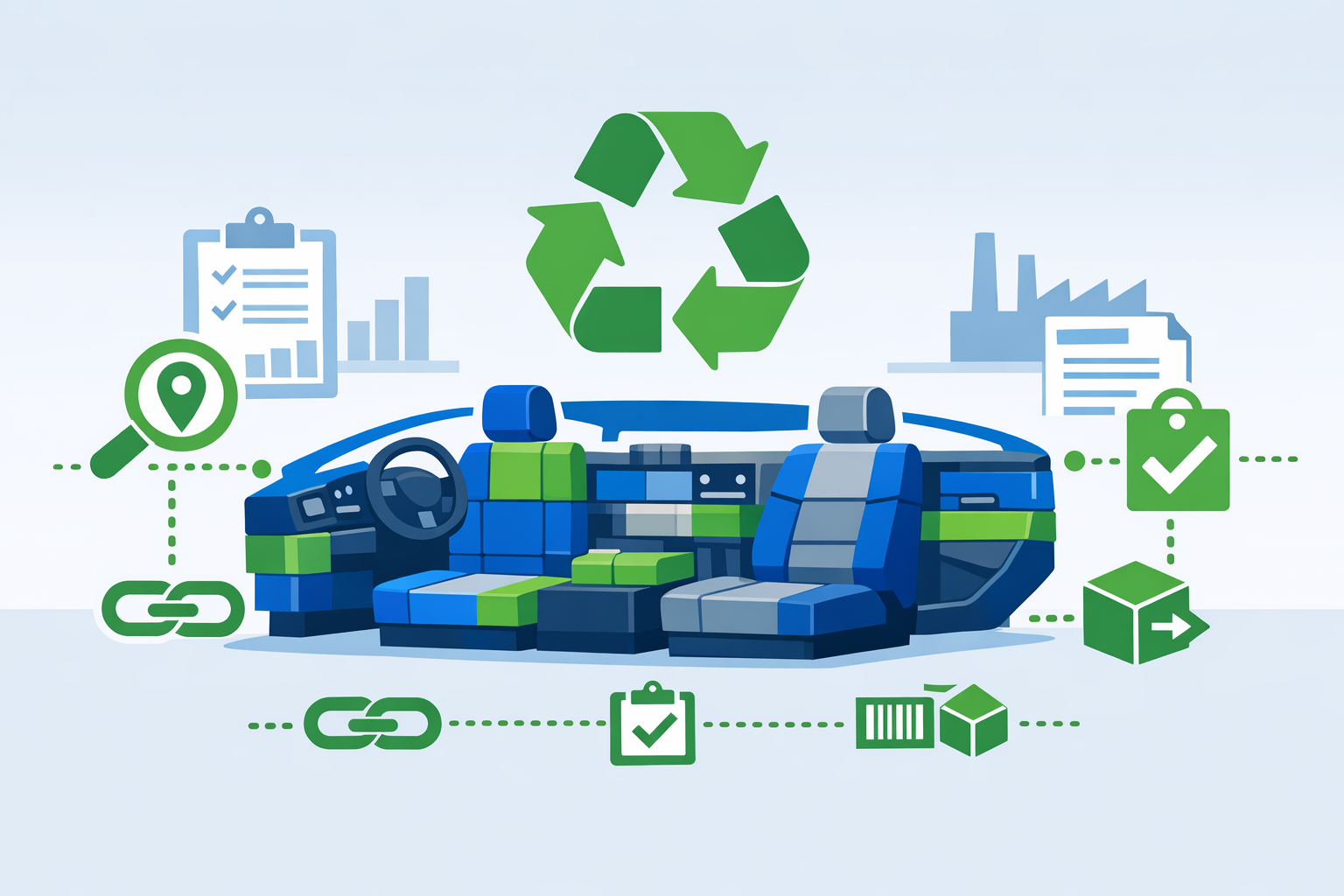
Recycling automotive components is often complicated by the multi-material nature of interior parts - such as seats, door panels, instrument panels, and headliners - because they incorporate adhesives, webs, foams, and other materials, according to the American Chemistry Council.
Details
A prospective federal standard is expected to center on three unresolved questions: what minimum recycled-plastic content will be required and how "recycled" will be defined for different interior substrates; how agencies will verify the origin of plastics and the processes used to recycle them; and which testing protocols will govern durability, UV resistance, and flammability requirements for interior-grade recycled resins.
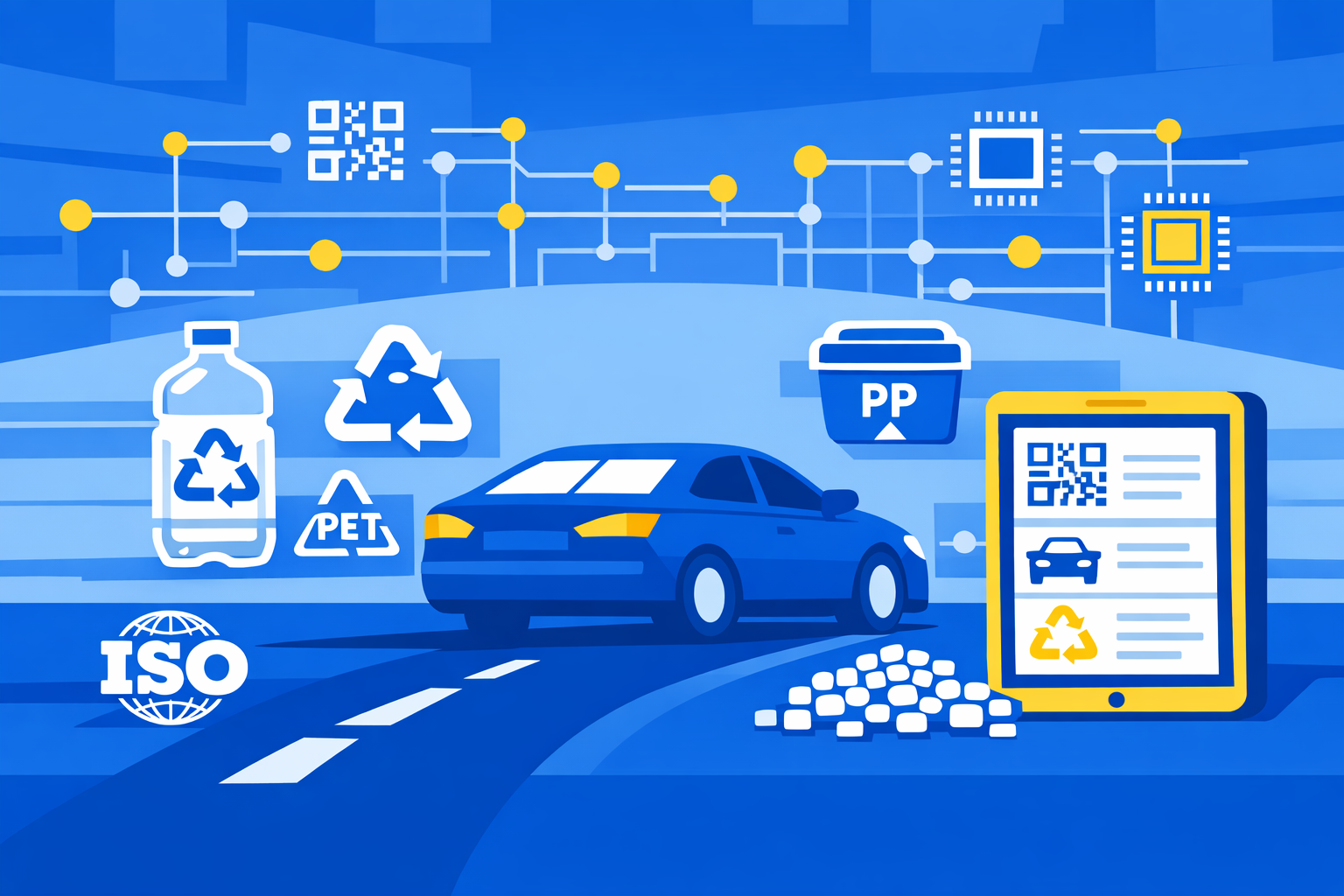
Traceability is emerging as the pivotal operational challenge. Chain of custody is critical to establishing an unbroken, traceable record of ownership and handling, as BS EN 15343 and ISO 22095 outline, according to researchers reviewing plastic recycling traceability systems. The automotive industry is increasingly demanding chain-of-custody documentation, material declarations, and recycled-content verification from suppliers - and suppliers that offer audited post-consumer recycled grades with certification are expected to gain preferred supplier status, according to market analysts.
Several OEMs have already begun building compliance infrastructure in anticipation of new requirements. Stellantis has announced a target to use 40% recycled content in vehicle plastics by 2030, partnering with European recyclers to obtain post-consumer polypropylene and polyamide compounds. BMW Group is testing interior panels made entirely from recycled thermoplastics, with a focus on mono-material designs to facilitate disassembly and closed-loop recycling. Tier 1 supplier Faurecia has developed injection-molding compounds with up to 50% recycled content that meet the dimensional stability and surface quality standards required for automotive interiors.
On the feedstock side, mechanically recycled plastics are the most widely available option and are currently being used by automakers to a limited extent within vehicles, according to IDTechEx. For certain components - particularly mono-material polypropylene interior parts - the challenges to introducing recycled content are more straightforward to overcome, making those components the near-term focus for OEMs and suppliers.
Early industry feedback suggests the standard could create short-term supply constraints as recyclers scale capacity and suppliers invest in data-collection systems to document material provenance. Post-consumer recycled plastic cost dynamics add margin pressure, as downstream processing, certification, color matching, and logistics can add cost relative to virgin material, according to market analysis.
Outlook
Analysts expect implementation of any federal standard to be phased, with pilot compliance requirements and potential exemptions for certain components or low-volume models. OEMs are likely to pursue bilateral supply-chain agreements specifying reporting formats, third-party verification, and audit rights ahead of formal enforcement.
Proponents of the rule argue that a unified federal framework will reduce state-by-state fragmentation, accelerate procurement timelines, and support more liquid recycled-content markets - outcomes that align with automakers' stated circular-economy commitments. For suppliers, the signal is clear: investment in certifications, chain-of-custody documentation, and long-term agreements with qualified recyclers will determine competitive positioning as the regulatory timetable takes shape.