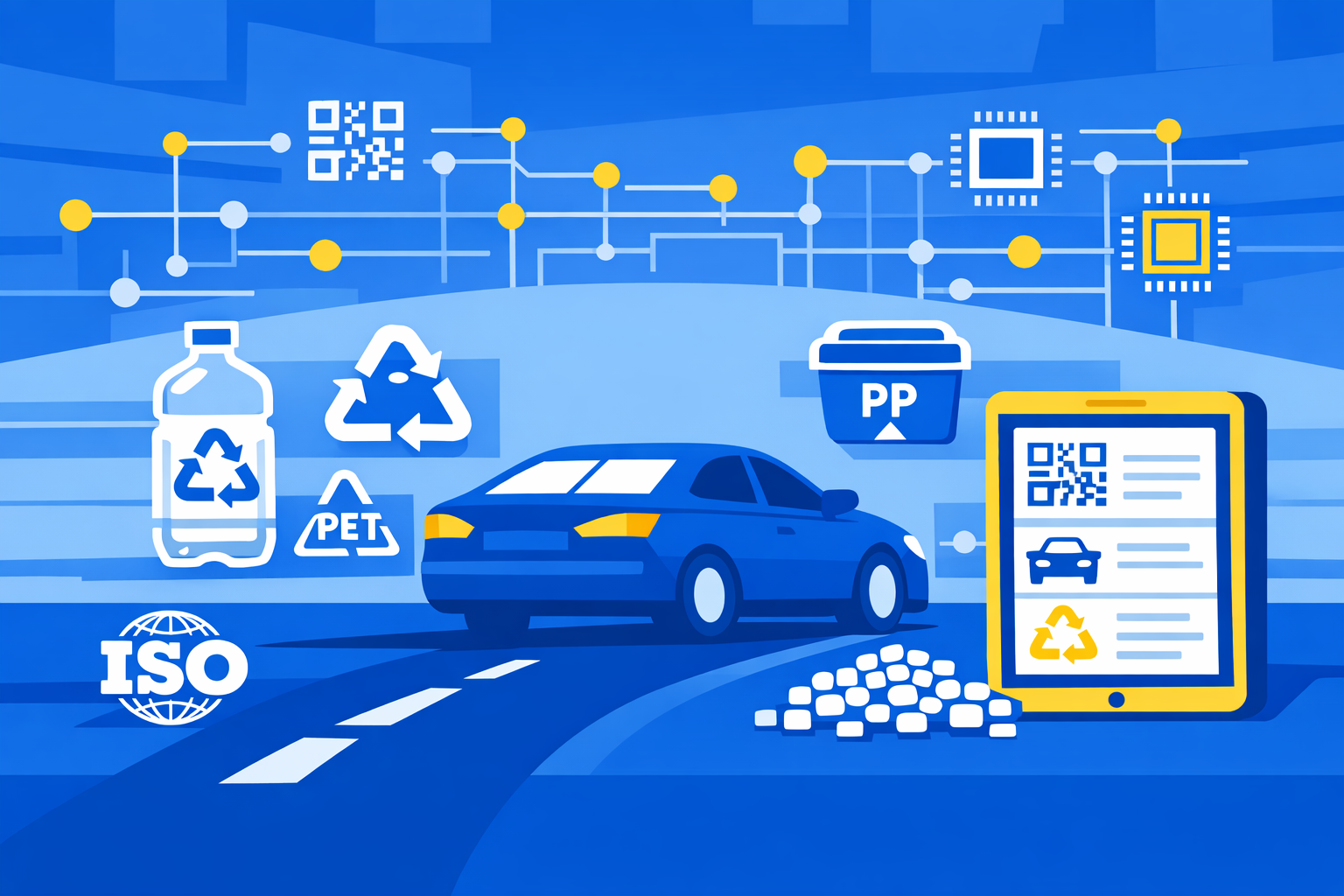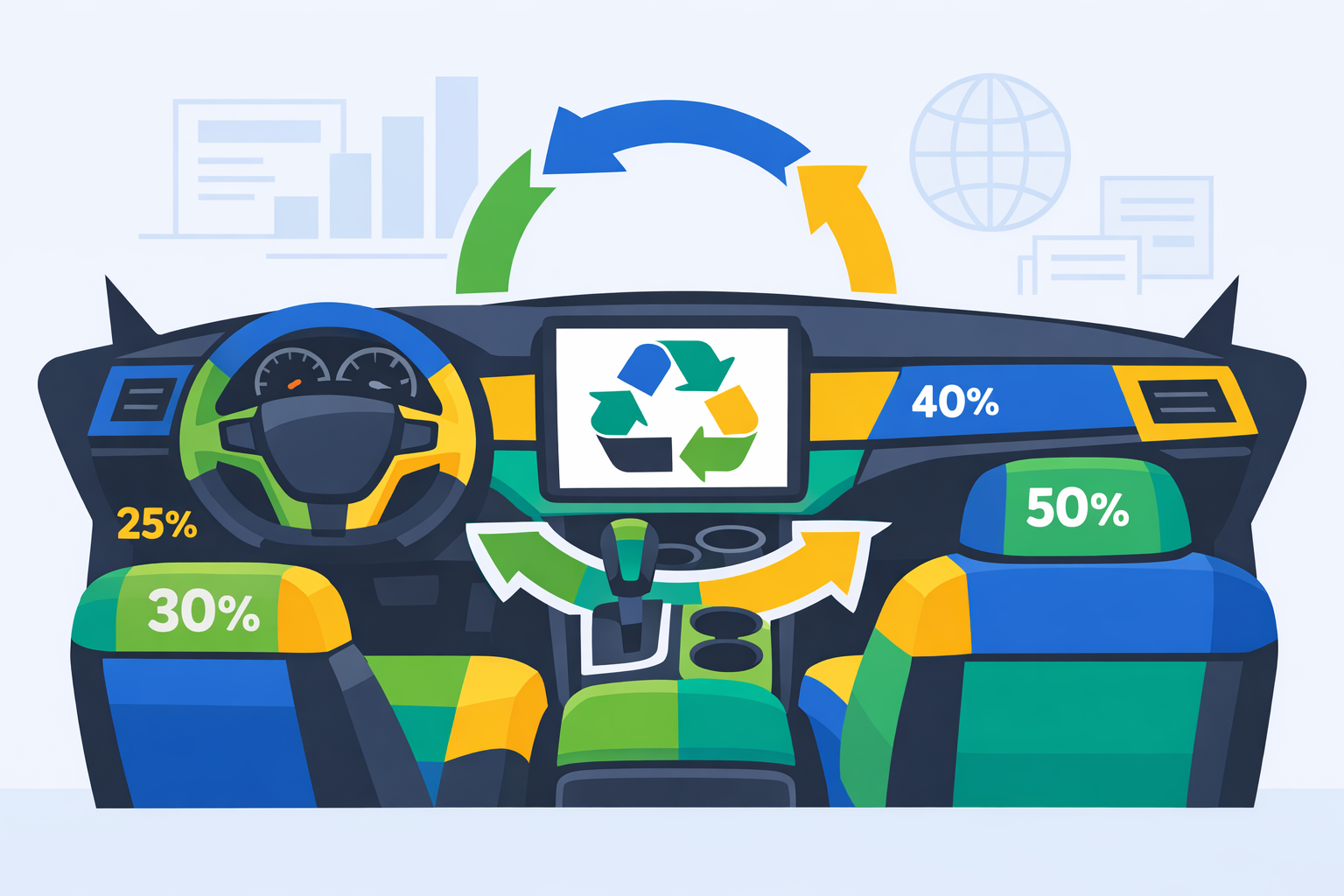
Federal legislative activity in the United States is converging on a nationwide minimum threshold for recycled-plastic content in vehicle interiors. The push aims to replace a fragmented patchwork of state regulations and bring U.S. automakers closer to emerging international requirements. Multiple bills before Congress seek to establish uniform federal frameworks for recycled-content standards and claims, with the automotive supply chain positioned as a primary beneficiary of harmonization.
Background
The U.S. currently has no federal mandate requiring recycled-plastic content in vehicle interiors. As of mid-2025, five states have enacted laws requiring minimum post-consumer recycled (PCR) content in plastic packaging, and seven states have active extended producer responsibility (EPR) programs for packaging. This state-by-state divergence forces tier-one and aftermarket automotive suppliers to manage multiple compliance obligations, increasing sourcing complexity and cost.
Pressure for federal action is intensifying as international standards advance ahead of domestic policy. The EU's proposed End-of-Life Vehicles regulation would require new vehicles to contain 20% recycled plastic within six years of entry into force, rising to 25% within ten years, with a portion mandated to come from end-of-life vehicles. According to the World Economic Forum, this EU regulatory shift "elevates plastics in vehicles from an optional sustainability consideration to a legally enforceable component" of vehicle manufacturing. The American Chemistry Council has separately called for federal and state initiatives to stimulate investment in national durable-plastics recycling infrastructure for automotive end-of-life streams.
Details
On the legislative front, several bills introduced in the 119th Congress address the structural conditions underpinning a vehicle-interior recycled-content standard. The Recycled Materials Attribution Act (RMAA), introduced in the U.S. House of Representatives on February 11, 2026, would direct the Federal Trade Commission to update its Green Guides to establish clear, consistent federal standards for recycled-content and recycling claims. According to the Recycling Leadership Council, which backed the bill, the RMAA would harmonize inconsistent state rules and ensure recycled-content claims are "accurate, transparent, and verifiable under a uniform national framework." The legislation has been referred to the House Committee on Energy and Commerce.
Separately, the Packaging Claims and Knowledge (PACK) Act, introduced in December 2025, would establish a federal framework under the Federal Trade Commission regulating recyclability, compostability, and reusability claims on consumer packaging, aiming to eliminate the current patchwork of state labeling laws. The American Chemistry Council has also called on the federal government to formally recognize plastics produced via chemical recycling as qualifying "recycled plastic," a designation with direct implications for automotive suppliers seeking to meet future content thresholds.
A modern vehicle's plastics content comprises approximately 20% of its total weight, with interior components such as dashboards, door panels, center consoles, and seat bases typically manufactured from ABS, PC/ABS blends, and modified polyolefins. According to IDTechEx, key challenges to increasing recycled content in automotive interiors include material availability, variable material properties, and cost-with mono-material polypropylene interior components currently the most tractable target for automakers. The American Chemistry Council has noted that approximately 60% of North American plastic produced and sent to domestic manufacturers is used in durable goods, yet recycling rates for these materials remain low.
Leading OEMs are moving ahead of any current U.S. mandate. Stellantis has set a target to use 40% recycled content in vehicle plastics by 2030, partnering with European recyclers to obtain post-consumer polypropylene and polyamide compounds. Tier-one supplier Faurecia has developed PP and ABS compounds with up to 50% recycled content under its NAFILean and MATTrim brands, tailored for injection molding in automotive interiors.
Outlook
The trajectory of U.S. federal recycled-content legislation will depend partly on the pace of committee action on pending bills. As of late May 2026, no scheduled actions are confirmed for the RMAA or PACK Act in the House Committee on Energy and Commerce, though both carry bipartisan support. Should a vehicle-specific recycled-content threshold be proposed, rulemaking under the Federal Trade Commission or EPA could extend timelines by several years. In the near term, automotive procurement and sustainability teams should begin supply chain audits for PCR-capable material streams, as EU ELV compliance obligations will affect globally sourced platforms ahead of any comparable U.S. mandate.