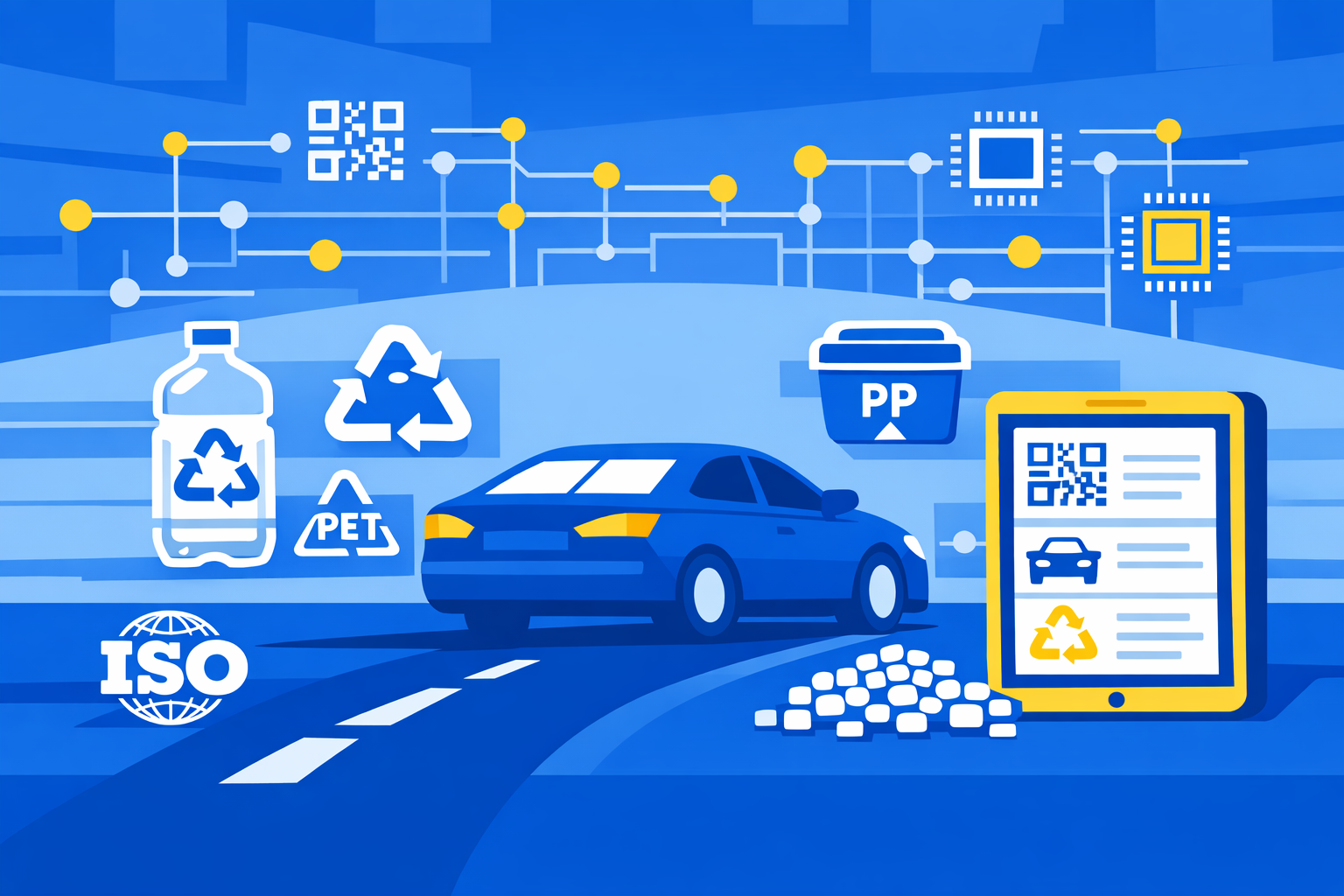
Automakers in the United States are preparing for new Extended Producer Responsibility (EPR) packaging regulations set to affect product packaging design, materials selection, and supplier reporting systems starting in 2026. Original Equipment Manufacturers (OEMs) must adapt packaging to meet recyclable and lightweight standards, implement digital packaging passports, and comply with new fee structures and reporting requirements.
Background
Several U.S. states-including California, Oregon, Colorado, Maine, Minnesota, Maryland, and Washington-have enacted packaging-specific EPR legislation. These laws require producers to join Producer Responsibility Organizations (PROs), report packaging data, and pay fees based on recyclability and recycled content {{cite:}}. Statutes such as California's SB 54 and Oregon's EPR act use eco-modulated fees and set recyclability and reduction targets through 2032, shifting end-of-life packaging costs from municipalities to producers {{cite:}}{{cite:}}.
In the automotive sector, OEMs are explicitly designated as "producers" under EPR frameworks. They face SKU-level data reporting, recyclability mandates by 2032, and increased requirements for post-consumer recycled (PCR) material usage {{cite:}}. This marks a shift from viewing packaging as a peripheral expense to treating it as a regulated aspect of product stewardship.
Details
OEMs must register with state-approved PROs-most commonly the Circular Action Alliance (CAA)-and submit detailed packaging data, including material type, weight, recycled content, and recyclability attributes for each SKU, according to state-specific schedules {{cite:}}{{cite:}}. For states such as Oregon and California, reporting 2025 packaging data is required by May 2026, with subsequent fee payments scheduled for mid- to late-2026 and early 2027 {{cite:}}.
Automakers anticipate higher packaging costs, as fee structures penalize the use of non-recyclable or hard-to-recycle materials while rewarding recyclable and lightweight formats. PwC analysts estimate OEMs could offset fees or achieve cost advantages by redesigning packaging, enhancing traceability, and increasing use of PCR content, presenting opportunities for returns in compliance investments {{cite:}}.
Packaging suppliers are responding by developing data transparency tools and digital systems to assist OEM compliance. These include supplier portals capturing material composition, weight, and sustainability credentials, along with packaging redesign services to cut size and weight without compromising logistics performance {{cite:}}{{cite:}}.
Industry standards bodies such as Germany's VDA are promoting digital packaging passports and standardized formats like Odette LG19 to improve material and certification data exchange across supply chains. These measures may become part of future OEM packaging practices {{cite:}}.
Outlook
OEMs are expected to accelerate packaging redesign through 2026 to align with recyclability mandates, performance goals, and cost pressures. Supplier ecosystems are likely to advance digital transparency and material innovation. Implementation of digital packaging passports may streamline EPR compliance and enhance supply chain traceability, especially as U.S. programs expand and regulatory complexity increases.