US Auto Packaging EPR Rules Accelerate Recycled-Content Push Across OEMs
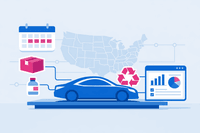
A new wave of Extended Producer Responsibility (EPR) regulations across several U.S. states is driving automotive original equipment manufacturers (OEMs) to increase recycled-content standards within their packaging supply chains. States including Maine, Maryland, Minnesota, Oregon, Washington, and California now require OEMs to register with Producer Responsibility Organizations (PROs), submit detailed packaging data, and consider incentives favoring reusable or high-recycled-content materials. These regulations, taking effect from 2025 and intensifying in 2026, introduce tiered fee structures and eco-modulation strategies that provide financial incentives for sustainable packaging.
Background
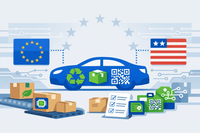
State-level EPR laws shift post-consumer packaging waste responsibility from municipalities to producers, including automotive OEMs. These laws emphasize recyclability, compostability, and the use of recycled content. Producers must register with a PRO, report packaging types and volumes, and pay fees based on material recyclability and post-consumer recycled (PCR) content. Eco-modulated fee designs apply lower fees to recyclable or recycled-content materials and higher fees to hard-to-recycle packaging. As of late 2025, seven states have enacted such laws, with implementation continuing to 2032. Multiple regulatory frameworks classify OEMs as producers, directly assigning them compliance and design responsibilities.
Details
In Maine, OEMs must register with the stewardship organization and report packaging data by May 2026, with material definitions and fee infrastructure rolling out through 2027. Washington and Maryland require OEMs to join PROs or register individually by mid-2026, with financial contributions linked to material recyclability. California allows PRO membership from 2027, with performance targets tightening through 2032. Minnesota mandates OEM PRO participation by mid-2025 and increasing cost-sharing through 2031. Oregon began its PRO system in July 2025; OEMs have started reporting and paying fees despite ongoing legal challenges. These measures are increasing demand for recycled-content packaging, accountability for end-of-life management, and the need for supplier collaboration and traceability. OEMs are seeking comprehensive material, PCR, and recyclability data from suppliers to support compliance and minimize fees.
Outlook
As EPR regulations evolve, OEMs will face tiered fees that incentivize recycled-content packaging and may penalize conventional materials. From 2026 onward, strategies in packaging design, procurement, and supplier collaboration will focus on materials traceability, PCR integration, and compliance with state PRO standards. OEMs adapting to these changes early may achieve cost efficiencies, while those that delay could encounter rising fees and heightened compliance risks.