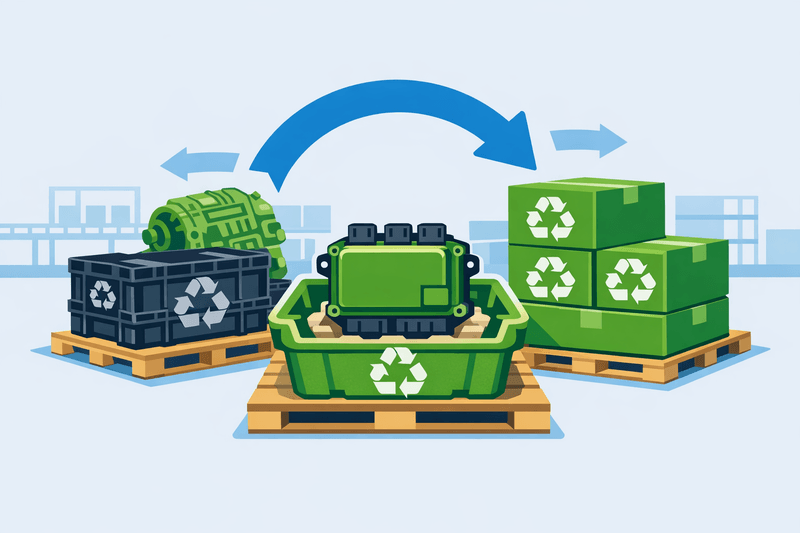
US Tier 1 automotive suppliers and automakers have launched pilot programs using 100% recycled-content packaging-comprising recycled plastics and fiber-based materials-for critical components such as control modules and powertrain parts. This initiative aligns with increasingly stringent state-level Extended Producer Responsibility (EPR) mandates set to apply across key markets by 2026. The pilots aim to evaluate material performance, logistics durability, and cost implications ahead of upcoming regulatory deadlines.
Background
States including Colorado, Maine, Maryland, Washington, and California have adopted phased EPR regimes that require producers to join Producer Responsibility Organizations (PROs), report packaging data, and pay compliance fees between 2026 and 2028. Colorado's program begins January 1, 2026. Maryland and Washington require producer registration by mid-2026, and California is expected to enforce its rules by January 20271https://www.packaging-labelling.com/news/us-packaging-epr-programs-advance-with-harmonized-reporting-and-investments-in-recycling-infrastructure-in-2026?utm_source=openai. In the absence of a unified federal EPR standard, the fragmented regulatory landscape compels multi-state businesses to adapt packaging strategies proactively2Viewpoint: US recycled polymers under pressure | Latest Market News.
Details
The pilot programs target packaging for high-value automotive parts, testing recycled-content formats under conditions representative of real-world supply chain operations. Evaluations focus on recycled polymers' moisture resistance, structural integrity during transit, nesting efficiency for shipping optimization, and the feasibility of reusable packaging in spare parts logistics. Preliminary supplier data indicates that fiber-based trays and recycled polypropylene (r-PP) crates may decrease material costs by 10-15% while meeting established OEM durability standards. Ongoing efforts include renegotiating contracts to incorporate recycled-content requirements and performance guarantees. Collaborative logistics trials continue between suppliers and fleet operators.
Outlook
If successful, the pilots could drive wider adoption of standardized packaging optimized for automated material handling and returns, following e-commerce models. Broader cross-industry adoption may occur if recycled-content packaging proves both scalable and cost-effective. As states transition to full EPR compliance in 2027-2028, findings from these studies are expected to influence broader implementation of circular packaging models within the automotive sector and beyond.