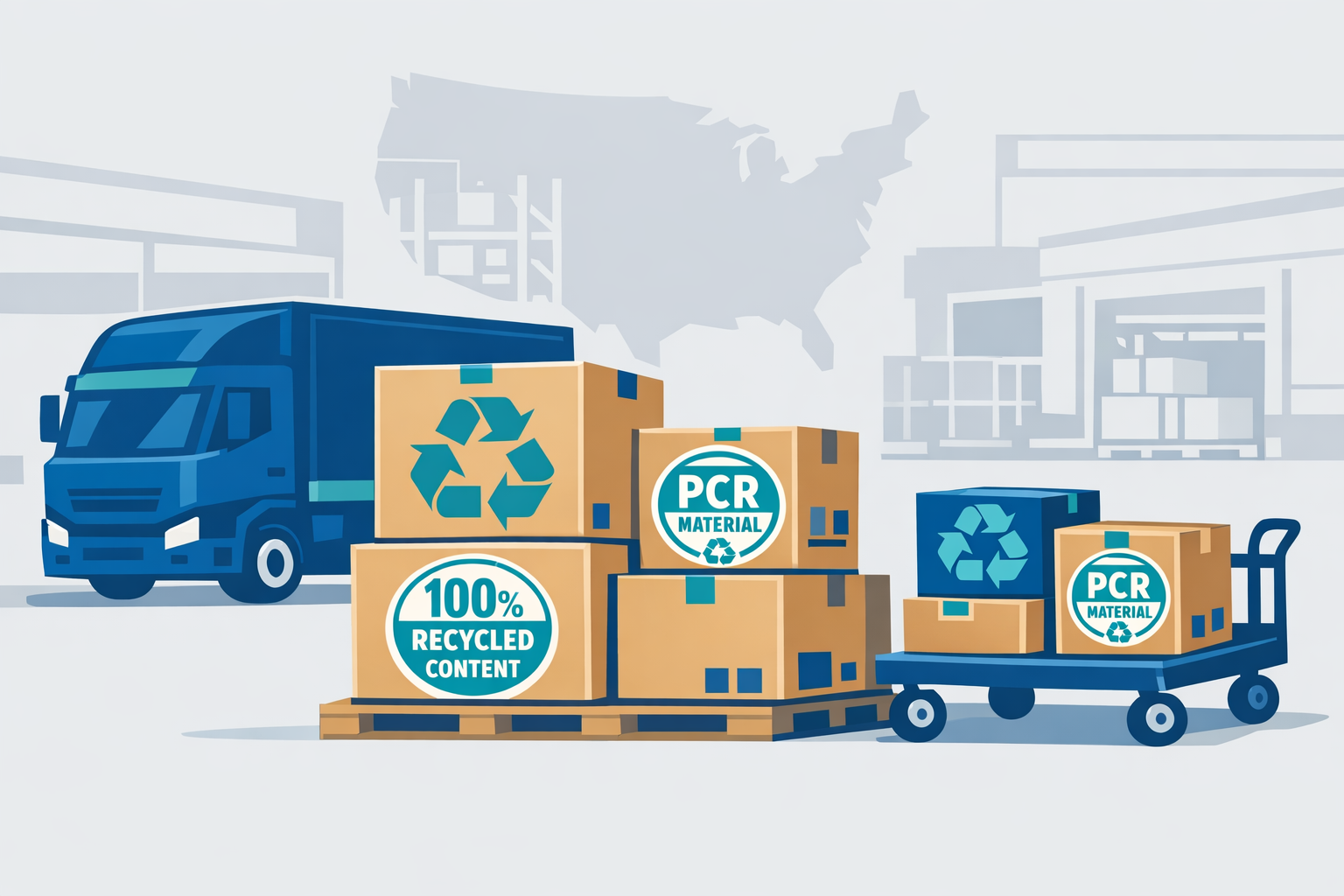
Major US auto parts distributors are launching pilot programs requiring 100% recycled-content packaging across parts shipments, forcing rapid renegotiations of supplier contracts as state-level extended producer responsibility (EPR) enforcement and post-consumer recycled (PCR) content mandates shift from planning to active compliance deadlines in 2026. The pilots-spanning corrugated cases, dunnage, and protective wraps used in aftermarket and service-parts logistics-are compressing timelines for packaging material transitions that many suppliers had expected to manage gradually over several years.
Background
As of early 2026, seven US states-California, Colorado, Maine, Maryland, Minnesota, Oregon, and Washington-have enacted packaging-specific EPR laws, all at varied stages of implementation. According to compliance tracking firm H2 Compliance, EPR is shifting from rollout to real enforcement in 2026, with more states activating programs, expanding material coverage, and tightening compliance expectations.
Separately, standalone recycled-content mandates are tightening on plastic packaging formats widely used in automotive distribution. According to EcoEnclose, Oregon's next round of fees will be due in July 2026, California's in late 2026, and Colorado's in January 2027. Brands are advised to design packaging to reduce fees by minimizing size and weight, switching to lower-fee materials, maximizing recycled content, and designing for recyclability. Under most state EPR structures, fees are increasingly tied to packaging weight, material type, and recyclability.
For automotive distributors operating across multiple regulated states, the cumulative obligation is significant. According to EcoEnclose, businesses should budget for a 15-40% uplift on packaging spend to absorb EPR fees and material transition costs. As packaging regulations evolve to emphasize recycled content, recyclability, and reuse, industries face challenges adapting-particularly in sectors like electronics and automotive, where product fragility during transit is a primary concern.
Details
The distributor-driven push toward 100% recycled-content packaging is creating three distinct pressure points for suppliers: material specification changes, updated testing requirements, and contested liability clauses governing packaging performance in transit.
On the material side, eco-modulation refers to adjusting producer fees under EPR programs based on the environmental performance of packaging materials, meaning distributors can reduce fee exposure by mandating higher PCR content from packaging suppliers. This financial incentive is accelerating what had previously been voluntary guidance. The Suppliers Partnership for the Environment (SP), a forum that includes Ford, GM, Honda, Stellantis, and Toyota, has published updated packaging guidance for automotive companies seeking to recycle packaging materials more efficiently. The guidance was developed by SP's Sustainable Packaging Work Group, building on previously released guidelines. According to SP Executive Director Kellen Mahoney, "This guidance reflects practical, tested approaches our members have identified to improve the quality and value of recovered packaging materials." By sharing the information openly, SP hopes "to make it easier for companies of all sizes to pursue opportunities toward more circular and sustainable packaging systems."
On the testing front, switching to 100% PCR materials introduces material-consistency challenges that complicate standard packaging qualifications. A major obstacle in the post-consumer recycled plastics market is inconsistent material quality: recycled plastics often vary in color, purity, and performance because they originate from mixed waste streams with different grades and additives, making it difficult for manufacturers to maintain product standards in high-performance applications. In auto parts logistics, where components range from delicate sensors to heavy powertrain parts, distributors and suppliers are now negotiating which party bears the cost and liability when PCR-based packaging fails to protect parts in transit-a question not addressed by existing contract templates.
The legal landscape is also adding complexity. According to Pregis, on February 6, 2026, the US District Court for the District of Oregon granted a preliminary injunction preventing the state from enforcing Oregon's Plastic Pollution and Recycling Modernization Act against members of the National Association of Wholesaler-Distributors (NAW). Enforcement is paused for NAW members only until the trial in July 2026. The litigation underscores how distributors-which many state laws define as "producers" liable for packaging placed on the market-face exposure on multiple regulatory fronts simultaneously.
The global post-consumer recycled plastics market was valued at USD 72.3 billion in 2024 and is projected to reach USD 203.4 billion by 2034, growing at a CAGR of 10.9%. According to market data cited by Market.us, a major challenge constraining the post-consumer recycled plastics market is inconsistent material quality, as recycled plastics often vary in color, purity, and performance. For auto parts distributors with transit-damage liability clauses in supplier agreements, this variability is prompting demands for third-party material certification and ASTM/ISTA-standard drop and compression testing of PCR-based packaging formats before commercial rollout.
Outlook
With Oregon's EPR enforcement trial set for July 2026 and California's fee schedule release due in April 2026, distributors face a narrow window to lock in compliant packaging specifications and finalize revised supplier contracts before cost structures become binding. Some states may require packaging sold into their jurisdictions to meet performance targets by a set date-such as being reusable, recyclable, compostable, or containing a minimum percentage of recycled content. California, for example, has established design targets that covered packaging products must meet by 2032. Downstream OEMs are also beginning to reference distributor packaging compliance records as part of supplier qualification reviews, extending the EPR compliance obligation further up the parts supply chain. For the industry, 2026 is not a distant planning horizon but a tipping point that will shape how packaging is designed, sourced, and managed going forward.