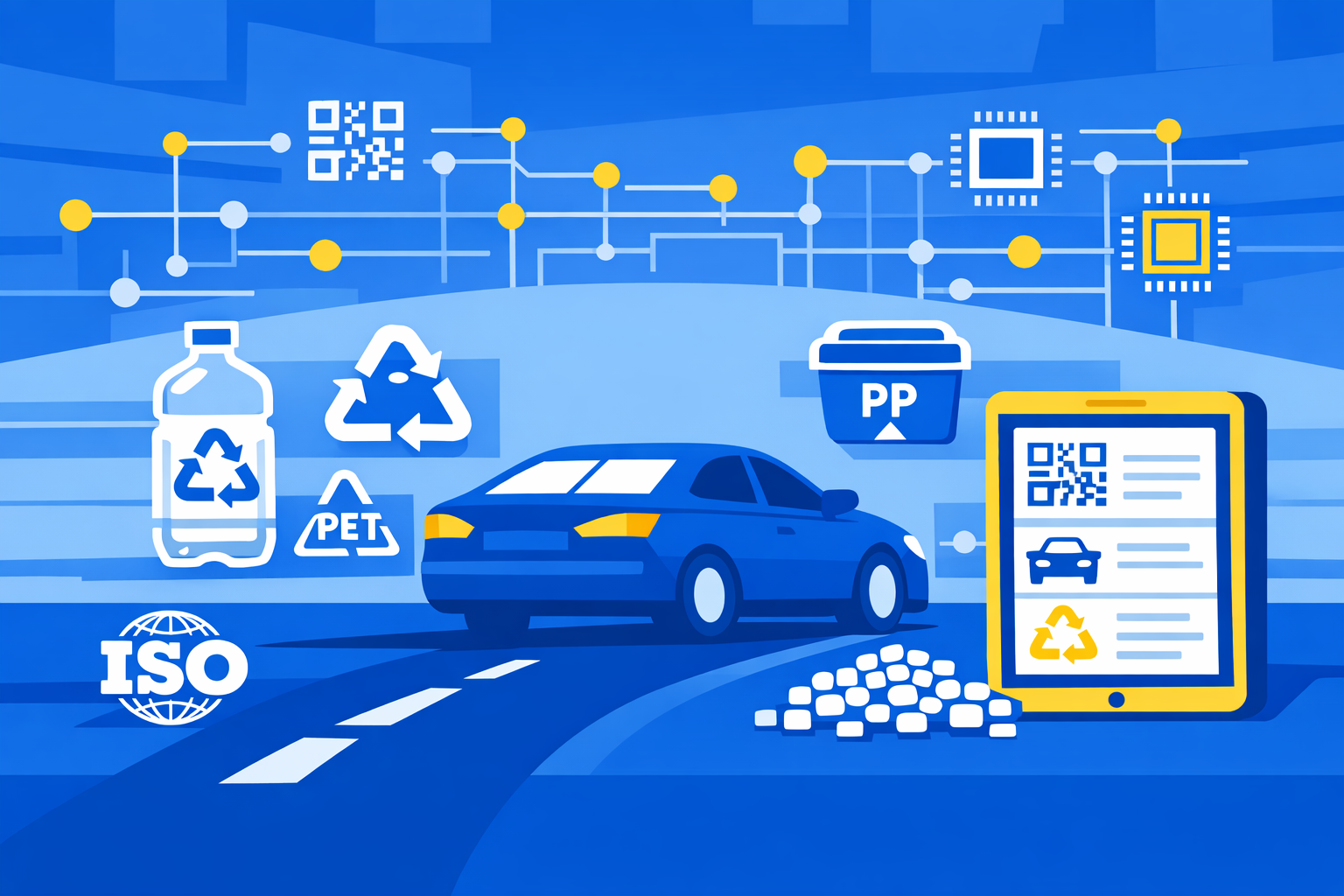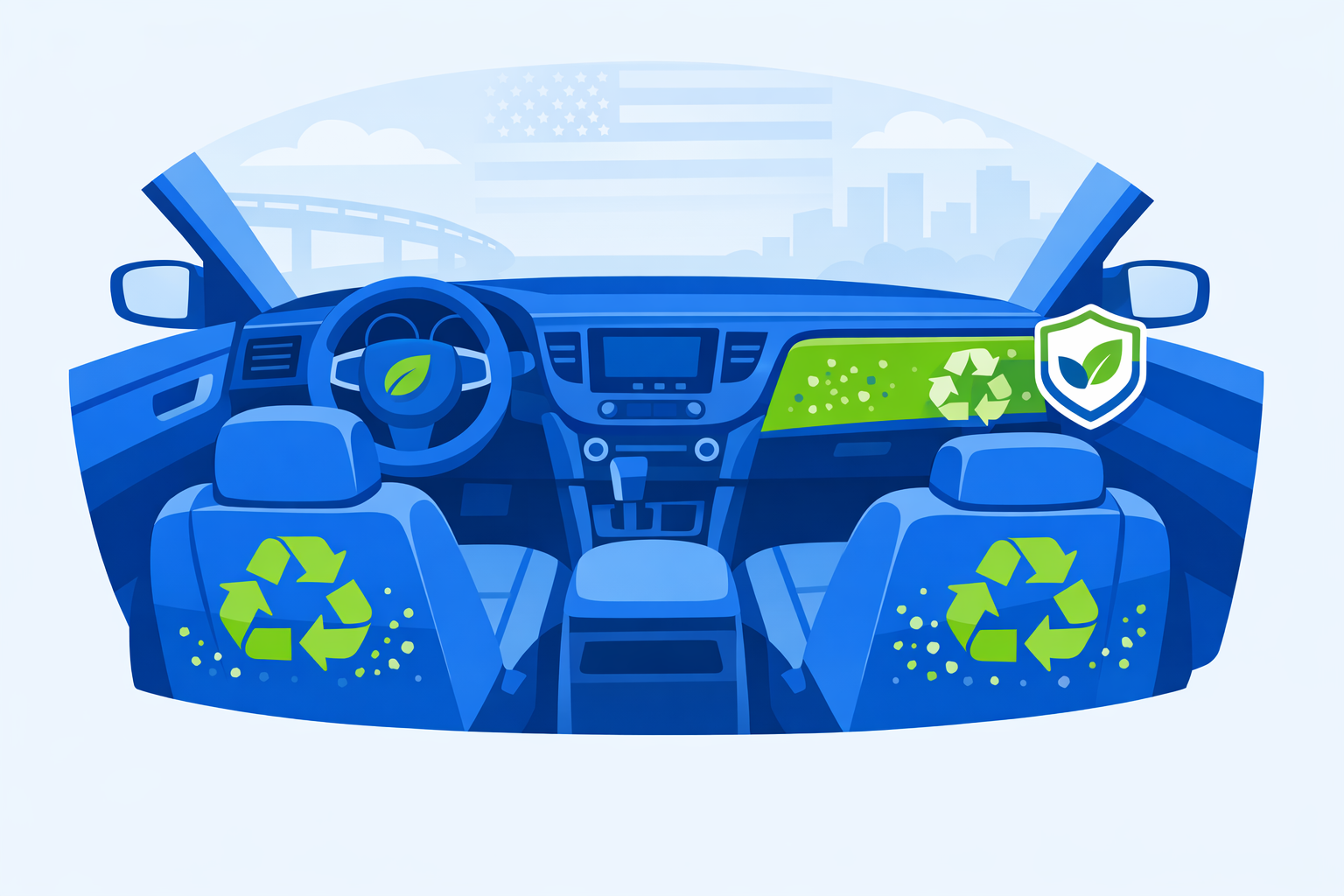
A wave of proposed and enacted state-level frameworks in the United States is pushing automotive supply chains toward higher proportions of recycled plastics in vehicle interior components - and calling for centralized certification to verify their origin. The drive comes as recycled content mandates spread across packaging and durable goods, with automakers and Tier 1 suppliers now examining whether the same compliance logic will extend to dashboards, door trims, and seat covers.
Background
As of 2025, five US states have enacted laws requiring post-consumer recycled (PCR) content in plastic packaging, according to the Association of Plastic Recyclers (APR), while seven states have active extended producer responsibility (EPR) programs for packaging. This momentum has introduced a new compliance vocabulary - registration, reporting, traceability, and fee structures - now spreading from consumer packaging into durable goods categories.
Vehicle interiors sit at the intersection of this regulatory shift. Plastics account for roughly 20% of a modern vehicle's weight, appearing in dashboards, door panels, center consoles, and seat bases, according to Plastics Engineering. Those components typically use ABS, PC/ABS blends, and modified polyolefins - materials whose recycled-content performance varies significantly by resin type and application. IDTechEx notes that mono-material polypropylene interior components present more straightforward challenges for introducing recycled content and are currently the primary target for manufacturers in the short to medium term.
Details
Several automakers have already committed to recycled-content targets for vehicle plastics. Stellantis has stated a plan to use 40% recycled content in vehicle plastics by 2030, partnering with European recyclers to secure post-consumer polypropylene and polyamide compounds, according to Plastics Engineering. Volvo committed to ensuring at least 25% of plastics used in vehicle manufacturing would be recycled by 2025 under a UN-backed environmental plan, according to Knauf Automotive. Tier 1 supplier Faurecia has developed PP and ABS compounds under its NAFILean and MATTrim brands with up to 50% recycled content, formulated for automotive interior injection molding.
On the certification front, APR overhauled its PCR Certification Program in late 2024, aligning it with ISO chain-of-custody and traceability standards. Since the program's launch in 2021, APR PCR Certification has been awarded to more than 35 plastic recyclers, covering an estimated 30% or more of post-consumer PET, PP, HDPE, and LDPE/LLDPE produced in North America, according to APR. Both Oregon and California cite the APR PCR Certification Program, or a recognized equivalent, for aspects of compliance with their state EPR laws. APR President and CEO Steve Alexander has described the program as "a robust, reliable and verifiable mechanism to prove a claim for minimum PCR content" ahead of requirements across North American jurisdictions.
On the materials side, recycled polypropylene for automotive interiors presents known technical obstacles. Teknor Apex notes that standard PCR polypropylene is limited in automotive interior applications due to colorability constraints, odor and VOC emissions, and variability in material consistency - factors that typically restrict PCR materials to non-visible or lower-performance components. Suppliers including Teknor Apex are engineering PCR compounds capable of meeting odor and emissions specifications for visible interior parts, while BASF has developed chemically recyclable polyamide grades certified through mass balance that meet mechanical and thermal standards for OEM applications.
Compliance with traceability requirements is also converging around digital tools. Starting in mid-2025, EU manufacturers became required to embed detailed material data into components through mandatory digital product passports, according to Plastics Engineering. No equivalent federal mandate exists in the US, but the EU framework is shaping the expectations of multinational OEMs sourcing parts across both markets.
Outlook
California's SB 54 permanent regulations were approved by the Office of Administrative Law on May 1, 2026, and took effect immediately. The Circular Action Alliance is slated to submit its program plan in June 2026, with full EPR implementation scheduled to begin in January 2027, according to CalRecycle and Resource Recycling. In Washington, the Recycling Reform Act's Advisory Council was named in January 2026, with the Department of Ecology beginning formal rulemaking. For automotive parts suppliers and OEMs, the near-term task is determining whether state PCR mandates - currently focused on packaging - will extend by statute or procurement requirements to interior components, and whether the certification infrastructure built for packaging can be adapted to serve the more technically demanding vehicle interior supply chain.