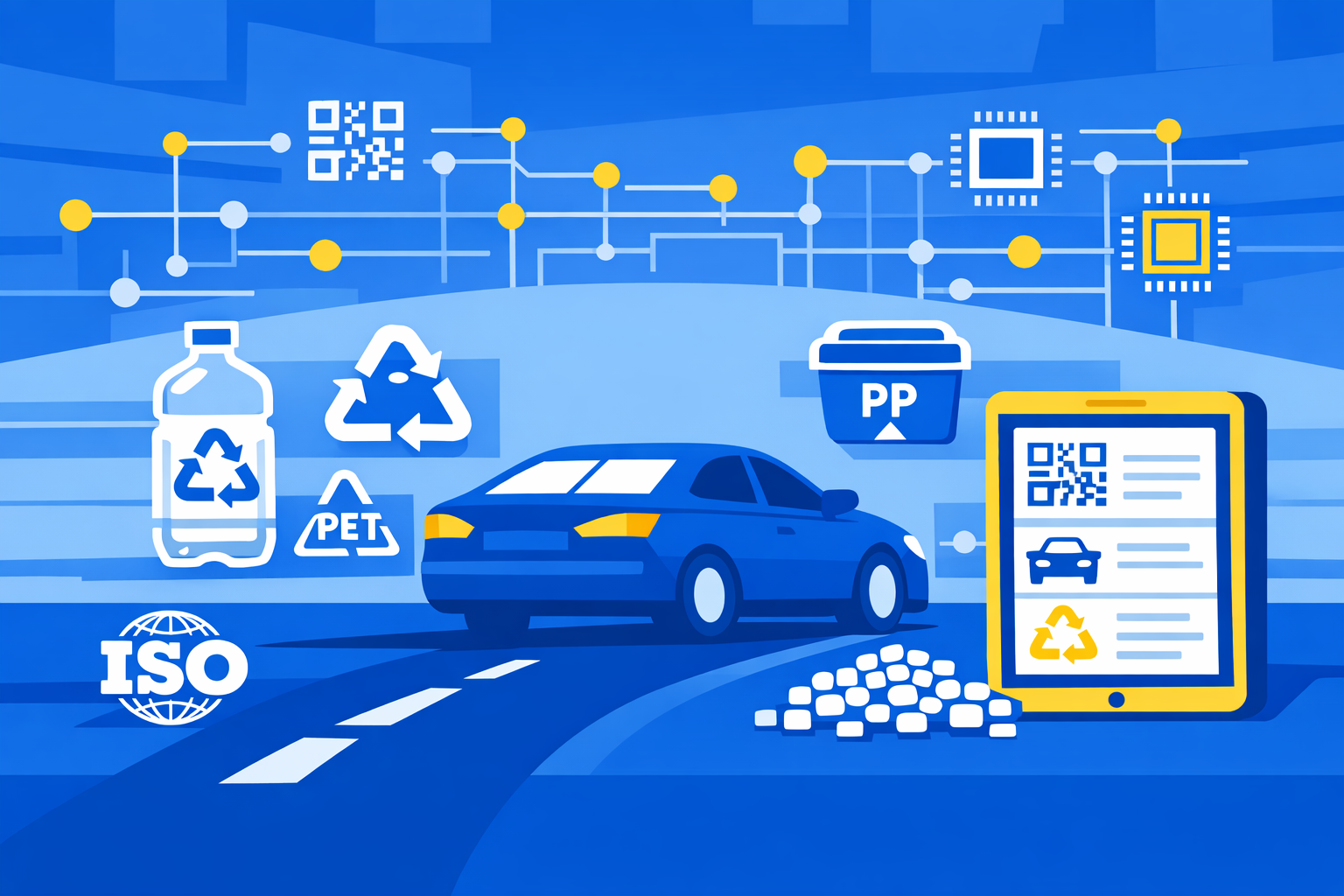
The European Union's simultaneous rollout of the Packaging and Packaging Waste Regulation and the Digital Product Passport framework is compelling automotive original equipment manufacturers and their suppliers to overhaul compliance systems, labeling practices, and packaging design ahead of enforcement deadlines between 2026 and 2030.
Background
Two interlocking regulatory instruments are reshaping how auto components are packaged, labeled, and tracked across the EU single market. The Packaging and Packaging Waste Regulation - Regulation (EU) 2025/40, commonly referred to as the PPWR - entered into force on February 11, 2025, and will apply across all EU member states from August 12, 2026. It replaces the former Packaging Directive 94/62/EC and, unlike its predecessor, applies directly and uniformly without discretionary national transposition.
In parallel, the Ecodesign for Sustainable Products Regulation (ESPR, Regulation (EU) 2024/1781) anchors the Digital Product Passport (DPP) framework, with the European Commission adopting the 2025-2030 ESPR Work Plan on April 16, 2025. The DPP serves as a digital data container to enhance transparency, traceability, and circularity by providing standardized, product-specific sustainability and lifecycle data.
For the automotive sector, the regulatory pressure is both structural and near-term. The EU Battery Regulation (EU) 2023/1542 mandates a Battery Passport - the first enforced DPP - for all electric vehicle and industrial batteries over 2 kWh from February 18, 2027. This requirement covers EV and industrial batteries placed on the EU market regardless of origin.
Details
The PPWR establishes sweeping obligations for any economic operator placing packaged goods on the EU market. Unlike the former directive, which gave member states significant implementation discretion, the PPWR applies directly and uniformly across all EU markets. For manufacturers, importers, distributors, and online sellers, the regulation fundamentally changes how packaging must be designed, documented, labeled, and managed at end of life - with every in-scope packaging format requiring technical documentation and an EU Declaration of Conformity.
For auto parts packaging, the compliance timeline is compressed. Substances of concern must be minimized in packaging from August 2026 and labeled from August 2028. From 2027, the PPWR will require digital identifiers - such as QR codes - linking to structured environmental information including material composition, recyclability, and reuse data.
On the DPP side, product categories are being phased in between 2026 and 2030, with priority given to high-impact products including batteries, iron and steel, textiles, electronics, and tyres. A central EU DPP registry and interoperable systems are expected to be operational by mid-2026. Automotive-adjacent materials such as steel, aluminium, and tyres - core to component supply chains - are already on the ESPR priority list.
The compliance burden extends beyond EU-domiciled companies. The obligation to implement the DPP lies with the economic operator placing the product on the market, regardless of where it is manufactured. Products made outside the EU may still be subject to DPP obligations if covered by a Commission delegated act.
DPP success depends fundamentally on supplier data quality and cooperation - yet typical automotive or electronics manufacturers source from 500 to 5,000 direct suppliers across 30 to 50 countries. According to the German Economic Institute (IW), two-thirds of German companies surveyed in autumn 2024 were either unaware of DPPs or did not consider them relevant, while only 4% had already taken preparation measures. Large companies are further along: three-quarters of German companies with more than 250 employees already share digital product data, with 39% doing so in a standardized form.
European standards bodies are actively developing the technical foundations underpinning the DPP regime, with eight harmonized standards for DPP data and interoperability expected to be completed by 2026 to ensure data consistency, scalability, and market-wide compatibility.
The PPWR also introduces financial incentives tied to packaging design. Eco-modulation of Extended Producer Responsibility fees will expand, meaning packaging design directly affects EPR costs. Packaging that is difficult to recycle or disrupts recycling streams will attract higher fees, while compliant, high-performing designs benefit from lower financial burdens.
Outlook
By July 2026, the European Commission will deploy a central DPP registry to support enforcement and transparency, with plans for a publicly accessible portal allowing users to search and compare DPP data. By 2029, national packaging databases such as Germany's LUCID register will be replaced by a single EU-level producer registry. As the DPP framework expands to additional automotive component categories through delegated acts expected between 2027 and 2030, OEMs and Tier 1 suppliers that have not yet invested in interoperable data infrastructure face the highest compliance risk and steepest implementation costs.
See also: EU Advances Standard Reusable Packaging for Automotive Aftermarket Parts