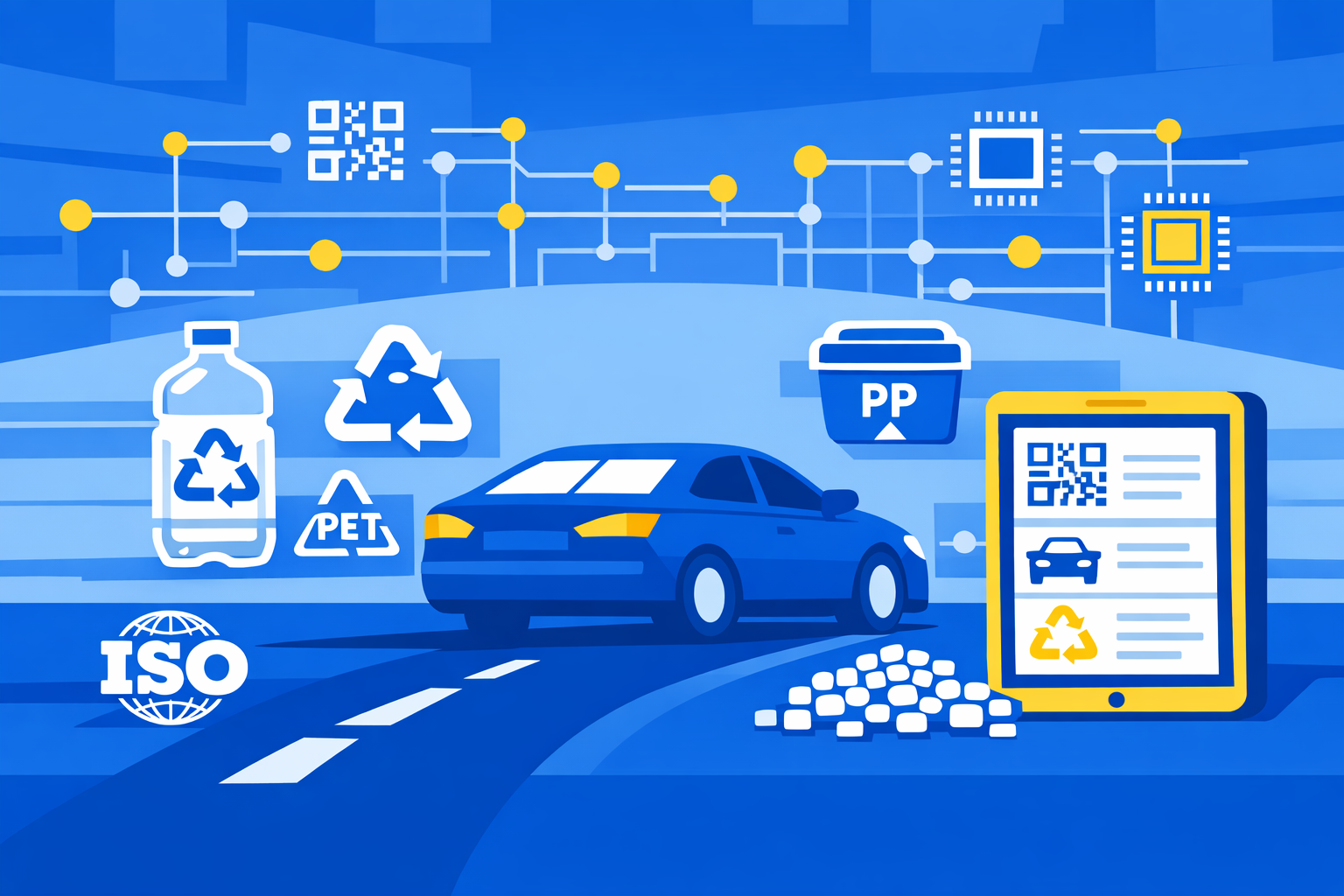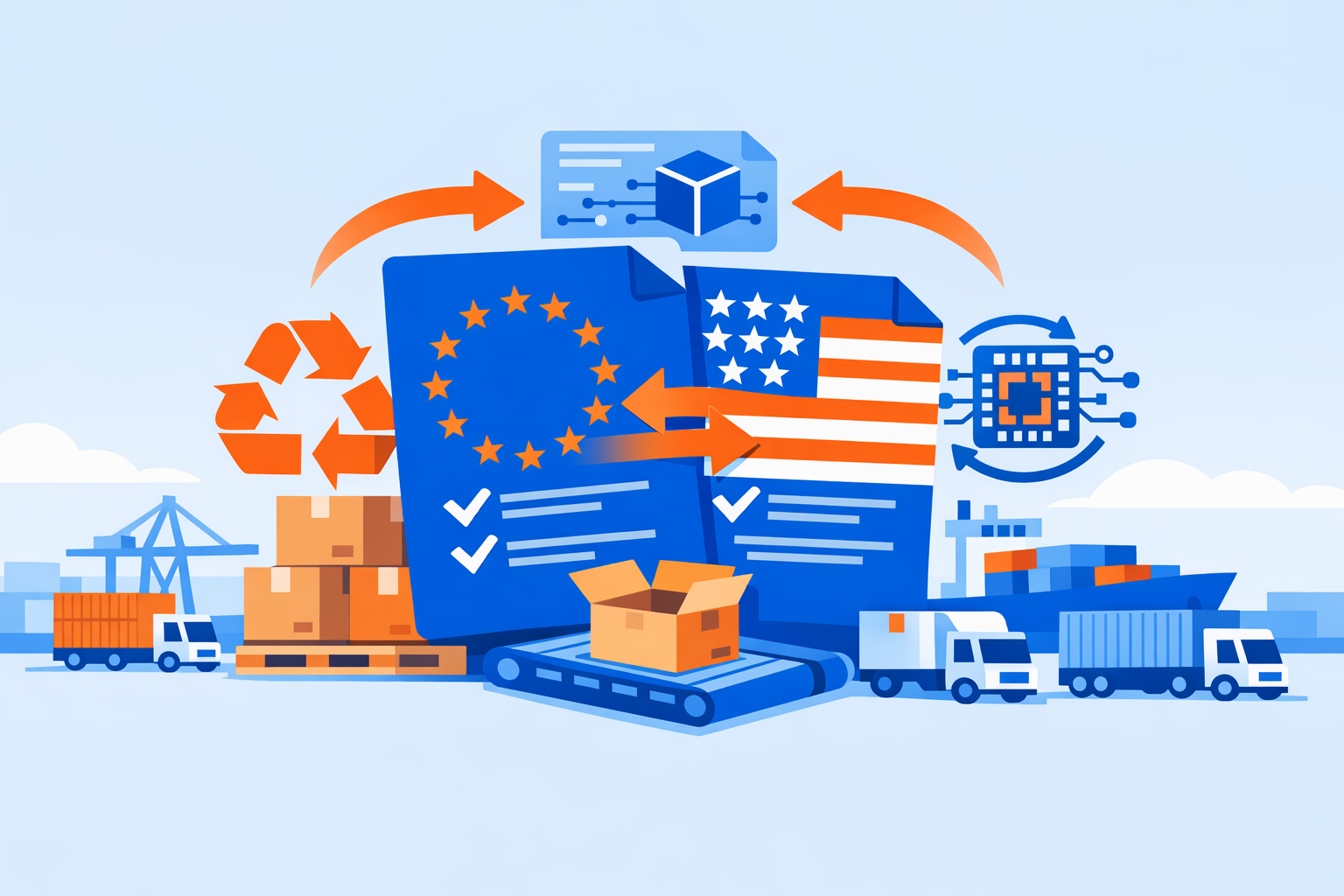
The convergence of European and North American packaging regulations is compelling automotive original equipment manufacturers (OEMs) and their tier suppliers to accelerate contract revisions, overhaul packaging specifications, and restructure cross-border logistics terms ahead of overlapping 2026 enforcement deadlines.
Background
Regulation (EU) 2025/40-the EU's Packaging and Packaging Waste Regulation (PPWR)-entered into force on February 11, 2025, and will generally apply starting August 12, 2026.[1] Key requirements around labeling, recyclability, recycled content, and reuse will phase in between 2026 and 2030 and beyond.[2] The regulation replaces the 1994 Packaging and Packaging Waste Directive and, unlike its predecessor, applies directly and uniformly across all EU Member States without national transposition.
On the US side, momentum is building at the state level. California's SB 54 requires brand enrollment by July 1, 2025, and fee payments starting in 2026, with aggressive targets including a 25% reduction in plastic packaging by 2032 and full recyclability or compostability by then. Oregon, Washington, Minnesota, Maryland, Colorado, and Maine have enacted EPR laws requiring producer-funded recycling systems, eco-modulation fees, and performance targets.
For automotive supply chains, simultaneous pressure from both regulatory blocs is forcing procurement and logistics teams to treat compliance as a systemic-not departmental-challenge.
Details
Industry analysis indicates that most affected companies are behind schedule. A PPWR sentiment index compiled by Fraunhofer IML and partners revealed a gap between perception and implementation capability: almost every second company overestimated its preparedness, and only around 10% had built the structural foundations needed for PPWR compliance.
The PPWR's August 2026 application date triggers mandatory conformity declarations, recyclability assessments, and EPR registration obligations for all packaging placed on the EU market, including transport and industrial packaging used in automotive logistics. According to industry analysts, the PPWR is not merely another environmental compliance exercise-it is a structural shift in how packaging is designed, specified, sourced, circulated, tracked, and financed across automotive supply chains.
The pressure is particularly acute on purchasing departments. Purchasing is becoming the decisive lever for translating new packaging requirements into supplier specifications, contracts, and cost models. As one industry expert noted, many companies hold relevant information "often just not in a form that can be compiled into a reliable declaration of conformity," while packaging portfolios constantly change due to new suppliers, adjusted formulations, and design modifications-each adjustment potentially invalidating existing declarations.
The EU's Digital Product Passport (DPP) framework adds another layer of complexity. By July 2026, the European Commission will deploy a central DPP registry to support enforcement and transparency. Industrial and electric vehicle batteries must include Battery Passports by February 18, 2027-a mandate directly affecting automotive OEMs and their packaging and component supply chains. US manufacturers serving European markets must implement full DPP compliance for those products regardless of domestic requirements; automakers including General Motors, Ford, and Tesla that produce vehicles for European markets will need complete battery passport data.
Cross-border logistics operations face compounding risks. The definition of "placing on the market" covers the first making available of packaging on the EU market, whether empty or filled-a distinction that matters critically for importers managing cross-border stock. Non-EU suppliers must comply when placing products on the EU market, with non-compliance potentially resulting in shipments being rejected at the border.
Under the PPWR, from 2030, transport packaging used in B2B operations-including automotive parts shipments-must be 40% reusable, rising to a suggested target of 70% by 2040. From a North American logistics perspective, regulatory frameworks involve coordination primarily across the US, Canada, and Mexico, where agreements such as USMCA have helped streamline cross-border movement of parts and returnable packaging, contributing to operational consistency.
Outlook
From 2030, minimum mandatory recycled content thresholds will apply to various plastic packaging types, ranging between 30% and 65% depending on the category-requirements that OEMs and their tier suppliers must begin building into sourcing strategies and supplier contracts now. Recyclability design criteria, labeling standards, and documentation obligations take effect earlier than recycled content thresholds and reuse targets, meaning businesses must plan for phased compliance rather than a single implementation event. With only months remaining before PPWR's August 2026 general application date, automotive supply chain operators that have not yet audited packaging portfolios, updated supplier contracts, or established data-sharing infrastructure for digital product passports face escalating exposure to market-access restrictions on both sides of the Atlantic.