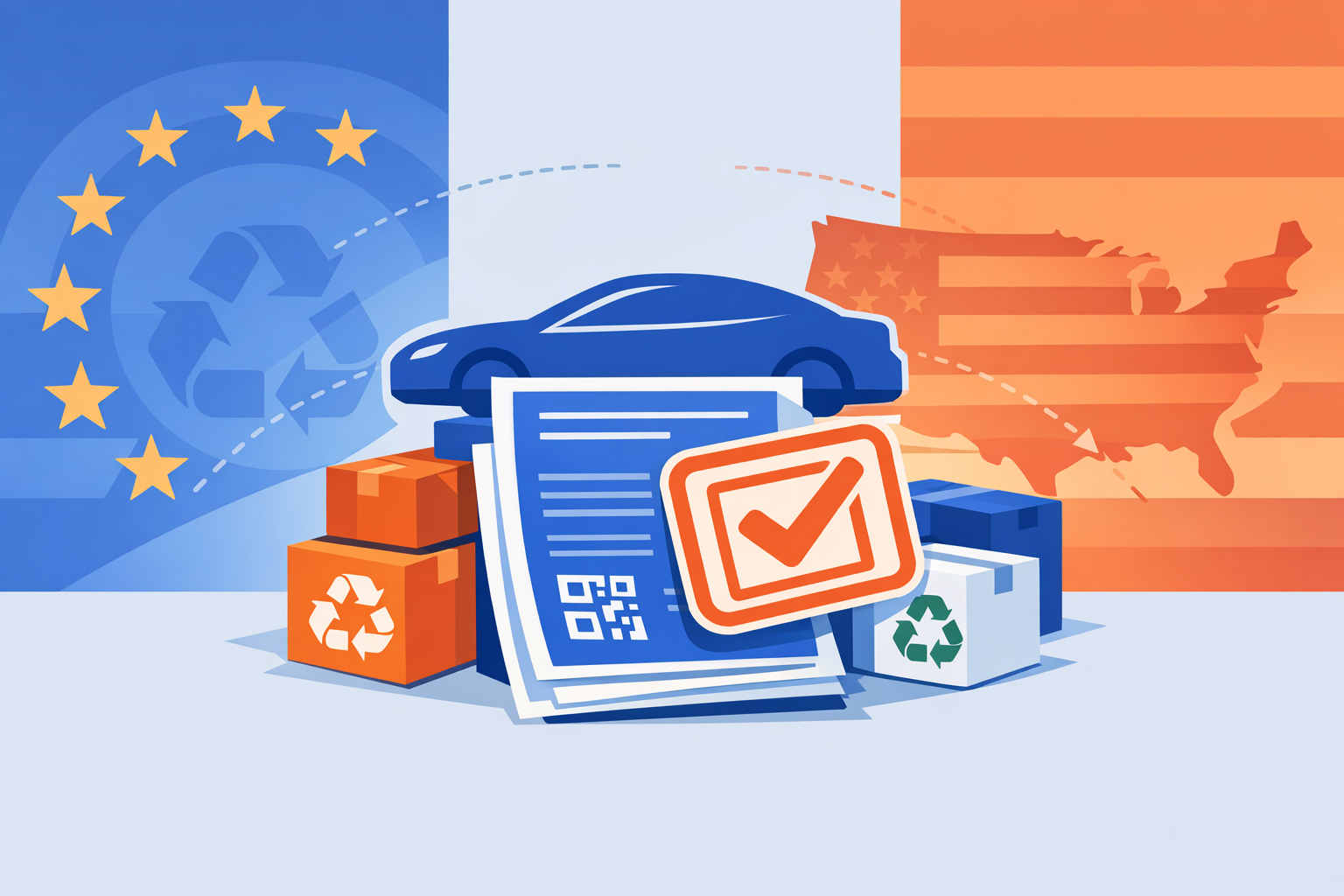
Automotive original equipment manufacturers operating across EU and US markets are renegotiating supplier contracts ahead of the August 2026 enforcement date for Europe's new packaging law, as cross-border recycled-content and traceability requirements reshape commercial and liability terms throughout the auto parts supply chain.
Regulation (EU) 2025/40, known as the Packaging and Packaging Waste Regulation (PPWR), entered into force on 11 February 2025 and will generally apply from 12 August 2026, according to the European Commission. The law replaces the 1994 Packaging Directive and applies directly and uniformly across all 27 EU member states-without national transposition-covering every packaging format placed on the EU market, including industrial and automotive transport packaging.
Background
The PPWR marks one of the most significant overhauls of European packaging law in more than two decades. Among its most consequential elements is a requirement that all packaging placed on the EU market be recyclable according to defined performance criteria. Recyclability is no longer a general concept but a measurable standard assessed against EU-wide design-for-recycling criteria.
In parallel, the US packaging regulatory landscape is shifting on a state-by-state basis. As of mid-2025, seven states had passed EPR legislation, according to the Sustainable Packaging Coalition. Oregon and California's programs launched in 2025, with producers registering and reporting packaging data ahead of fee collection. Maryland became the sixth packaging EPR state in May 2025, establishing a reimbursement model for local recycling costs; producers must register with the Maryland Department of Environment by 1 July 2026.
For automotive suppliers operating cross-border programs, the dual pressure of EU-wide obligations and evolving US state rules is feeding directly into contract reviews.
Details
The PPWR imposes compliance obligations from August 2026, well before its headline recycled-content targets take effect. Not all requirements apply simultaneously-recyclability design criteria, labeling standards, and documentation obligations take effect earlier than recycled-content thresholds and reuse targets. Manufacturers must conduct conformity assessments and maintain technical documentation for five years, or 10 years for reusable packaging. Suppliers must provide manufacturers with all necessary information and documentation to demonstrate compliance.
These documentation obligations are already filtering into supplier contract clauses. For in-scope businesses, supply chain engagement is critical: packaging suppliers must be able to provide recyclability assessments, recycled-content verification, and supporting technical documentation. Legal advisers recommend that OEMs insert specific representations and warranties around PPWR conformity, along with indemnification provisions tied to non-compliant packaging that could trigger market access restrictions.
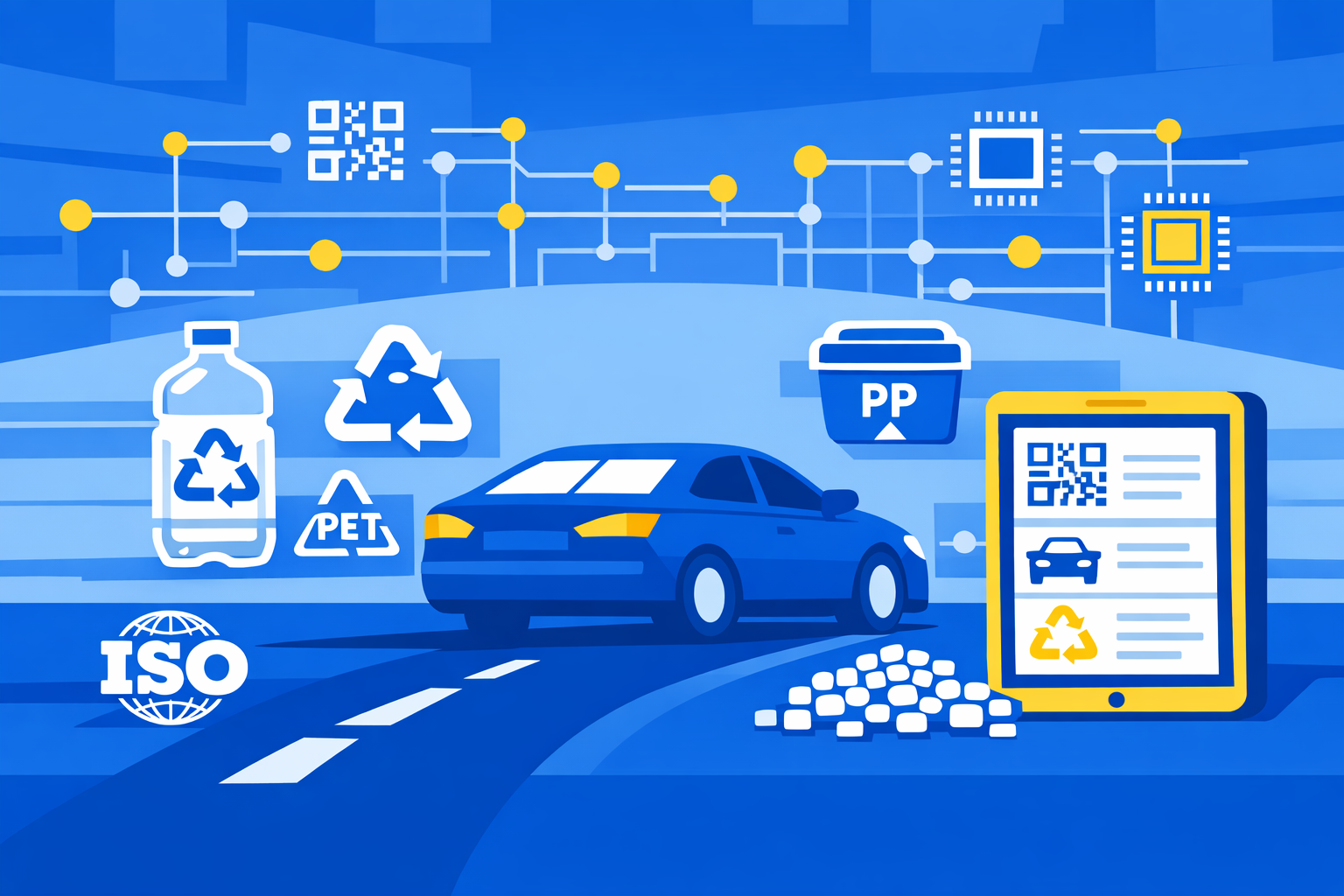
Mandatory minimum recycled content for plastic packaging under the PPWR takes effect from 1 January 2030, with thresholds ranging from 30% for PET and single-use beverage bottles to 35% for other plastics, escalating to 65% for several categories by 2040, according to EUR-Lex. The European Commission's calculation and verification method for recycled content is due by 31 December 2026, meaning OEMs embedding specific content targets in supplier contracts now face a period of technical ambiguity on measurement methodology.
Traceability is emerging as a critical contract term. From 2027, packaging must carry digital identifiers such as QR codes linking to structured environmental information, including material composition, recyclability, and reuse details. The automotive industry's demands for chain of custody, material declarations, and recycled-content verification mean suppliers offering audited post-consumer recycled grades with certification are expected to gain preferred supplier status.
Industry readiness data points to a significant execution gap. A 2025 PPWR sentiment index published by Fraunhofer IML, Logistikbude, and Initiative Mehrweg reveals a discrepancy between perception and implementation capability-nearly every second company overestimates its preparedness, with only around 10% having established the structural foundations for compliance, including clearly defined responsibilities, a reliable packaging data basis, and documented measures.
For US-based auto suppliers, EPR fee structures add a direct cost dimension to packaging decisions. Easily recyclable materials may incur lower fees, while hard-to-recycle plastics face higher costs under eco-modulated fee structures designed to incentivize better packaging design. Industry sources indicate companies should plan for a 15-40% uplift in packaging spend, with Oregon's next fee round due July 2026 and California's fees expected in late 2026.
Outlook
Compliance should be viewed as a multi-year transition rather than a single deadline, with phased obligations extending into the 2030s. Delaying preparation until August 2026 significantly increases compliance risk, particularly for companies with complex packaging supply chains or long product development cycles. OEMs and tier-1 suppliers are expected to intensify supplier audits and contractual remediation clauses through the second half of 2026 as the European Commission finalizes implementing acts governing conformity assessment formats and producer registration requirements.