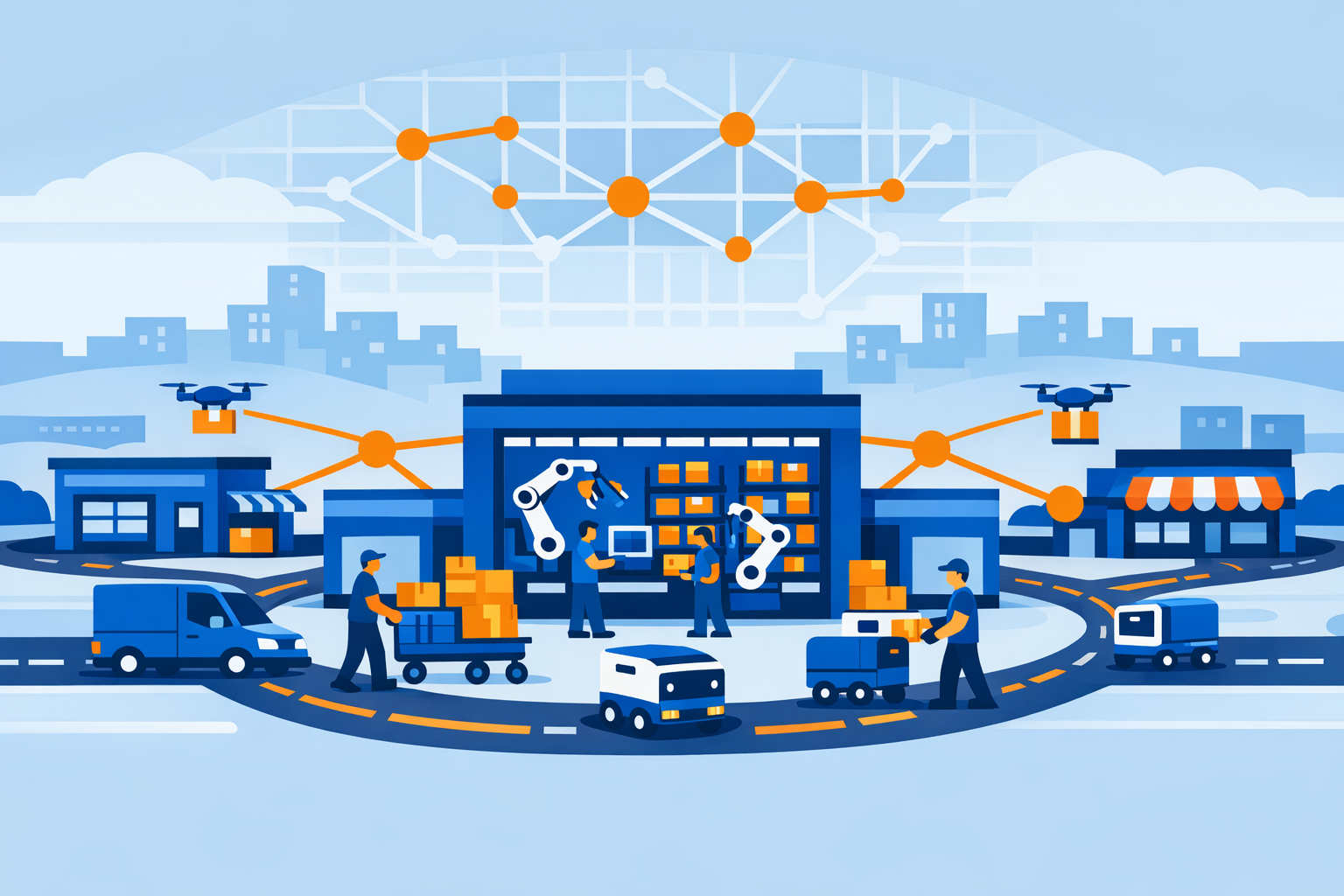
Retailers and parcel carriers are accelerating the buildout of hub-and-spoke last-mile networks anchored by micro-fulfillment centers (MFCs), fundamentally altering cost structures, delivery speed, and emissions profiles across regional logistics markets. The global last-mile delivery market is estimated at approximately $201 billion in 2025 and is projected to grow at a 12% compound annual rate through 2029, driven by rising e-commerce volumes and growing consumer demand for same-day and next-day fulfillment.
Background
Last-mile delivery accounts for up to 53% of total shipping costs, making it the most expensive and operationally complex segment of the supply chain. Historically dominated by large centralized distribution centers feeding national carrier networks, the sector has faced mounting pressure as macro disruptions-from tariff shifts to labor shortages-exposed the limits of over-optimized, centralized last-mile models in 2025, according to logistics platform Bringg. In response, shippers expanded rather than simplified their networks.
That shift accelerated a structural transition toward distributed, proximity-based fulfillment. Micro-fulfillment centers-compact, technology-enabled hubs often placed inside or adjacent to existing retail locations-have moved from niche experiment to mainstream logistics strategy, with operators deploying them to serve high-density urban zones while routing suburban and rural orders through regional carriers or gig-based delivery networks.
The proliferation of last-mile delivery hubs is simultaneously reshaping industrial real estate. Developers are repurposing existing commercial properties and constructing purpose-built facilities that prioritize proximity to dense population centers and access to major road networks, according to logistics real estate firm Cubework.
Details
The cost and speed gains from localized hub deployment are measurable. According to industry case data, moving fulfillment closer to the customer has cut delivery times from three days to under 24 hours even during peak demand periods. Integrated inventory management systems support dynamic order allocation-routing orders to whichever node can fulfill fastest, not merely the nearest location.
Carrier networks are also fragmenting. Major parcel carriers including FedEx, DHL, and UPS account for nearly 48% of structured last-mile delivery operations globally, but emerging regional couriers and gig-economy platforms are capturing market share, particularly in dense urban corridors, according to 3PL provider Jay Group. Amazon is investing $4 billion to triple its rural delivery network, while Costco now handles 85% of its U.S. e-commerce shipments internally, according to eMarketer.
AI integration is deepening across the hub network model. In October 2025, IKEA acquired Locus, a U.S.-based AI-powered logistics platform, to bring route optimization, real-time tracking, and enhanced vehicle utilization in-house, as part of a $2.2 billion omnichannel investment strategy that includes expanded fulfillment infrastructure through 2026.
The emissions dimension is adding urgency to infrastructure decisions. The global weighted average CO₂ output stands at 204 grams per parcel, but microhubs paired with zero-emission vehicles can reduce per-delivery emissions by up to 93%, according to SmartRoutes research. Without intervention, urban last-mile delivery emissions are projected to rise by more than 30% by 2030 across the world's 100 largest cities as e-commerce volumes grow, according to a systematic review published in MDPI in October 2025.
Regulatory pressure is intensifying across key markets. London's Ultra Low Emission Zone has prompted firms including DPD and Deliveroo to transition to fully electric delivery vans and cargo bikes, while cities across the United States, United Kingdom, and Australia are enforcing or preparing stricter emissions standards for delivery vehicles, according to supply chain training body CPSCP. Parcel lockers and pickup points in urban areas can cut CO₂ emissions by up to two-thirds compared to home delivery, and consolidated deliveries using optimized networks can cut delivery trips by 30%, lowering both costs and emissions, according to SmartRoutes.
Outlook
The structural shift toward regionalized, hub-based fulfillment is expected to continue through 2026 and beyond, with the global micro-fulfillment market projected to reach approximately $10 billion by 2026, according to Locus research. Urban planners and municipal authorities are increasingly involved in siting decisions as last-mile hubs compete for limited commercial space near city cores. Carriers and retailers that combine localized inventory placement with zero-emission vehicle fleets and AI-driven routing stand to gain the strongest cost and compliance advantages as regulatory frameworks tighten. For a related perspective on how delivery speed intersects with decarbonization across the broader logistics network, see our earlier analysis: Fast Shipping and Emission Trade-Offs in Global Packaging Logistics.