Germany's Packaging Law Implementation Act Enforces PFAS Ban, Recycled Content, and Recycling Design from August 2026
Germany's revised Packaging Law, effective August 12, 2026, will ban PFAS in food-contact packaging, mandate minimum recycled content, require design-for-recycling principles, and introduce digital labeling. These measures align national regulations with the forthcoming EU Packaging and Packaging Waste Regulation (PPWR).
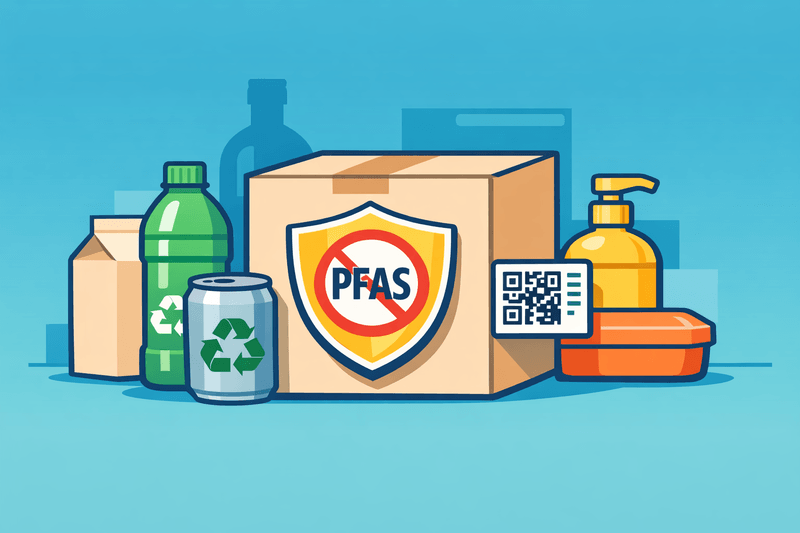
The new law replaces the existing Packaging Act (VerpackG) but retains Germany's Central Agency Packaging Register and the dual systems, while integrating additional compliance obligations under EU rules, according to industry analysis1VerpackDG: What's changing with the new packaging law - packaging journal. It enforces a strict ban of per- and polyfluoroalkyl substances (PFAS) above defined thresholds in food-contact materials, reflecting a move away from contamination-prone coatings2Germany signals major packaging shift - Food and Drink Technology.
Background
The EU's PPWR, applicable from August 12, 2026, standardizes recycling, recycled content, substance bans, and labeling requirements across member states, replacing national directives with a unified framework3PPWR – Die neue EU-Verpackungsverordnung ab 2026.
Germany's law introduces the domestic legal instrument VerpackDG to adapt national systems to the new EU framework. It ensures continued operation of licensing requirements, registration with the Packaging Register, and logistics via dual waste collection systems1VerpackDG: What's changing with the new packaging law - packaging journal.
Details
From August 2026, food-contact packaging containing PFAS above set limits will be prohibited in the German market2Germany signals major packaging shift - Food and Drink Technology. The law requires design-for-recycling practices; packaging that is difficult to recycle will face increased levies through licensing platforms like LUCID. This approach incentivizes mono-material construction and separable components2Germany signals major packaging shift - Food and Drink Technology.
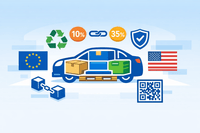
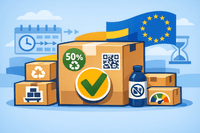
Minimum recycled content thresholds mirror those in the PPWR: plastic beverage bottles must contain at least 30% recycled content by 2030, with PET-specific mandates effective from early 20252Germany signals major packaging shift - Food and Drink Technology. Digital labeling, including QR codes and standardized pictograms for material composition and disposal instructions, will become mandatory by mid-20262Germany signals major packaging shift - Food and Drink Technology.
Administrative obligations now extend to all parties placing packaging on the German market, including importers and online retailers. They must maintain technical declarations of conformity that meet the updated safety and sustainability standards2Germany signals major packaging shift - Food and Drink Technology.
Outlook
By March 2026, German businesses must align product design, sourcing, compliance, and labeling to meet the August implementation deadline. Packaging Registration authorities are anticipated to revise fee structures and implement modulated licensing based on recyclability classifications. Companies are expected to audit market placements, verify supplier PCR content, and integrate digital labeling to comply with the law and avoid distribution restrictions or fines.