Genuine Parts Company (GPC) has expanded its 100% recycled-content packaging pilot to 15 North American distribution centers, targeting full national coverage by Q4 2026. The rollout is prompting Tier-1 and Tier-2 auto parts suppliers to renegotiate packaging specifications and supply agreements.
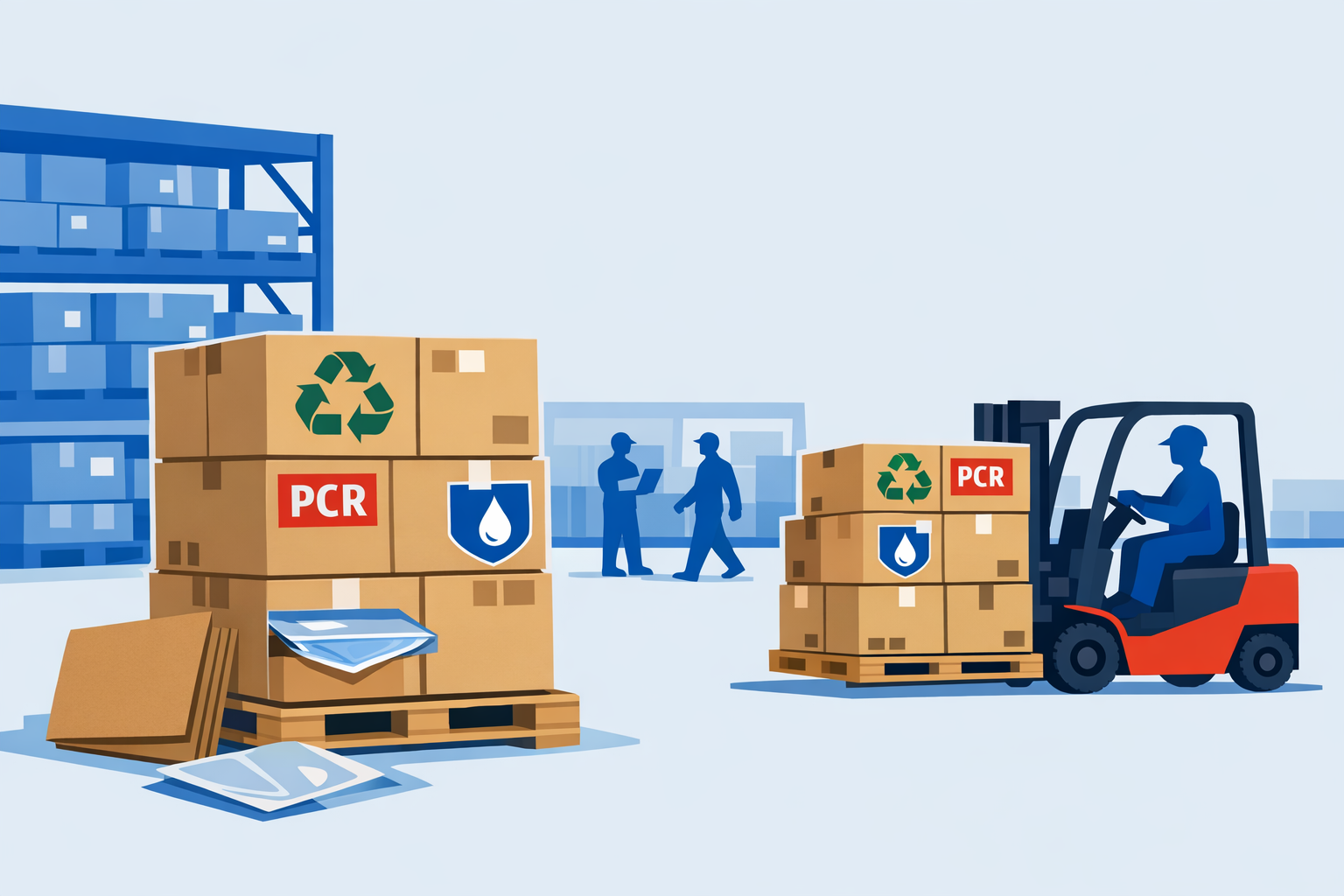
The expansion covers pallets, inner packaging, and primary shipping materials across the majority of GPC's North American operations. The program deploys recycled-content corrugated board, biobased inner liners, and post-consumer resin (PCR) plastics wherever performance, cost, and material availability meet defined operational thresholds. The timing is deliberate: as of early 2026, seven US states - California, Colorado, Maine, Maryland, Minnesota, Oregon, and Washington - have enacted active packaging extended producer responsibility (EPR) laws, with fee and reporting obligations that now reach distributors and their supply chains.
Regulatory Background
The expansion coincides with the most consequential year yet for North American packaging regulation. Colorado's packaging EPR program began implementation on January 1, 2026, and California's SB 343 truth-in-labeling law sets a compliance deadline of October 4, 2026, by which time companies must remove unqualified recyclability claims from packaging. In Canada, federal single-use plastics rules and provincial EPR frameworks are similarly tightening reporting requirements on packaging materials and their end-of-life management.
The EU's Packaging and Packaging Waste Regulation (PPWR) adds cross-border complexity. From August 12, 2026, packaging placed on the EU market must meet PPWR chemical safety requirements, including PFAS restrictions for food-contact packaging, and EU recyclability grading criteria are advancing toward mandatory application by 2030. For distributors like GPC that source or ship across the Atlantic, regulatory convergence between US and EU frameworks strengthens the business case for standardized recycled-content specifications.
Under most US EPR statutes, eco-modulated fee structures mean producers pay higher dues for packaging that lacks recycled content or recyclability. PCR reduces energy consumption by at least 79% and reduces greenhouse gas emissions by at least 67% compared with virgin plastic manufacturing, according to the US Plastics Pact - an argument GPC and its packaging partners cite to justify higher upfront material costs against projected waste-disposal savings.
Program Details and Supplier Impact
GPC is standardizing supplier contract terms to require recycled-content packaging wherever performance and availability benchmarks are met, according to the company's program documentation. Early supply-base feedback points to potential reductions in waste disposal costs and a lower carbon footprint per shipment. However, some suppliers report price volatility and longer lead times for PCR plastics and recycled-content corrugated materials as demand across multiple sectors outpaces current supply.
Structural integrity and moisture resistance remain primary engineering concerns for high-value auto parts in transit. Recycled corrugated board maintains stacking strength while reducing virgin fiber use, and water-based barrier coatings can add moisture resistance without relying on plastic films, according to packaging industry guidance - material combinations GPC is reportedly specifying for its distribution center rollout.
The supplier-contract dimension sets GPC apart from earlier, purely voluntary sustainability pilots in the sector. The Suppliers Partnership for the Environment, whose membership includes Ford, General Motors, Stellantis, Toyota, Honda, Magna, Lear, and Denso, has published sustainable packaging guidance covering recyclability assessments for 35 different packaging material types used in the North American automotive industry. GPC's binding contract language moves that guidance from recommendation to contractual obligation for its supplier network.
Outlook
Analysts and procurement professionals will watch whether material availability keeps pace with demand as more distributors and OEMs adopt similar mandates ahead of 2026 deadlines. At least eleven additional US states have introduced packaging EPR legislation beyond the seven already enacted, suggesting GPC's contract model could become a template rather than an outlier. Questions around packaging traceability, recycled-content certification, and performance validation under varied climate and handling conditions are expected to define the next phase of program development.