Several U.S. state Extended Producer Responsibility programs for packaging reach critical financial thresholds in 2027, creating new compliance obligations for automotive manufacturers and their parts suppliers. The convergence of fee start dates, operational launches, and covered-materials lists across California, Maine, Colorado, Oregon, and Maryland means companies that have not yet mapped their packaging streams face financial penalties and potential loss of market access.
Background
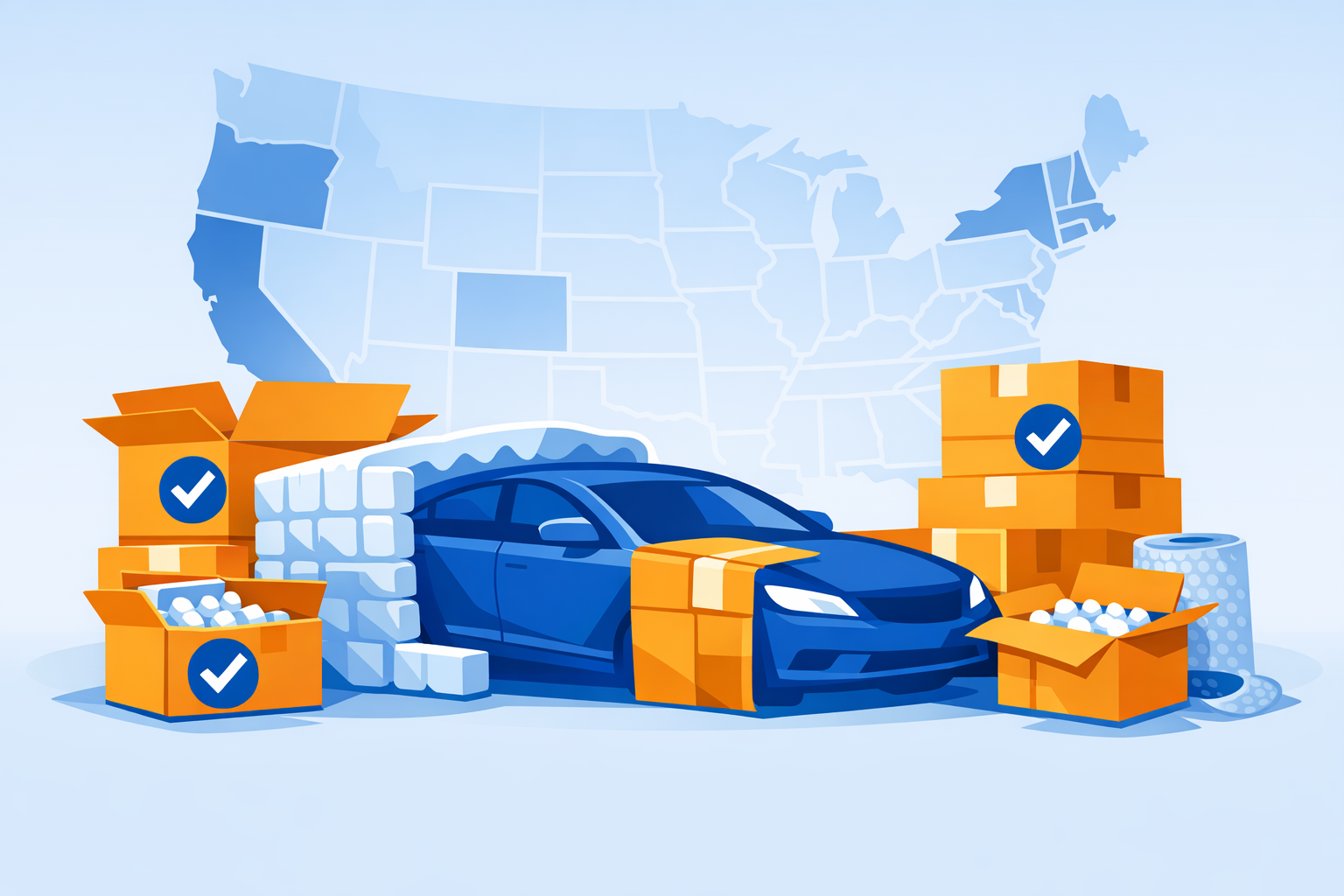
Seven states - Maine, Oregon, Colorado, California, Minnesota, Maryland, and Washington - have enacted comprehensive EPR packaging laws. The legislative wave began when Maine became the first state to enact a packaging EPR statute on July 12, 2021, fundamentally reallocating waste management costs. As Proskauer Rose noted in its 2025 compliance guide, EPR laws shift "the financial and operational burden of packaging waste management from local governments and taxpayers to manufacturers, importers and distributors." Producers now bear responsibility for the entire packaging lifecycle, from production through post-consumer disposal.
Although EPR programs for paint, electronics, and batteries have long existed in the U.S., packaging represents the most consequential expansion of the model for industrial sectors, including automotive. Most programs cover packaging and paper products for consumer-facing channels, with carveouts for medical and hazardous product containers, long-term durable protective packaging, and de minimis producers below revenue or tonnage thresholds. Automotive parts packaging - typically heavy-gauge corrugated, foam, and multi-material protective wrapping - does not automatically qualify for those exemptions and requires state-specific analysis.
Details
The 2027 compliance horizon is defined by several concurrent deadlines. California's SB 54 requires producers to join a Producer Responsibility Organization (PRO) or obtain individual approval by January 1, 2027, with escalating recycling targets through 2032. California's PRO, the Circular Action Alliance (CAA), is required to remit $500 million per year in producer fees starting in 2027. In Maine, the full EPR program is expected to become operational in 2027, with producers facing their first annual payment for packaging material supplied into the state due in September 2027. Colorado's eco-modulation fee schedule took effect January 1, 2026, with ongoing producer fees due January 1, 2027. Maryland is set to publish its statewide covered-materials list on July 1, 2027, establishing the scope of fee-bearing materials.
For automotive OEMs and Tier 1 suppliers, determining producer status is non-trivial. According to legal analysis by Adams and Reese, "producers must register and either join a PRO or submit an approved individual plan; they must report detailed data on covered materials placed on the market in the state; and they must pay fees." Producer status follows a tiered hierarchy - responsibility falls primarily on the brand owner or manufacturer, then on a licensee, importer, or distributor if the brand owner lacks a U.S. presence. Suppliers Partnership for the Environment (SP) has noted that even companies not classified as direct producers under EPR may still be required to report packaging data to OEM customers conducting business in EPR states.
Noncompliance carries serious financial and operational risk. Oregon's program, which entered enforcement on July 1, 2025, imposes noncompliance penalties of up to $25,000 per day. Multiple states impose daily penalties that escalate for repeat violations, and programs condition continued product sales on PRO participation by specified dates, according to Adams and Reese. Agencies retain authority to audit data submissions, require documentary support, and demand plan amendments if performance targets are not met.
Fee structures under eco-modulation create additional exposure for auto parts packaging. Eco-modulation creates financial rewards for readily recyclable packaging while imposing higher fees on hard-to-recycle formats. Multi-material protective foam and composite corrugated trays commonly used in auto parts shipments typically fall into higher-fee categories unless redesigned for recyclability.
EPR programs also intersect directly with anti-greenwashing requirements. According to EcoEnclose, "brands may be required to document packaging materials in detail, justify recyclability claims, and align on-pack messaging with regulatory definitions." Inconsistent labeling or vague recyclability claims can expose companies to enforcement action alongside EPR noncompliance. California's SB 343 Truth in Labeling law restricts when recyclability claims and symbols may be used on packaging.
The legislative pipeline continues to expand. At least two additional states - New Hampshire and Wisconsin - introduced some form of EPR legislation in 2026. Several states, including Massachusetts, New Jersey, New York, Rhode Island, and Virginia, have pending proposals or proposals expected to be reintroduced. According to Holland & Knight, "absent federal action, companies should expect continued expansion of a patchwork of state-level programs."
Outlook
The Suppliers Partnership for the Environment advises automotive companies to designate an internal EPR lead, build cross-functional packaging data processes, and begin state-by-state producer status assessments immediately - prioritizing California, Colorado, and Oregon. Legal experts at Adams and Reese recommend that companies plan for additional states to pass packaging EPR within the next two to three legislative sessions, with first obligations often arriving 12 to 24 months after enactment. Without a federal framework to harmonize requirements, auto manufacturers operating across multiple states face compounding reporting obligations, divergent covered-materials definitions, and separate PRO registration deadlines through the decade.