Seven U.S. states have enacted Extended Producer Responsibility (EPR) packaging laws that classify automotive OEMs and their suppliers as regulated producers, subjecting them to reporting mandates, recycling performance targets, and escalating fee structures already generating measurable costs across the sector.
Background
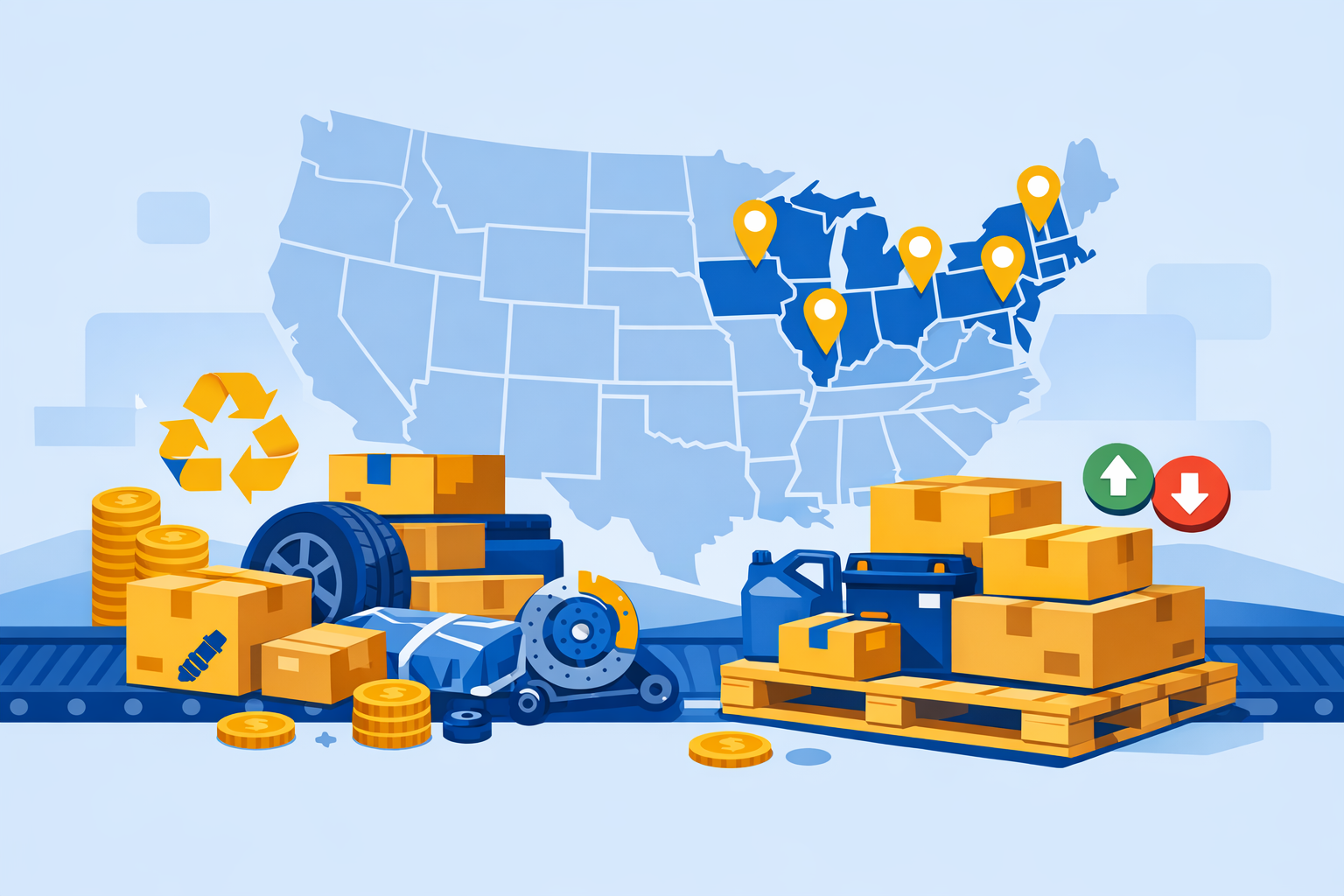
Seven states-California, Colorado, Maryland, Maine, Minnesota, Oregon, and Washington-have enacted EPR laws applying to packaging and paper products. EPR is a policy approach requiring companies to take responsibility for the collection, recycling, and end-of-life management of their products and packaging, shifting the financial and operational burden of waste management from local governments and taxpayers to the producers that design, manufacture, and sell these products.
In late 2025 and early 2026, legislators in Wisconsin (AB 772) and New Hampshire (HB1789-FN) introduced additional EPR bills, while Hawaii and Rhode Island passed legislation directing state environmental agencies to conduct needs assessments evaluating EPR program feasibility. New York, which has pursued EPR legislation for several years, again failed to pass a program in its most recent legislative session, but the bill remains active for the 2026 session.
The scope of these laws matters for automotive supply chains. EPR laws primarily target packaging waste entering the consumer municipal solid waste stream. In existing U.S. programs, business-to-business packaging used solely within manufacturing plants-such as returnable containers, racks, crates, or pallets-may be excluded. However, according to the Suppliers Partnership for the Environment (SP), auto industry on-site reviews have uncovered unexpected sources of reportable materials and excessive bagging practices that fall within EPR scope.
Details
The financial impact on the automotive sector is already measurable. Through an industry working group, seven original equipment manufacturers reported paying approximately $1.1 million to Oregon's EPR program alone. According to the Automotive Industry Action Group (AIAG), costs are expected to rise as additional states activate fee invoicing. Oregon's program moved into full implementation on July 1, 2025, when PRO membership fees came due and enforcement-including noncompliance penalties of up to $25,000 per day-took effect.
Fee structures vary by material type and include eco-modulation adjustments. Eco-modulation adjusts producer fees based on packaging materials' environmental performance; several states apply incentives and penalties tied to recyclability, recycled content, and other material criteria. In Oregon, paper fiber packaging carries a fee of approximately 7.6 cents per pound, while plastic packaging carries significantly higher rates. Oregon and Colorado use roughly 60 material categories for reporting, while California requires 95.
Key upcoming deadlines: Colorado and Oregon both require producer supply reports using calendar year 2025 data by May 31, 2026, with the Circular Action Alliance (CAA) planning to issue EPR fee invoices in January and July 2026 in two 50% installments. California producer invoices are expected in August 2026. In Maryland, producers must either join an existing PRO or submit an individual compliance plan to the Maryland Department of Environment by July 1, 2026.
Some states require packaging sold into their jurisdiction to meet performance targets by a set date, such as being reusable, recyclable, compostable, or containing a minimum percentage of recycled content. California has established design targets that covered packaging products must meet by 2032.
A sector-specific compliance pathway is also emerging. In Colorado, the Lubricants Packaging Management Association was approved as a PRO for certain petroleum and automotive products-the first indication that automotive supply chains may gain tailored compliance infrastructure separate from the CAA. Data collection has proven especially challenging for automotive producers, as the packaging data required under EPR programs differs from what companies typically have on hand.
Companies that manufacture or sell products are subject to reporting requirements and fees, with noncompliance penalties reaching up to $50,000 per day depending on jurisdiction.
Outlook
California requires all covered materials to be recyclable or compostable by 2032, with specific plastic recycling rates beginning in 2028. Suppliers redesigning toward mono-materials and verified-recyclable substrates stand to benefit from reduced fee exposure under eco-modulated schedules. Washington's program requires full compliance plan submission by October 1, 2028, ahead of statewide implementation on January 1, 2030, giving auto parts producers operating in that state a longer runway but little room to delay packaging specification reviews.