The University of Wisconsin-Stevens Point has opened a compostability testing laboratory, positioning the institution as a national resource for packaging manufacturers seeking end-of-life validation - including those in the automotive supply chain.
The Wisconsin Institute for Sustainable Technology (WIST) at UW-Stevens Point officially opened its Compostability Testing Laboratory on May 20, 2026, at the university's Waste Education Center in Stevens Point, Wisconsin. The facility expands the university's capacity to test packaging materials for biodegradation, disintegration, and compostability under commercial composting conditions. Wisconsin Governor Tony Evers attended the opening, citing the need for independent verification infrastructure as manufacturers across sectors adopt sustainable packaging commitments.
Background
WIST has operated as a packaging testing and research center within UWSP's College of Natural Resources for decades, serving manufacturers in paper, fiber, and plastics. The new laboratory reflects a broader strategic expansion funded through a combination of state and federal grants.
Funding for the new laboratory came through grants supported by the U.S. Economic Development Administration and the Wisconsin Economic Development Corporation (WEDC). The investment follows a $4 million WEDC grant awarded to WIST in 2024, which enabled the institute to hire four new staff members, add student interns, and upgrade laboratory infrastructure.
The push for certified compostability testing is partly driven by regulatory momentum. Extended producer responsibility (EPR) rules have been taking effect across Europe and expanding into multiple U.S. states from 2025-2026 onward, increasing pressure on manufacturers - including automotive packaging suppliers - to document the end-of-life performance of their materials.
For the automotive sector, this is particularly significant. Tier-1 and Tier-2 suppliers face growing OEM requirements to demonstrate the recyclability or compostability of returnable and expendable packaging, from parts-protection foams to fiber-based dunnage. Independent, accredited testing data is increasingly required for supplier certification and contract compliance. Related developments are covered in cross-industry recyclability standards expanding into automotive packaging and EPR rules now facing U.S. automakers.
Details
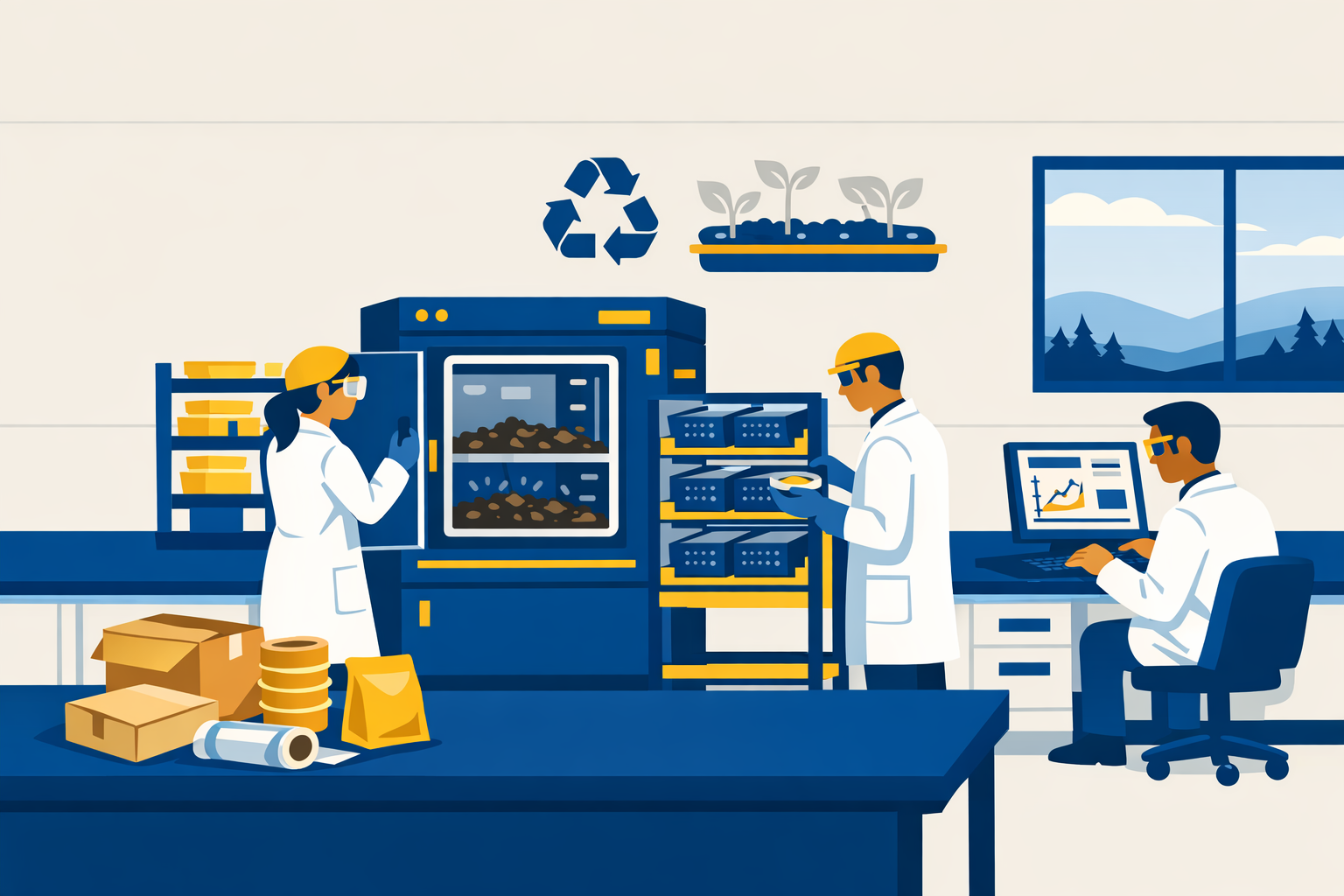
The 2,800-square-foot laboratory is housed within UW-Stevens Point's Waste Education Center and includes dedicated areas for plant growth trials, biodegradation and disintegration testing, and materials analysis involving regulated metals and fluorine.
WIST is one of only two academic laboratories in the United States approved by the Biodegradable Products Institute (BPI) for compostability testing, and one of seven approved facilities nationwide overall. The lab holds ISO 17025 accreditation and tests materials to ASTM D6400, D6868, and D8410 standards - the protocols most widely recognized by certifiers and regulators for industrial compostability claims.
WIST Executive Director Paul Fowler said the facility covers the complete testing process for packaging materials: "That then enables us to divert valuable material away from landfill and to beneficial reuse as compost." Fowler added that the facility had already been "attracting national attention" before its formal opening. Beyond compostability, WIST has been approved by How2Recycle as a provider of repulpability and recyclability testing for unbleached coated packaging materials, including carton board and corrugated board.
WIST has employed more than 110 UW-Stevens Point students in packaging, paper science, business, and waste management roles, creating a pipeline of trained professionals relevant to packaging engineering functions across manufacturing industries. The laboratory is open to industry professionals, though it does not function as a standard university classroom.
Governor Evers framed the opening in the context of industry demand, stating that "as more companies seek out ways to incorporate sustainable packaging into their business model, we also need to ensure products are meeting these standards."
Outlook
WIST is developing the capability to extend testing into home composting environments, which would broaden certifiable use cases for packaging materials beyond industrial composting infrastructure. For packaging engineers and sustainability managers in the automotive sector, a BPI-approved, ISO-accredited domestic testing partner reduces the lead time and cost of qualifying new sustainable materials. WIST's testing services are open to packaging manufacturers nationally, and the institute has indicated it is seeking additional industry partnerships to advance product development and market entry strategies.